 ETHORITY®
ETHORITY RESEARCH · GOOD AI PRISM MARKET STUDY 2026/27
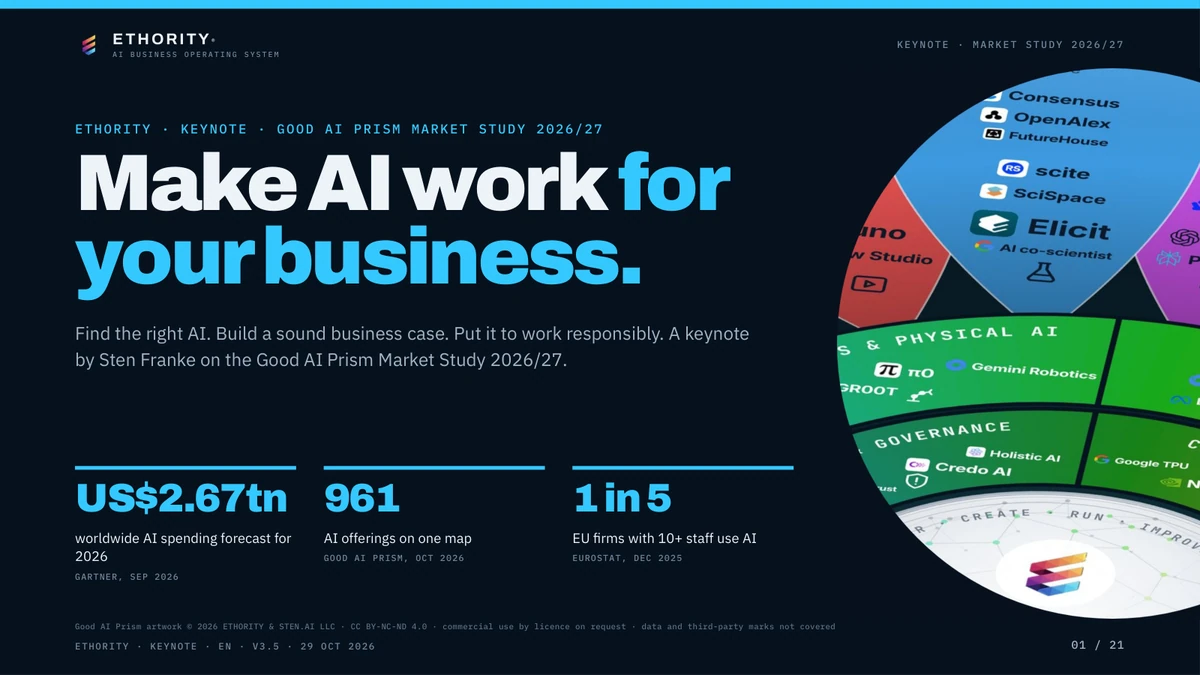
961 AI offerings on one map: decide now what you will use in 2027.
Before you invest in AI, you need to know what is on offer, what it costs and which rules apply from when. ETHORITY's market study answers this for businesses in Europe, the Americas, Asia-Pacific, the Middle East and Africa, with a source for every figure.
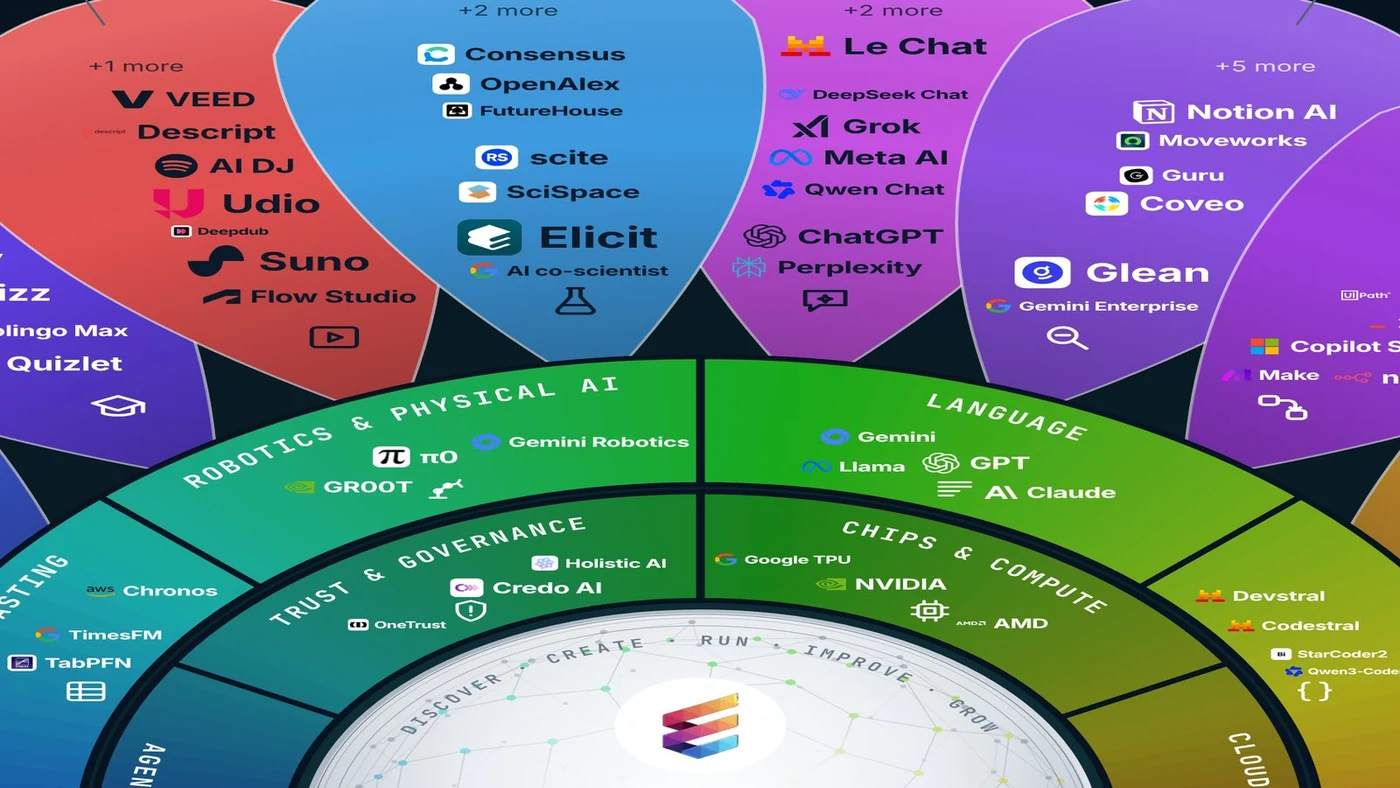
- US$2.67tn
- worldwide AI spending forecast for 2026Gartner, Sep 2026
- 961
- AI offerings in the October 2026 study · 485 profiles in the online catalogueGood AI Prism, Oct 2026
- 24
- topic areas on one mapGood AI Prism, version 3.12
- 30+
- economies comparedMarket Study 2026/27
In the national studies compared, large firms use AI 1.6 to 4.3 times as often as small ones.
In every national study we compared, large firms use AI 1.6 to 4.3 times as often as small firms.
Good AI Prism Market Study 2026/27
Missing know-how is the barrier firms name most often.
71% of EU firms that considered AI name lack of expertise as a barrier.
Eurostat 2025 · cited in the Good AI Prism Market Study 2026/27
Where buyers have real choices, we look closer.
In addition, ETHORITY researched 194 entries in depth, in the areas where buyers choose between real alternatives.
Good AI Prism, Oct 2026
Research you can check
Decide with research you can check. The Good AI Prism by Sten Franke & ETHORITY® maps 961 AI offerings across 24 topic areas, 8 data types and 6 technology layers, each with a source and a date. Start with the Global market study for the whole market, take the sector and function briefs below for your field, and open the topic area pages for the cards behind each finding, from finance and accounting to the public sector. The method, step by step, is in How ETHORITY researches the AI market further down this page.
Every study appears in English and German. ETHORITY checked the providers' information on 19–20 October 2026 and will check the same sources again in the next update, so you can see how the market changes.
Studies
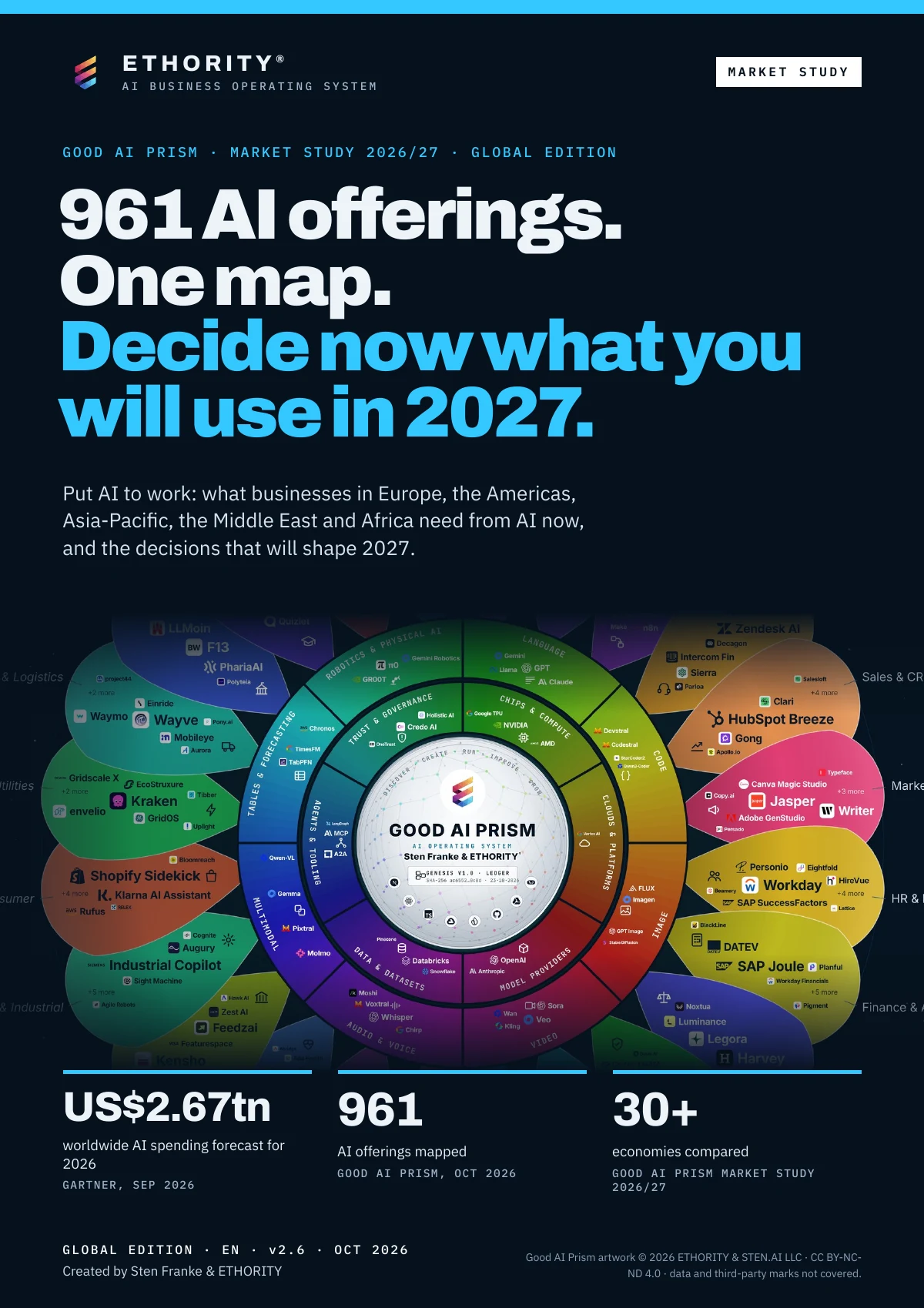
Global edition · EN
961 AI offerings. One map. Decide now what you will use in 2027.
The Good AI Prism helps you find useful AI and compare the evidence behind your options. For organisations already using AI, the question is moving from whether to use AI to which AI, how safely and whether it pays. This Global edition brings together 961 AI offerings across 24 topic areas, 8 data types and 6 technology layers, with sources, dates and limits to guide your next decision.
Version 2.6 · 90 pages
Open the study →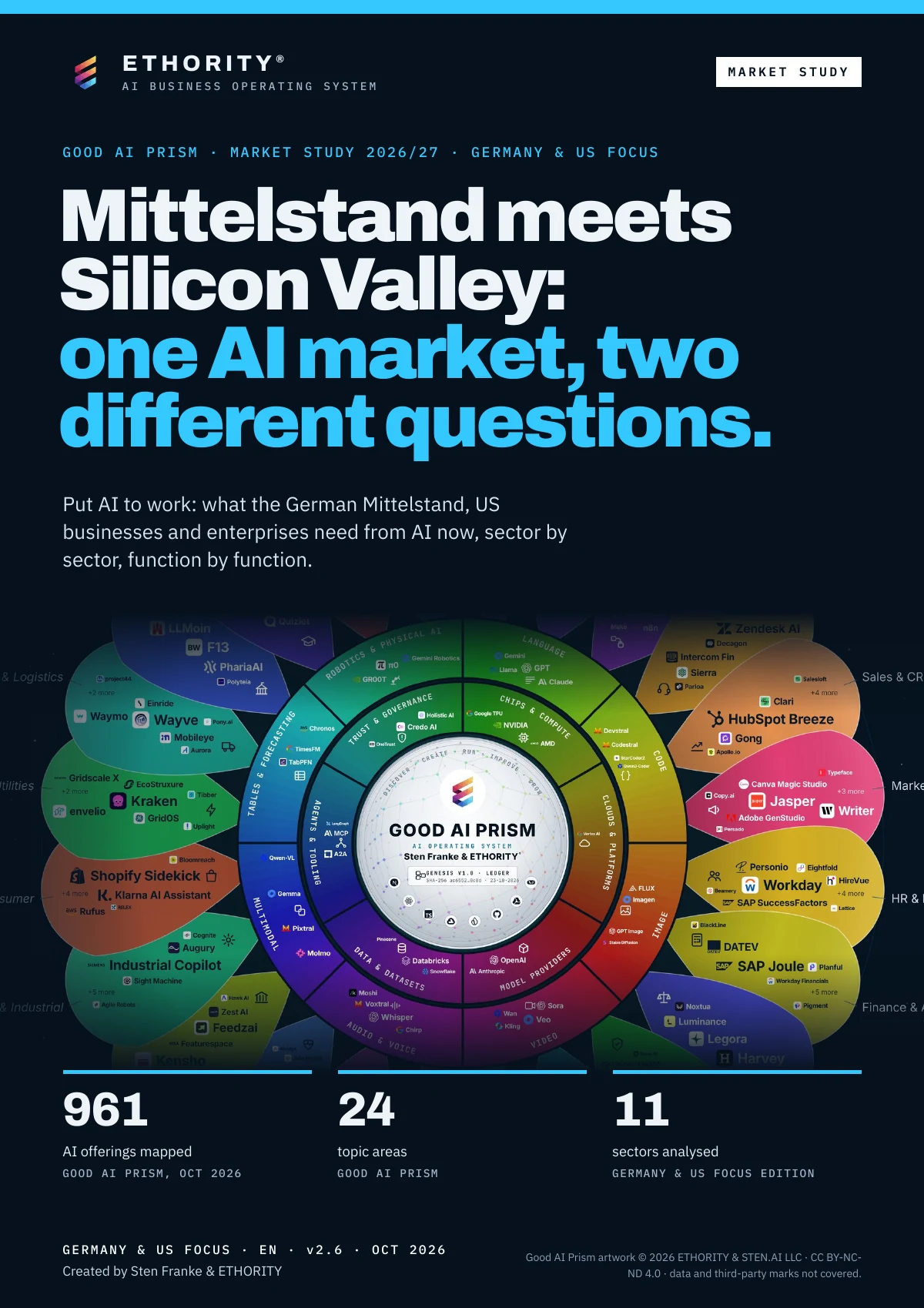
Germany & United States Focus · EN
Germany's mid-sized companies meet Silicon Valley: one AI market, two different questions.
The Mittelstand needs know-how; US firms need cost control. What German and US businesses need from AI now, sector by sector, function by function.
Version 2.6 · 72 pages
Open the study →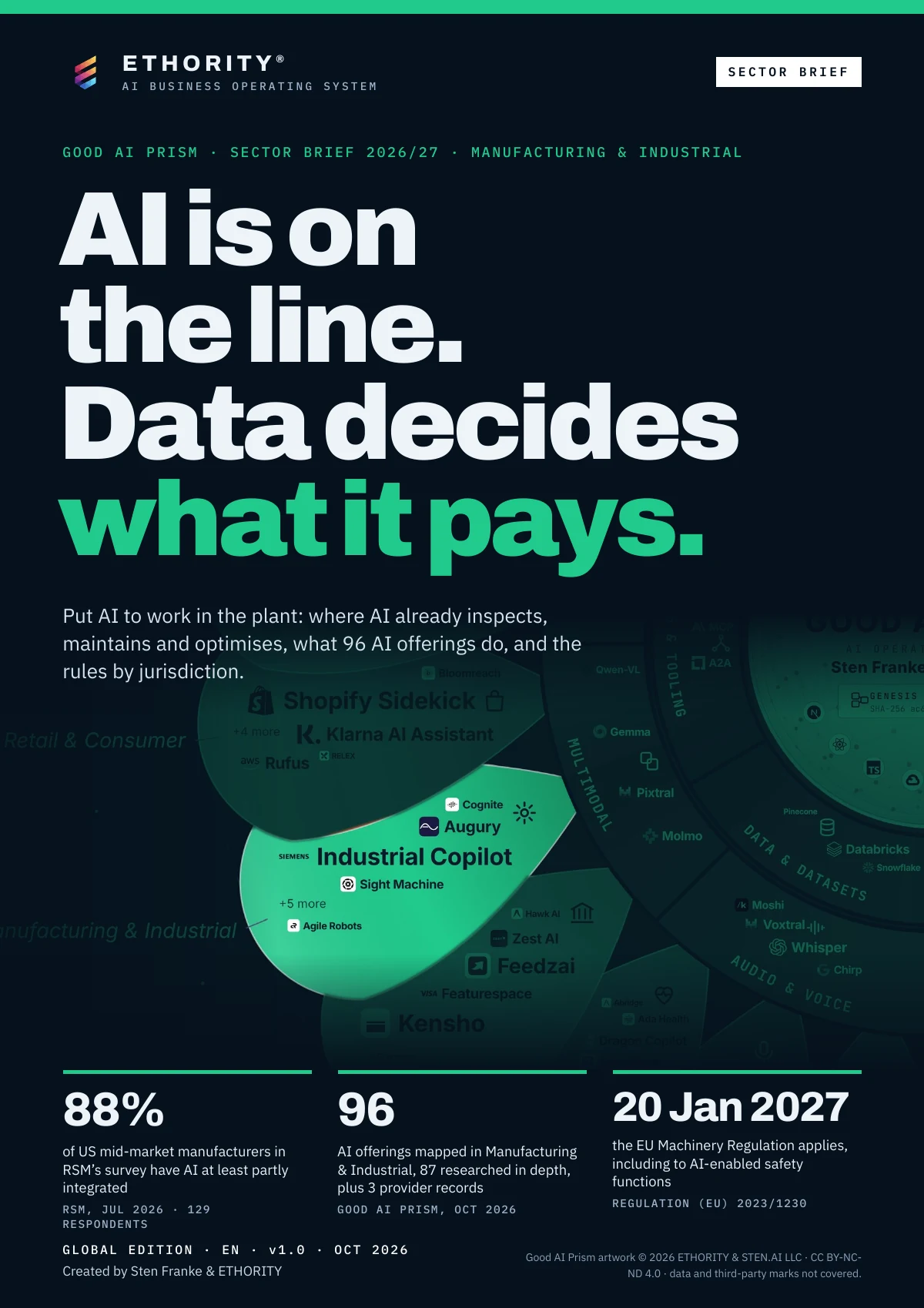
Global edition · EN
AI is on the line. Data decides what it pays.
Start where data already flows. Where AI already inspects, maintains and optimises in the plant, what the market offers and the rules by jurisdiction.
Version 1.0 · 42 pages
Open the study →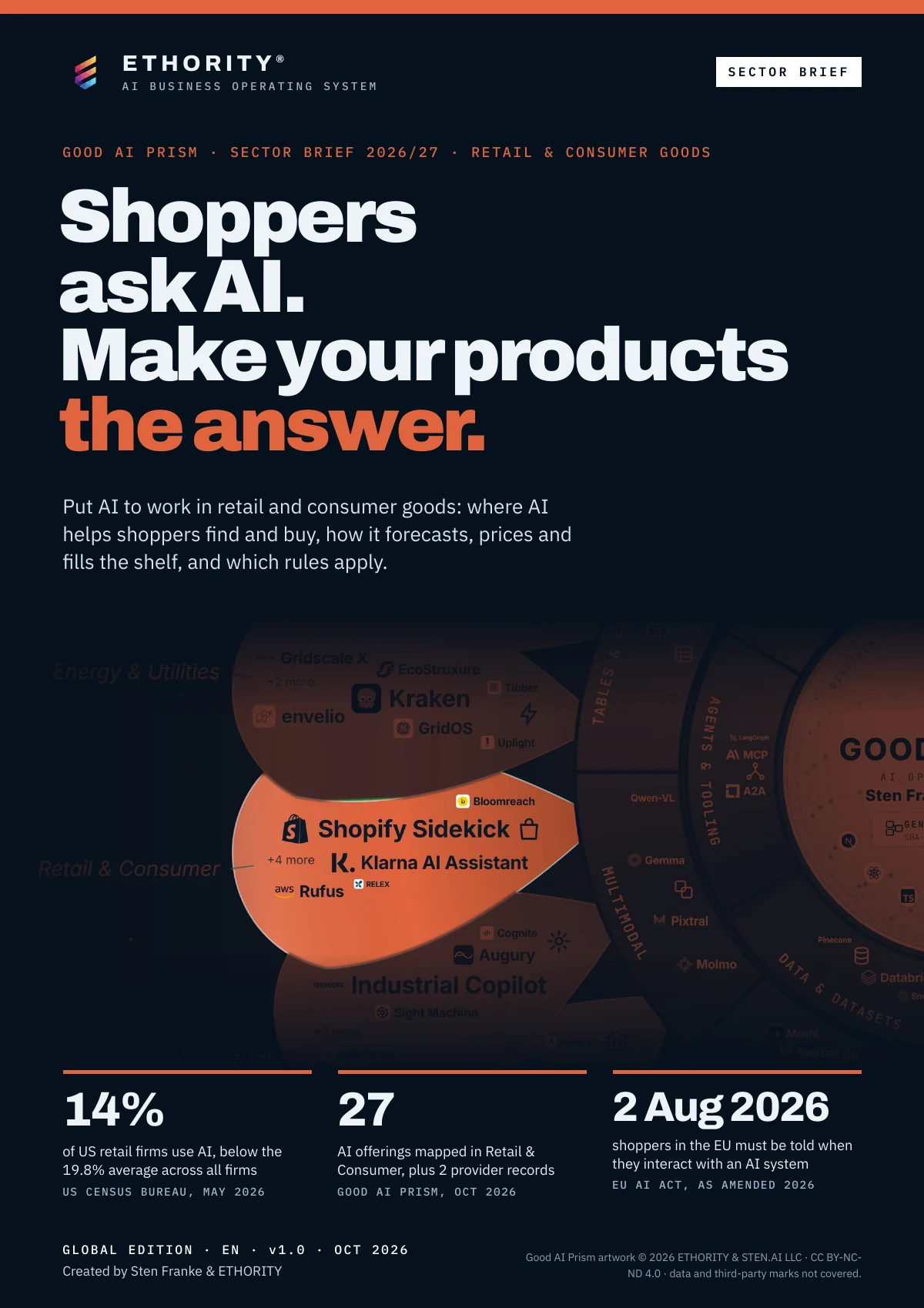
Global edition · EN
Shoppers ask AI. Make your products the answer.
The assistant advises, trust decides. Where AI helps shoppers find and buy, how it forecasts, prices and fills the shelf, and which rules apply.
Version 1.0 · 40 pages
Open the study →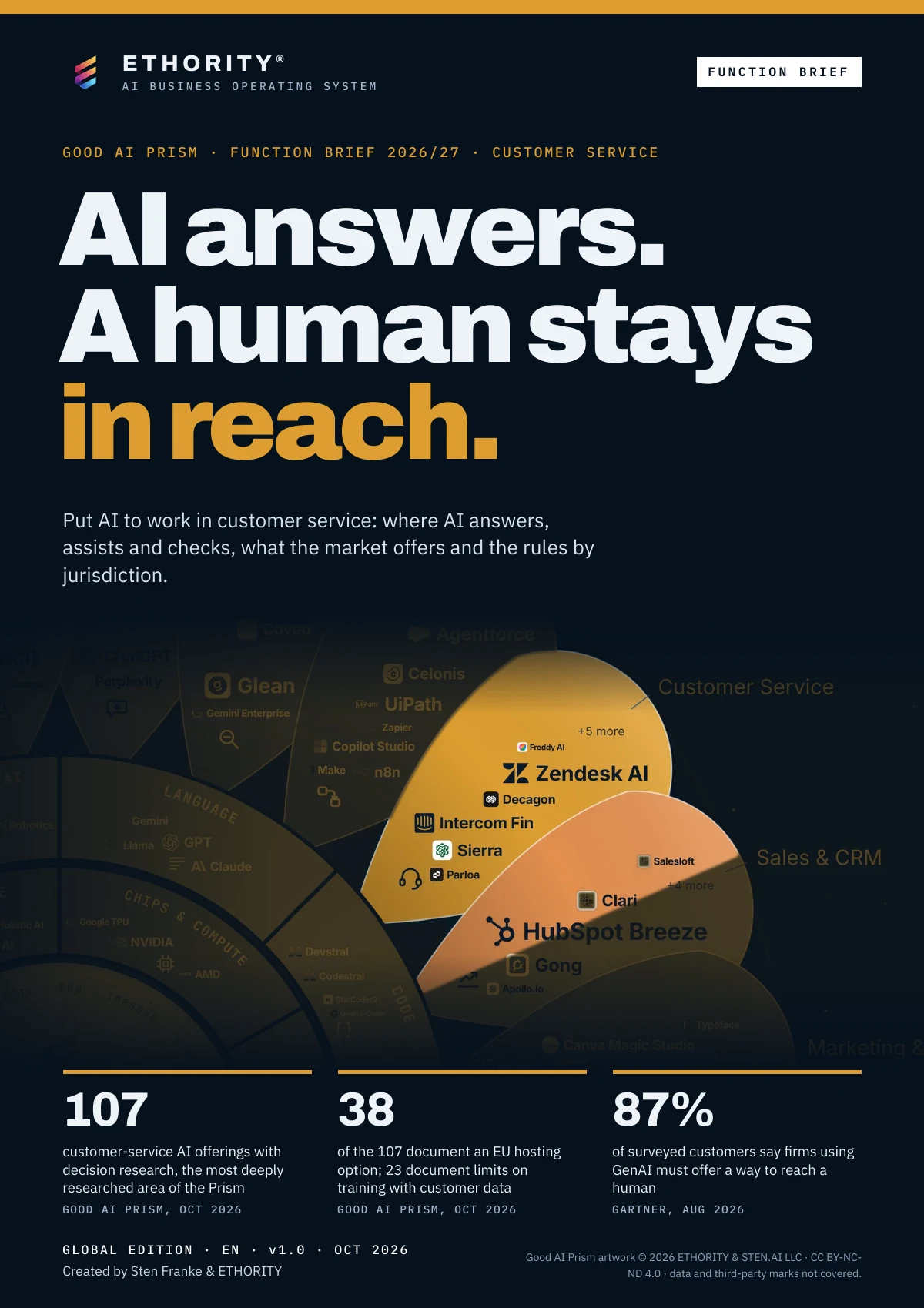
Global edition · EN
AI answers. A human stays in reach.
Answered is not solved: 87% of surveyed customers want a way to reach a human. Where AI answers, assists and checks, what 107 offerings do and the rules.
Version 1.0 · 42 pages
Open the study →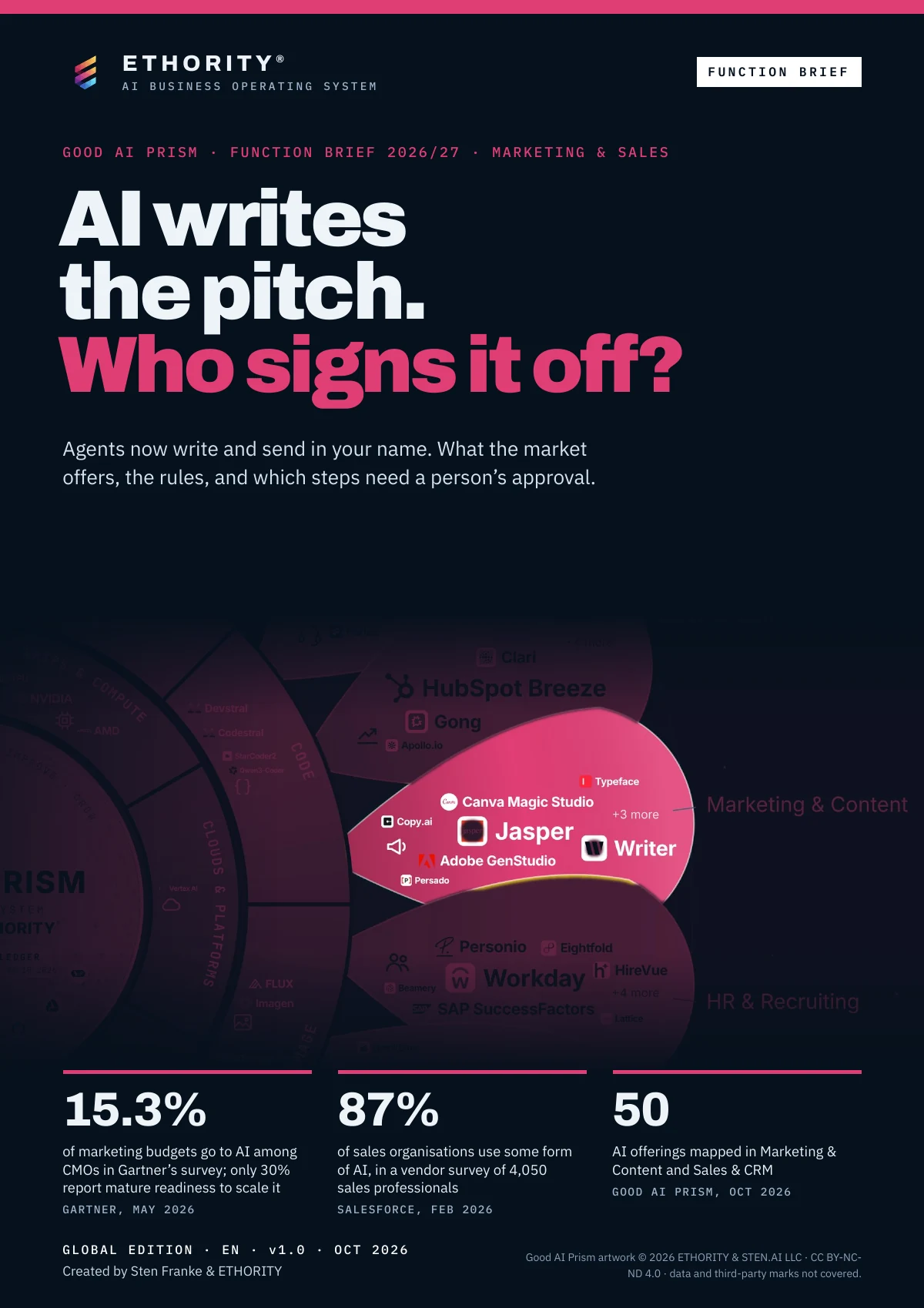
Global edition · EN
AI writes the pitch. Who signs it off?
Agents now write and send in your name. What the market offers, the rules, and which steps need a person’s approval.
Version 1.0 · 40 pages
Open the study →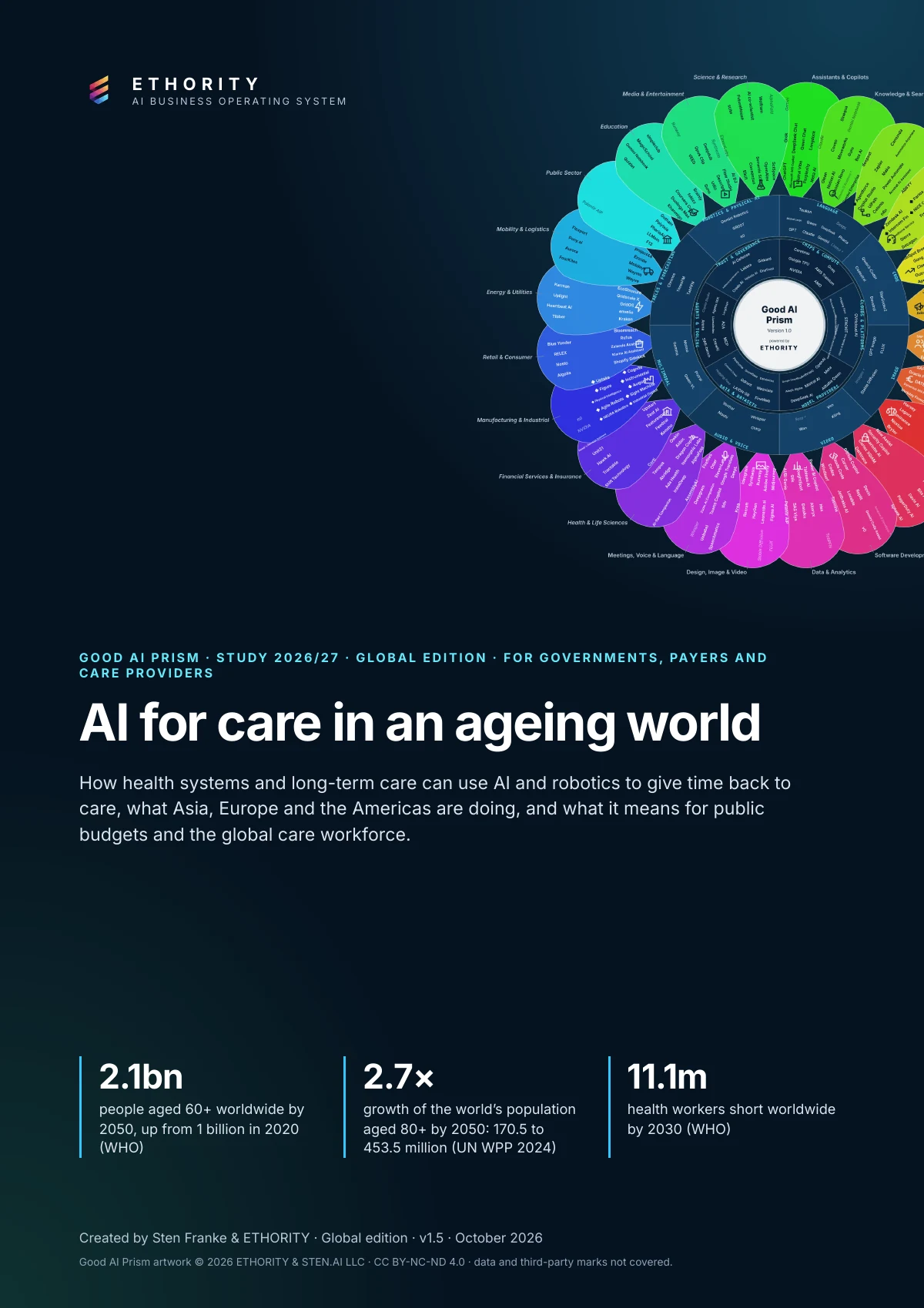
Global edition · EN
AI for care in an ageing world
The world will be short of 11.1 million health workers by 2030. How health systems and long-term care use AI and robotics to give time back to care.
Version 1.5 · 23 pages
Open the study →
United States · EN
AI for care in an ageing America
More than 600,000 people wait for Medicaid home care. What US hospitals, home care and long-term care can do with AI, and what it means for Medicare and Medicaid.
Version 1.5 · 23 pages
Open the study →
Original edition · EN
AI for Care in Ageing Societies
82% of Swedish municipalities already offer digital night supervision at home. What China, Japan, the Nordics, the US and Germany do to give time back to care.
Version 1.5 · 23 pages
Open the study →
Global edition · EN
AI-generated drugs reach Phase 3.
AI-supported breast screening cut screen-reading workload by 44%. The first late-stage trials, the evidence and the money in drug discovery, cancer care and ageing science.
Version 1.7 · 40 pages
Open the study →The whole AI market on one sheet.
The full Good AI Prism as an A3 poster: every topic area, data type and technology layer on one page.
See the map on one page →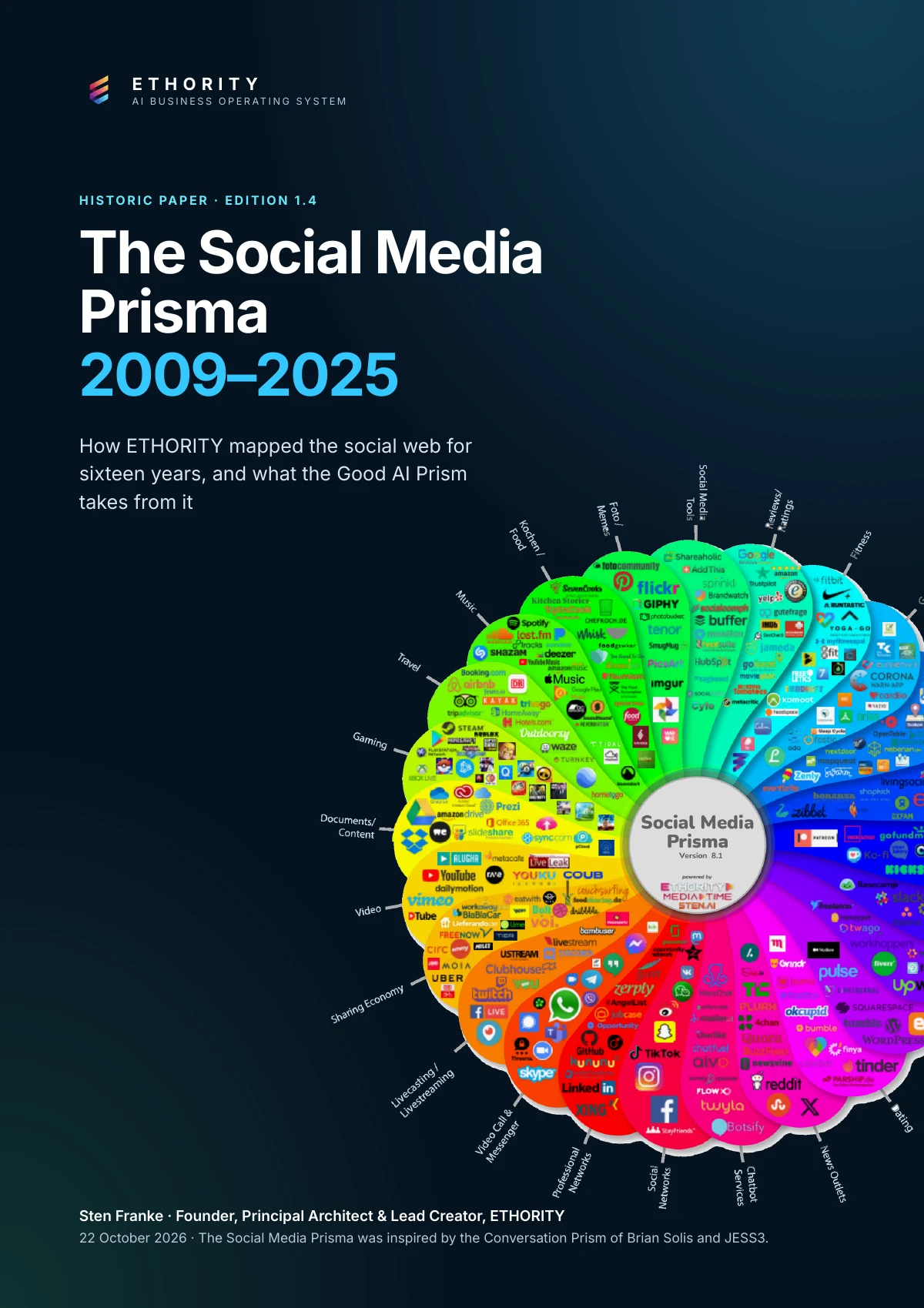
Historical edition · EN
Sixteen years of mapping the social web.
How ETHORITY mapped the social web from 2009 to 2019, and the method the Good AI Prism builds on.
Version 1.4 · 14 pages
Open the study →Briefs by industry and business function
Global edition · EN
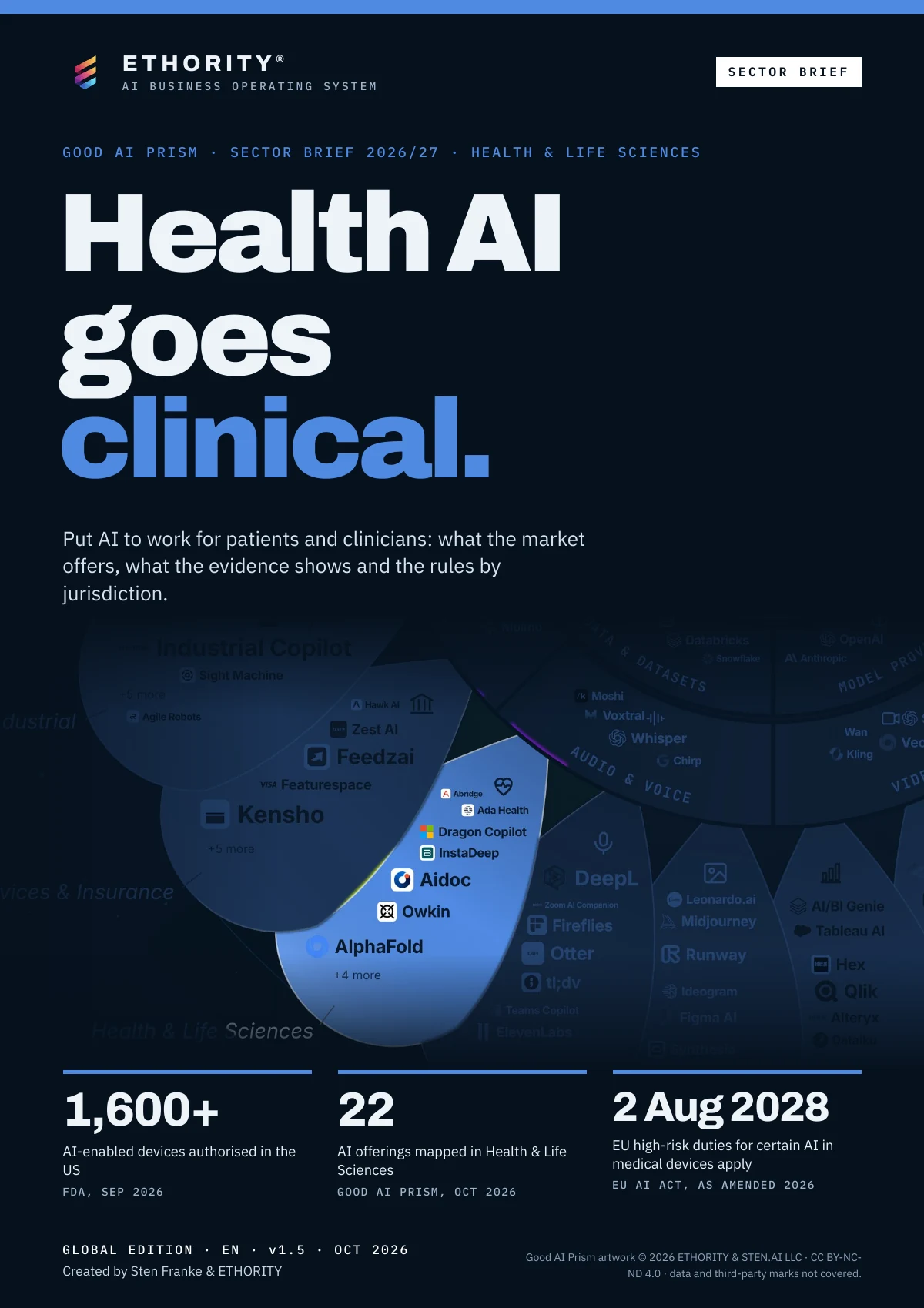
Health AI goes clinical.
More than 1,600 AI-enabled devices are authorised in the US. What the market offers patients and clinicians, what the evidence shows and the rules by jurisdiction.
Version 1.5 · 40 pages
Open the study →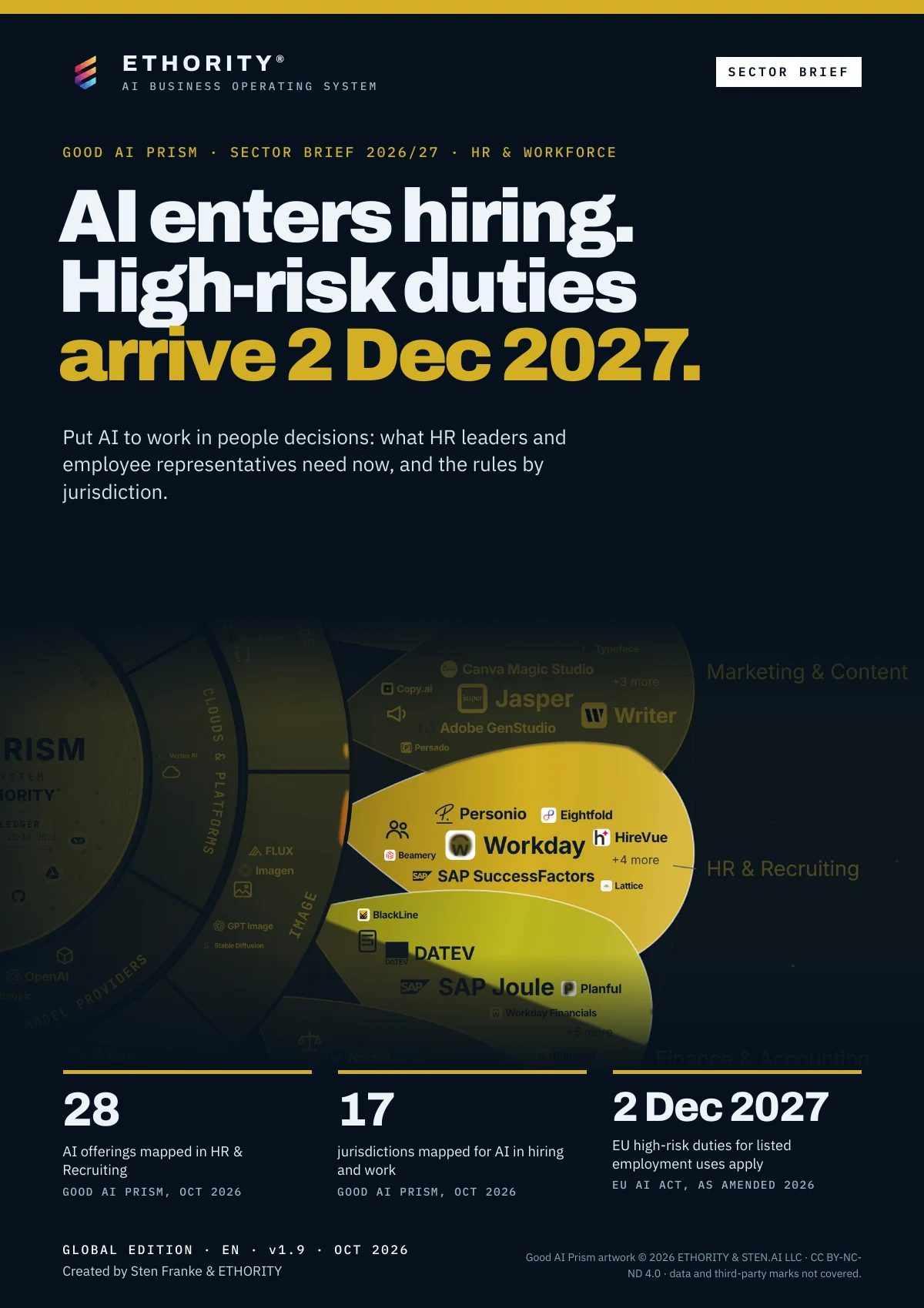
Global edition · EN
AI enters hiring. High-risk duties arrive 2 Dec 2027.
Half the mapped HR offerings serve hiring. What HR leaders and employee representatives need now, and the rules in 17 jurisdictions.
Version 1.9 · 40 pages
Open the study →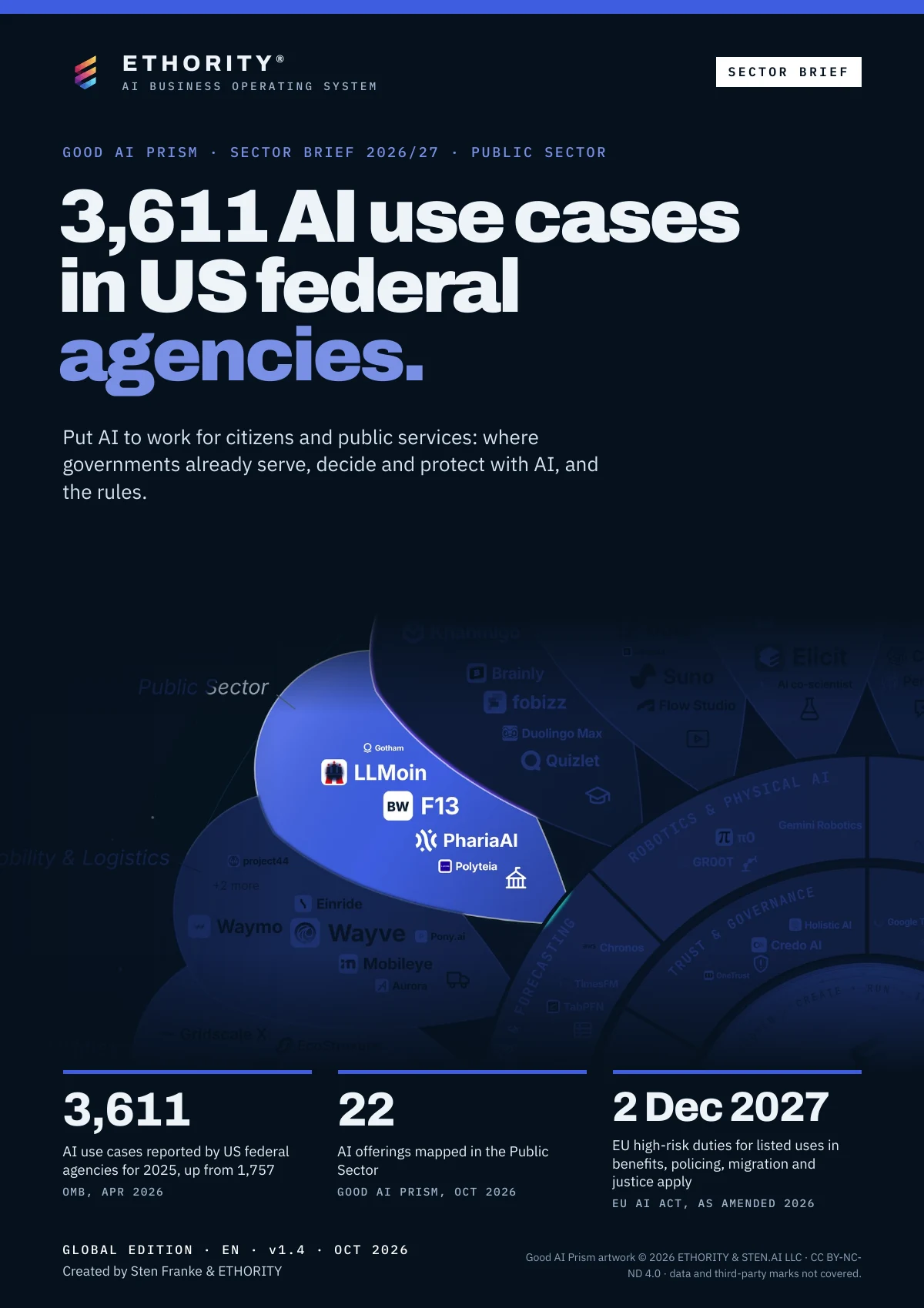
Global edition · EN
3,611 AI use cases in US federal agencies.
US federal AI use cases more than doubled in a year. Where governments already serve, decide and protect with AI, and the rules that apply.
Version 1.4 · 40 pages
Open the study →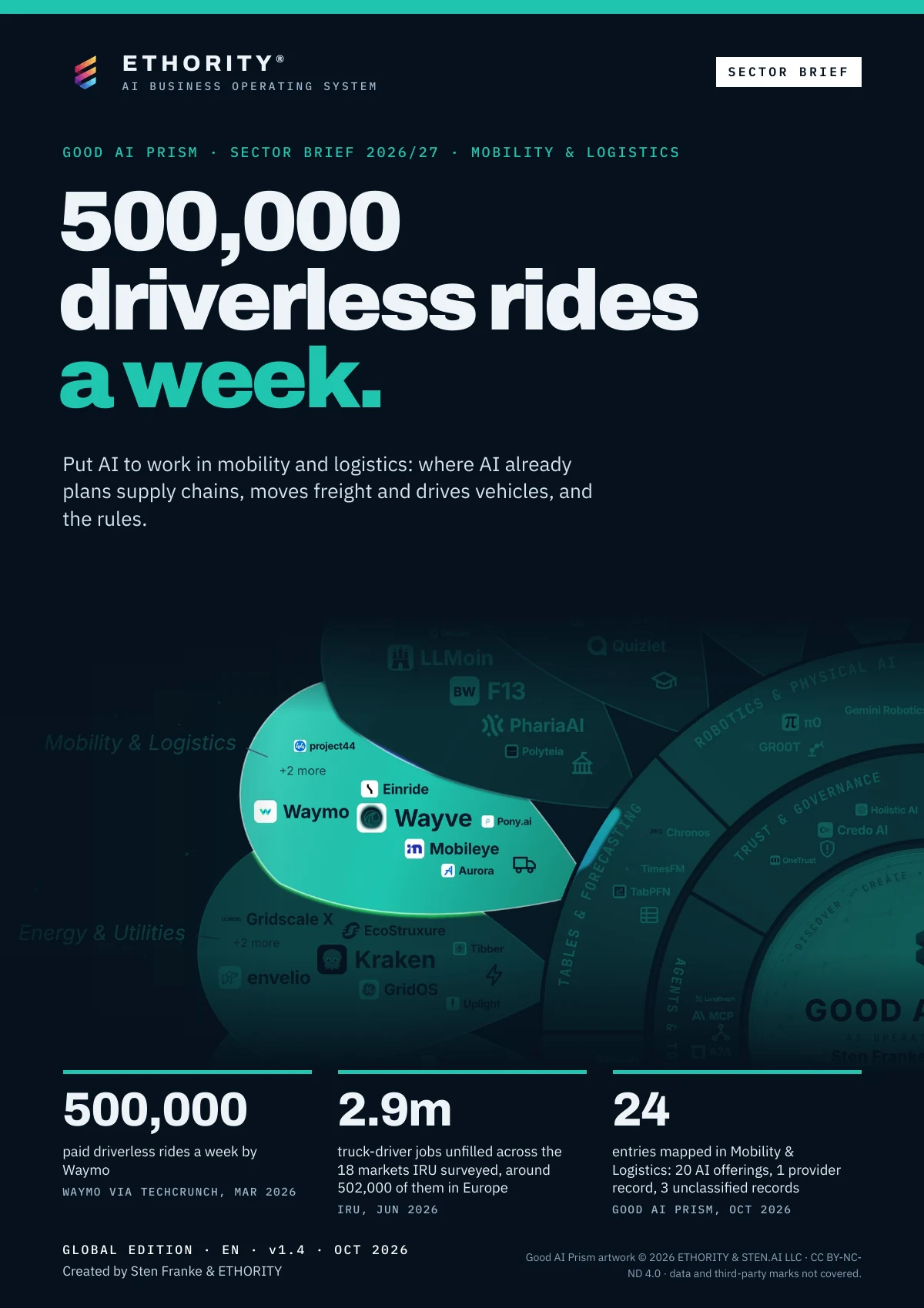
Global edition · EN
500,000 driverless rides a week.
2.9 million truck-driver jobs are unfilled in the markets IRU surveyed. Where AI already plans supply chains, moves freight and drives vehicles, and the rules.
Version 1.4 · 40 pages
Open the study →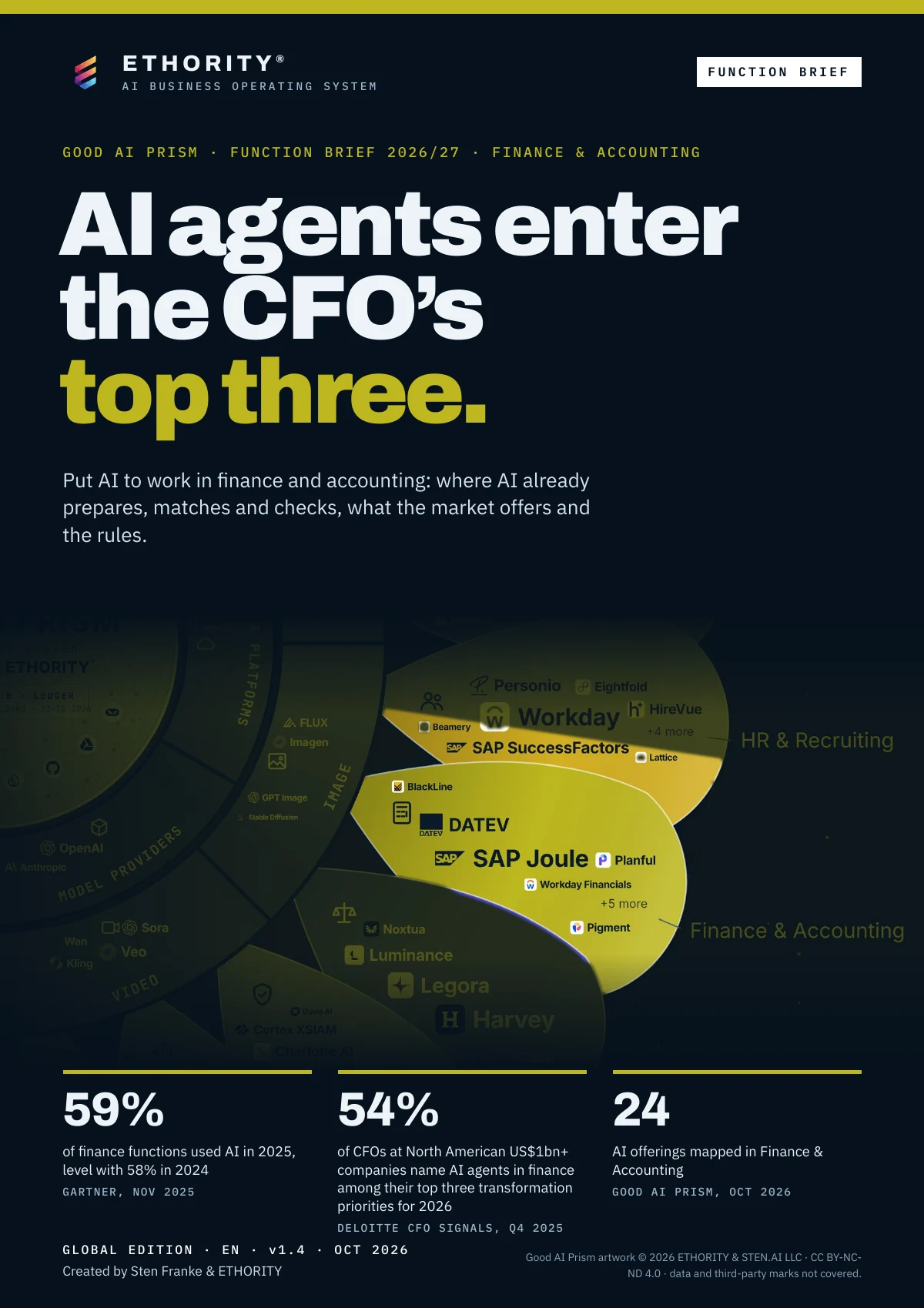
Global edition · EN
AI agents enter the CFO’s top three.
AI use in finance holds at 59% while CFOs push agents up their agenda. Where AI already prepares, matches and checks, what the market offers and the rules.
Version 1.4 · 40 pages
Open the study →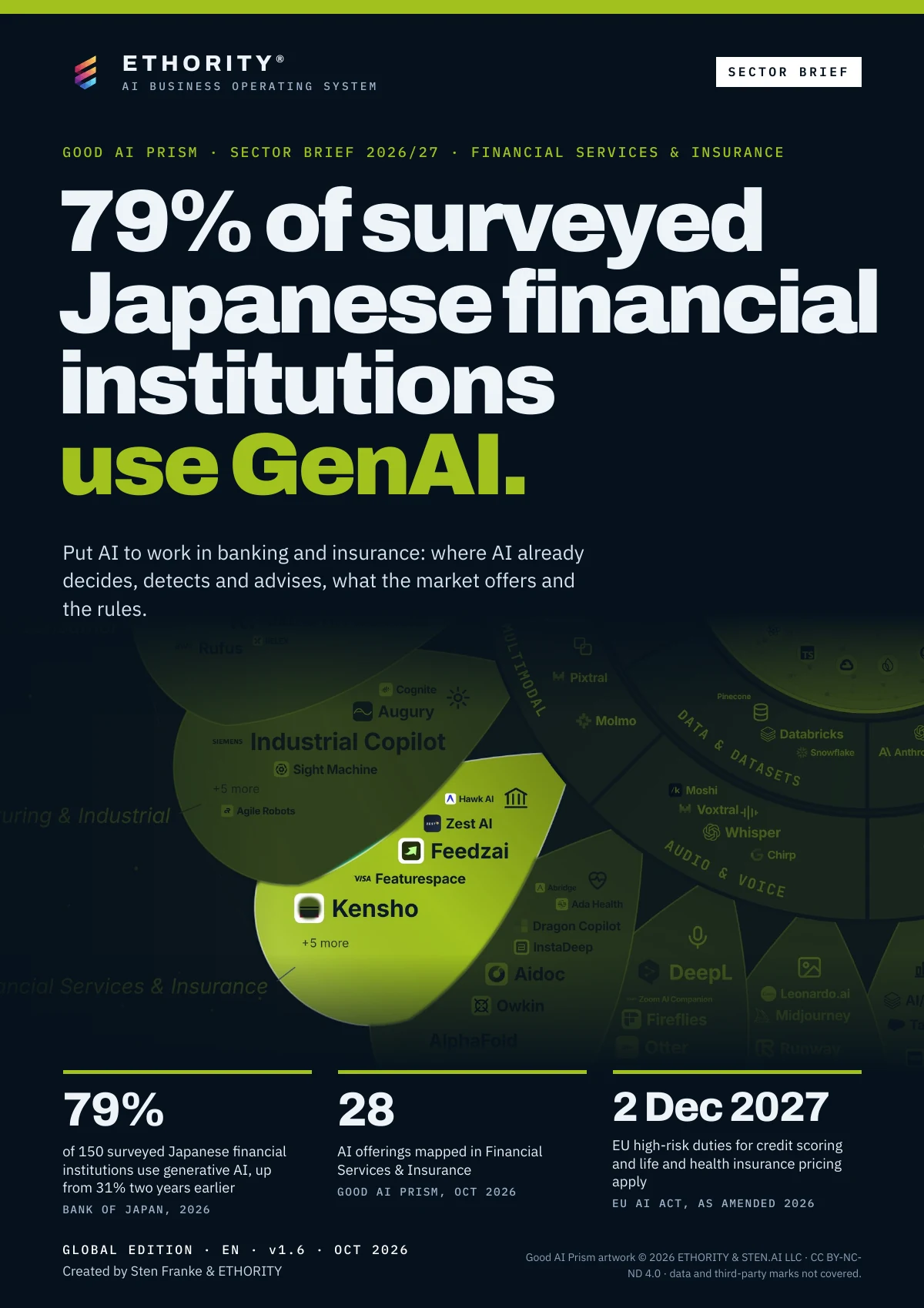
Global edition · EN
79% of surveyed Japanese financial institutions use generative AI.
Credit, fraud, pricing: decisions your customers can understand. Where AI already decides, detects and advises in banking and insurance, and the rules.
Version 1.6 · 40 pages
Open the study →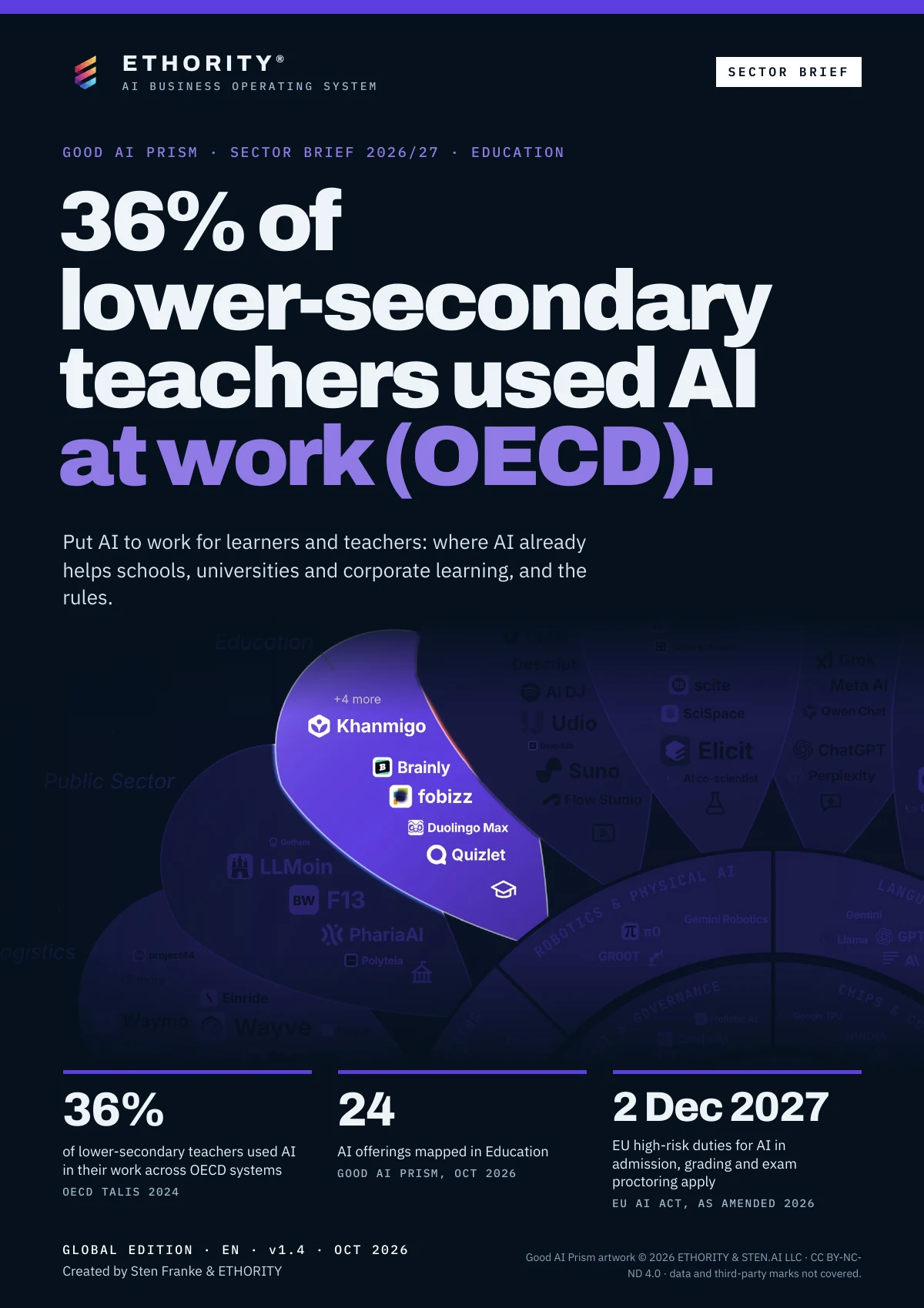
Global edition · EN
36% of lower-secondary teachers used AI at work (OECD).
From 2 Dec 2027 high-risk duties apply to certain AI in admission, grading and proctoring. Where AI already helps schools, universities and corporate learning.
Version 1.4 · 40 pages
Open the study →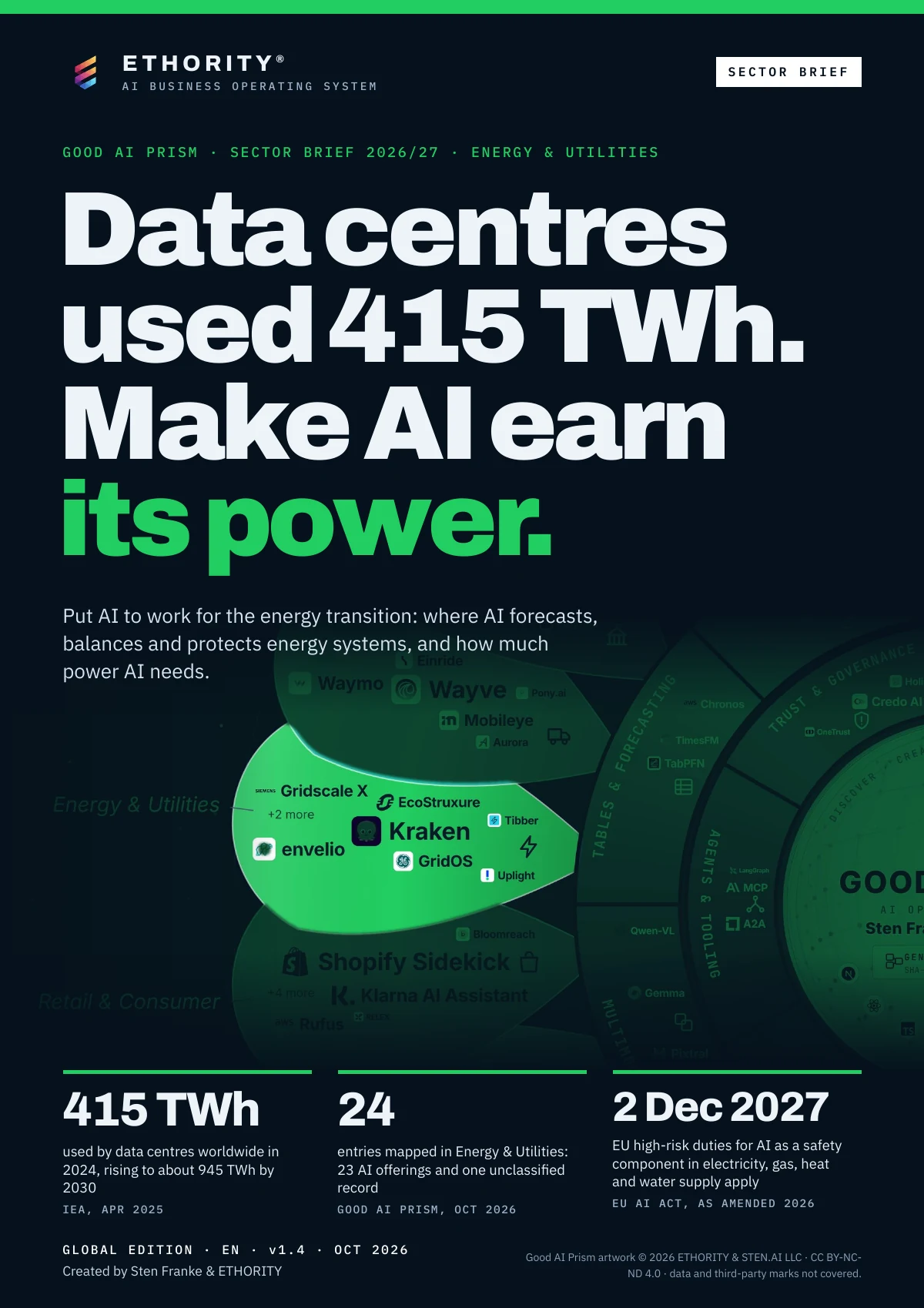
Global edition · EN
Data centres used 415 TWh. Make AI earn its power.
Start where AI is measured daily: forecasts and maintenance. Where AI balances and protects energy systems, and how much power it needs itself.
Version 1.4 · 40 pages
Open the study →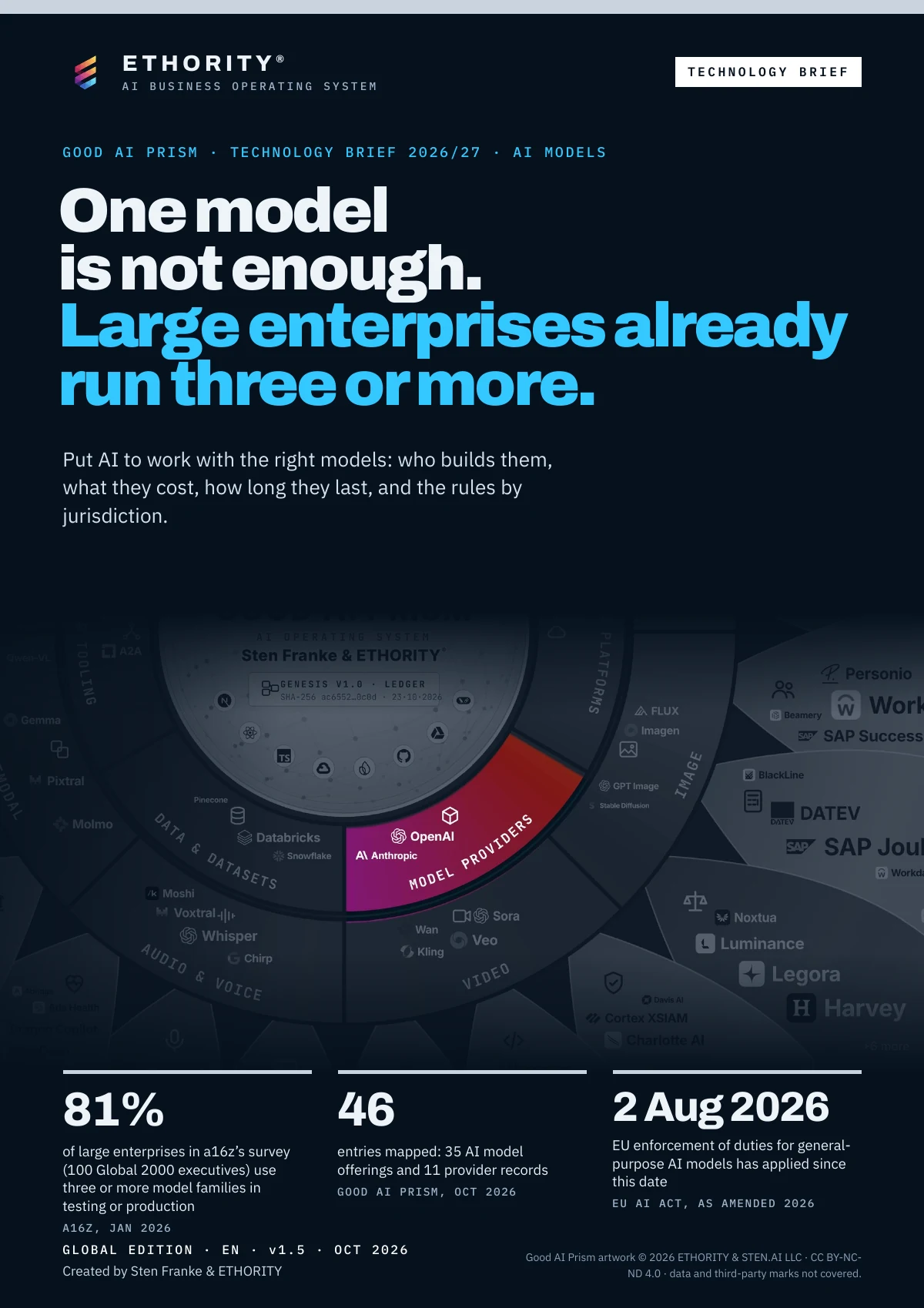
Global edition · EN
One model is not enough. Large enterprises already run three or more.
81% of large enterprises use three or more model families. Who builds AI models, what they cost, how long they last, and the rules by jurisdiction.
Version 1.5 · 38 pages
Open the study →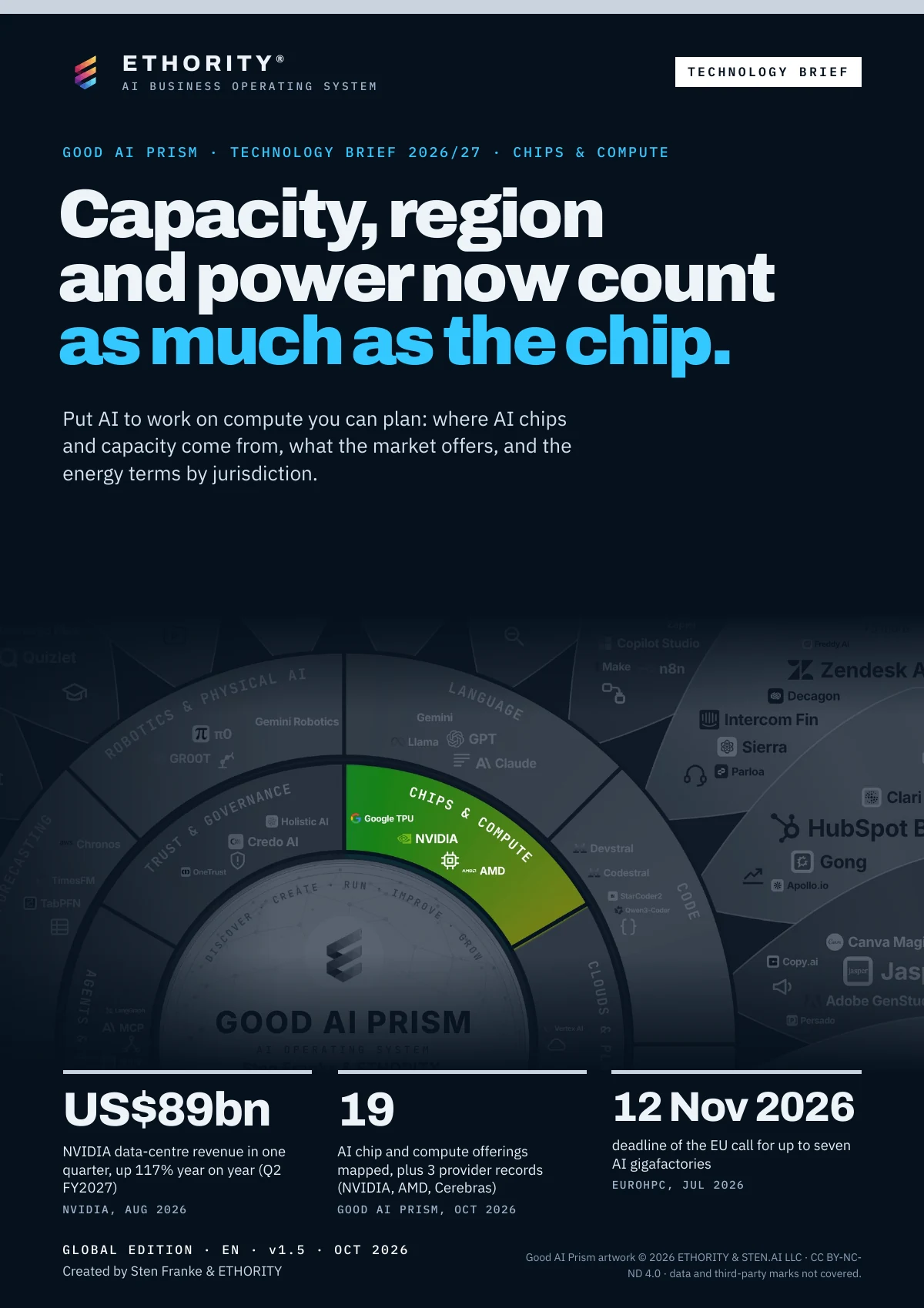
Global edition · EN
Compute that fits the work you run.
Capacity, region and energy terms count as much as chip performance. Where AI chips and capacity come from, what the market offers and the energy terms by jurisdiction.
Version 1.5 · 40 pages
Open the study →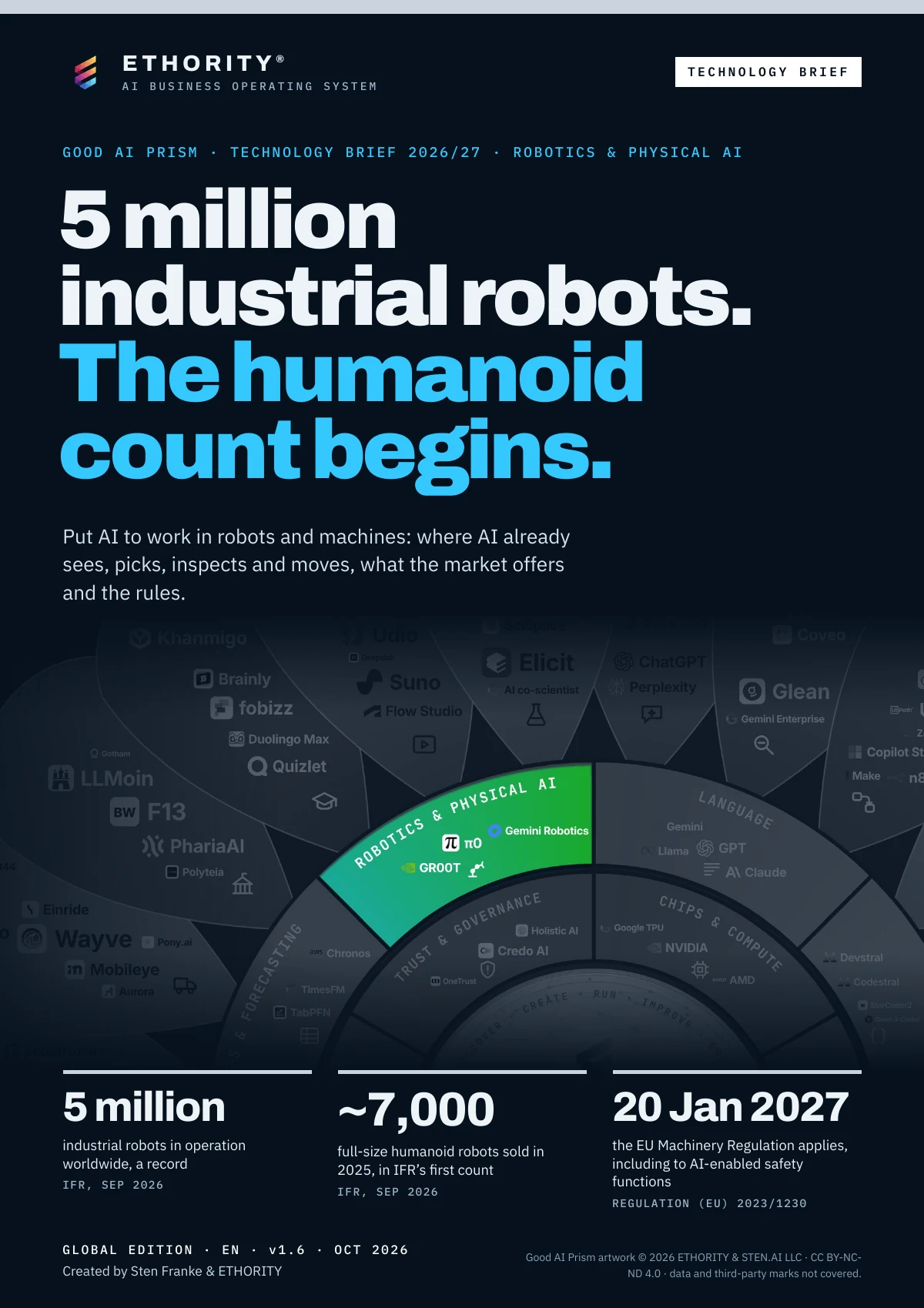
Global edition · EN
5 million industrial robots. The humanoid count begins.
Humanoids are counted for the first time: about 7,000 sold in 2025. Where AI already sees, picks, inspects and moves, what the market offers and the rules.
Version 1.6 · 40 pages
Open the study →Articles
Ten AI ethics issues now have legal dates.
The ten AI ethics issues of 2024 now each have a legal date, a measurable control or published evidence.
See the map on one page →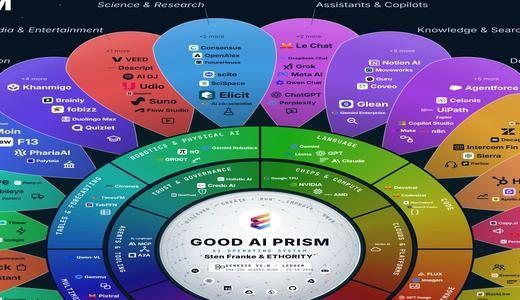
961 AI offerings. Start with the job, not the tool.
A method for going from one business need to a shortlist of AI offerings you can defend.
See the map on one page →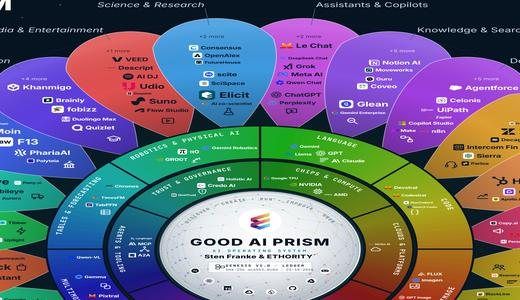
AI spending is forecast to rise by half. 37% of surveyed organisations see an effect on profit.
Sourced figures for 2025–26 on AI spending, adoption, models, energy and value, for your 2027 planning.
See the map on one page →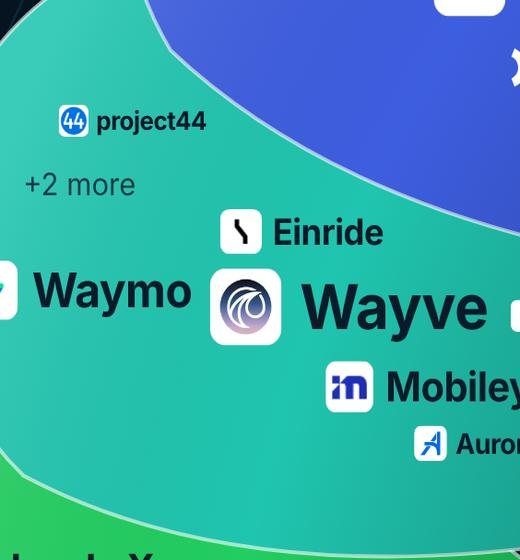
Half of German logistics firms use AI. Measure your own gains.
What has been measured in warehouses and supply chains since 2024, and how to measure it in your own operation.
See the map on one page →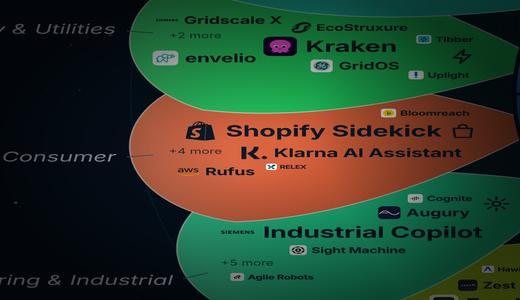
Shoppers move to AI faster than retailers.
Why consumer trust and measured results now matter as much as algorithms in pricing and personalisation.
See the map on one page →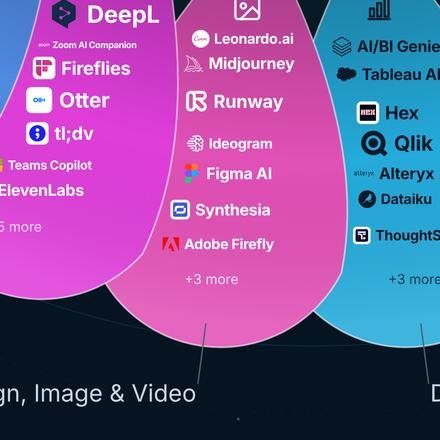
Synthetic media now needs a label almost everywhere.
What has changed for AI-generated faces and voices since Microsoft's VASA-1 model in 2024, and the labelling rules in the EU, China, Korea and India.
See the map on one page →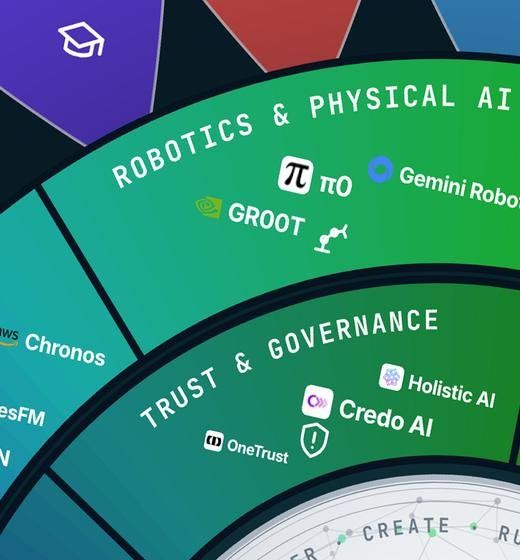
AI rules move from documents into daily operation.
Why AI agents, tools and constant change move AI governance – the rules and responsibilities for AI – into the systems that run your AI every day.
See the map on one page →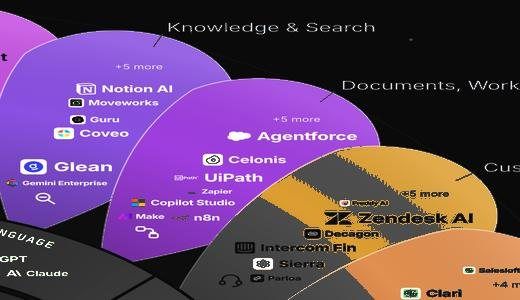
Access to a tool does not give an AI agent the right to act.
How to define what each AI agent may do: by action, limit, time and consequence, rather than by the tools it can reach.
See the map on one page →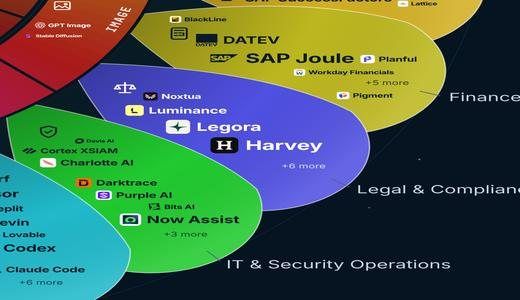
Preparing for the EU AI Act is the start; control happens in daily operation.
How to connect each EU AI Act duty to your systems, controls, evidence, monitoring and regular reassessment.
See the map on one page →
Check every vendor claim before you rely on it.
Tie every vendor claim to the exact product, version, contract and use before you rely on it.
See the map on one page →
Govern the outcome, not only the risk.
Connect your AI rules to the business result, the full cost and the value you observe, and let them say stop.
See the map on one page →
AI-first means changing how you work, not counting tools.
What has to change across the organisation: strategy, work, decision rights, knowledge, evidence and leadership.
See the map on one page →
Trusting AI and going all-in are one job.
Why speed and responsible AI are no longer competing choices. An essay by Sten Franke.
See the map on one page →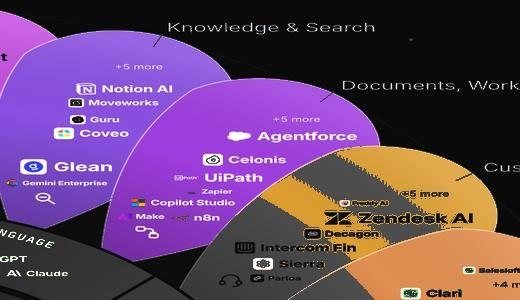
A marketplace listing does not make an AI agent trustworthy.
When you buy AI agents, keep identity, offer, payment, evidence and trust apart, and grant rights only after purchase.
See the map on one page →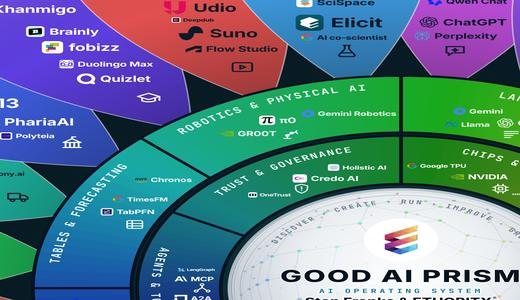
A list of AI agents does not control them.
What controls AI agents in daily operation: clear rights, a record of how well each fact is supported, checks matched to the risk, data limits and alerts when something changes.
See the map on one page →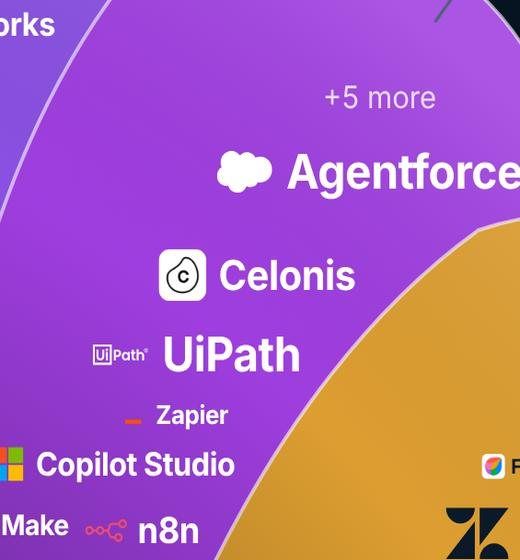
AI does not scale by itself. Redesign the work.
Start with one objective, choose the simplest approach for each task and measure the cost of every result you accept.
See the map on one page →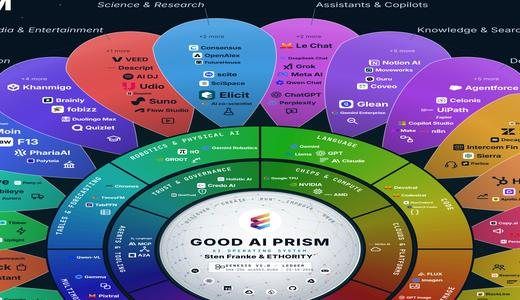
Saved hours are not AI value.
Separate a better task, freed-up time and a business result, so you can show the value AI really delivers.
See the map on one page →Presentations
ETHORITY · LONG READ
How ETHORITY researches the AI market
Seven steps from a provider's own page to a decision you can defend: how the Good AI Prism by Sten Franke & ETHORITY® turns 998 market entries into a sourced map of 961 AI offerings, and checks it again in every update.
Most AI market overviews start with a vendor list. Ours starts with the question a buyer has to answer: which AI belongs in this part of the business, what does it cost, what evidence supports it, and which rules apply when? Every step of the method serves that question. Here it is in plain words.
1. Record what providers say, with a date
Each entry in the Good AI Prism is recorded from the provider's own pages: what the offering does, who it is for, where it runs, how it is priced and what it documents about data and human oversight. Every fact carries its source and the date it was read. For the first research round, provider information was reviewed on 19–20 October 2026. When a page changes, the next update records the change and keeps the earlier version on file.
2. Sort the market onto one map
The first research round holds 998 market entries, 961 of them AI offerings. Each one is placed on a single wheel: 24 topic areas, from customer service and finance to science and the public sector, with the technology layers underneath, such as models, data, compute and governance. One map means one vocabulary, so a buyer in HR and a buyer in legal can compare like with like. You can open the Prism map and see where each offering sits.
3. Read deeper where decisions are made
A map shows breadth; decisions need depth. Where buyers face real choices, the research goes further: 194 depth-research records look closely at documentation and at the evidence a provider offers for its claims. They are records about offerings, not a count of products. They feed the profiles in the Good AI Prism registry, where each card shows its facts with their dates.
4. Put the market next to the buyers
What can be bought is only half the picture. The study sets the offer side against what organisations actually do, using a separate synthesis of external studies from more than 30 economies. The figures differ because they measure different things. About nine in ten organisations in a global survey report regular AI use (McKinsey, Aug 2026); official statistics count one EU firm in five with ten or more staff (Eurostat 2025). We report both and keep them apart. In every national study we compared, large firms use AI 1.6 to 4.3 times as often as small firms.
5. Add the rules and their dates
A purchase that ignores the calendar is a risk. Each edition names the rules that apply and when they start: US state rules on automated decisions from 1 January 2027, EU duties for listed high-risk uses from 2 December 2027. The EU AI Act Navigator gives a first orientation for your own use case. The briefs go further for their field. The Health & Life Sciences brief sets out the dates for AI in medical devices, and the AI Models brief the duties for general-purpose models.
6. Publish in layers
The same evidence appears at the depth each reader needs. The Global market study covers the whole market in 41 pages with 18 exhibits; the Germany & US Focus edition reads it for the German Mittelstand and US businesses. Sector and function briefs take one field at a time. The topic area pages, such as Customer Service or HR & Recruiting, turn the map into cards you can filter and compare side by side. Every edition appears in English and German.
7. Read it again
The Good AI Prism is a longitudinal programme. Each update reads the same sources again, so readers can see how a market moves: who arrives, who changes a promise, who leaves. Providers can submit corrections; confirmed corrections appear, dated, in the next update. The rules are set out on the study methodology page.
Who does the work
ETHORITY is built as an AI-first organisation: people and AI agents work as one team in one system, and a named person is accountable for every decision. The Good AI Prism is produced this way. Sten Franke leads the research design; his first market map was a web directory for Germany in 1997. The habit has a public record: the German Social Media Prisma charted the social web from September 2009, and the Social Media Prisma paper tells that story.
What this means for you
Start with your question, not with a vendor. Find your area on the map, read the brief for your sector, open the cards, compare the offerings that fit and price the choice with the AI ownership cost calculator. Every number you take into a board paper keeps its source and its date, so the decision can be checked later. That is the point of the method: AI decisions that say what should improve, what evidence supports the choice and who is accountable for the result.
Sources and further reading
- Put AI to Work: The Good AI Prism Global Market Study 2026/27 → · Oct 2026
- Good AI Prism Market Study 2026/27, fact sheet · Oct 2026
- McKinsey, The state of AI (global survey), cited in the study · Aug 2026
- Eurostat, use of artificial intelligence in enterprises, cited in the study · 2025
YOUR NEXT STEP
Discuss your question with Sten Franke.
Bring your business question or the figures you already know. ETHORITY investigates within the agreed scope; together with Sten Franke you agree the next piece of work.