 ETHORITY®

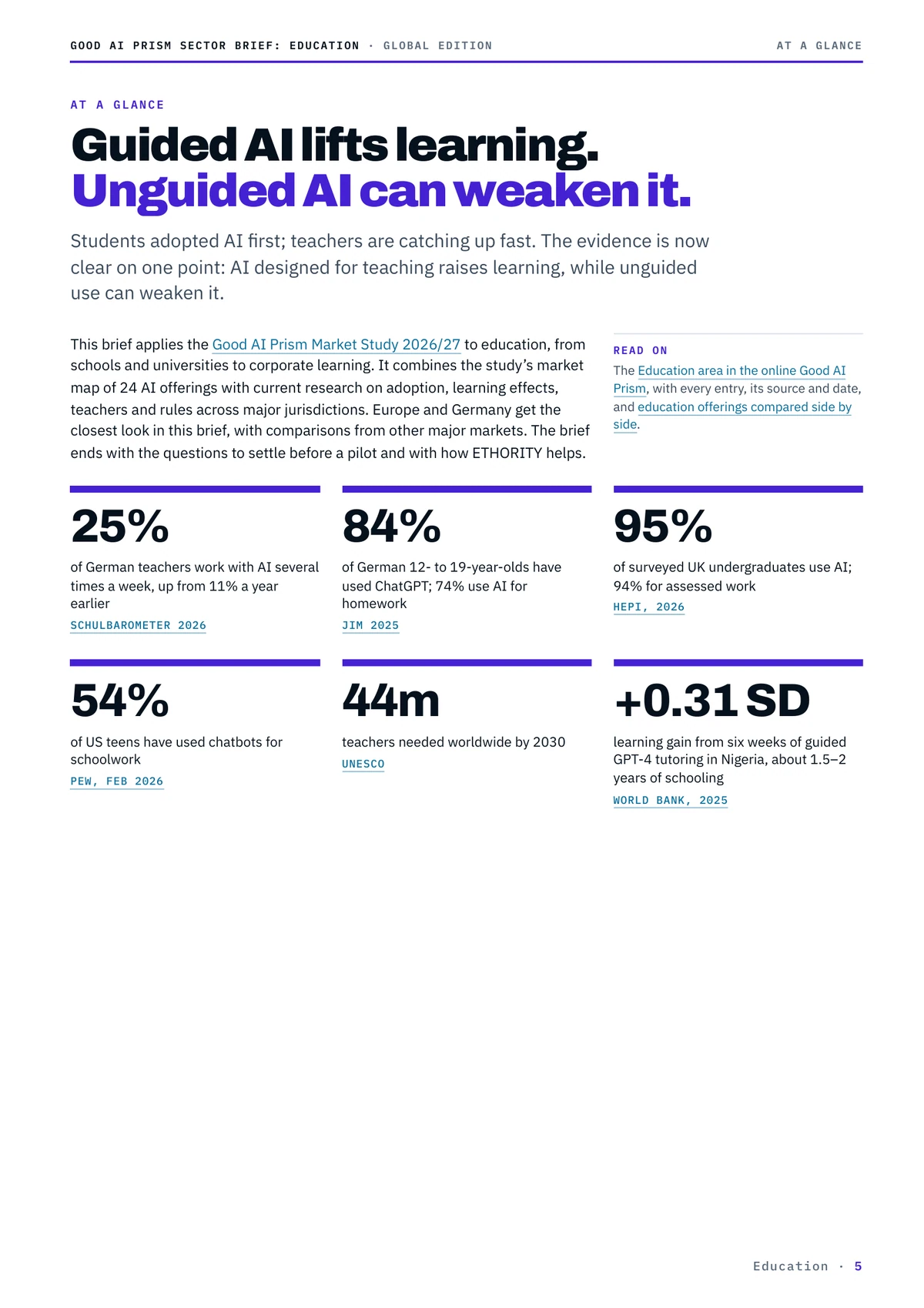
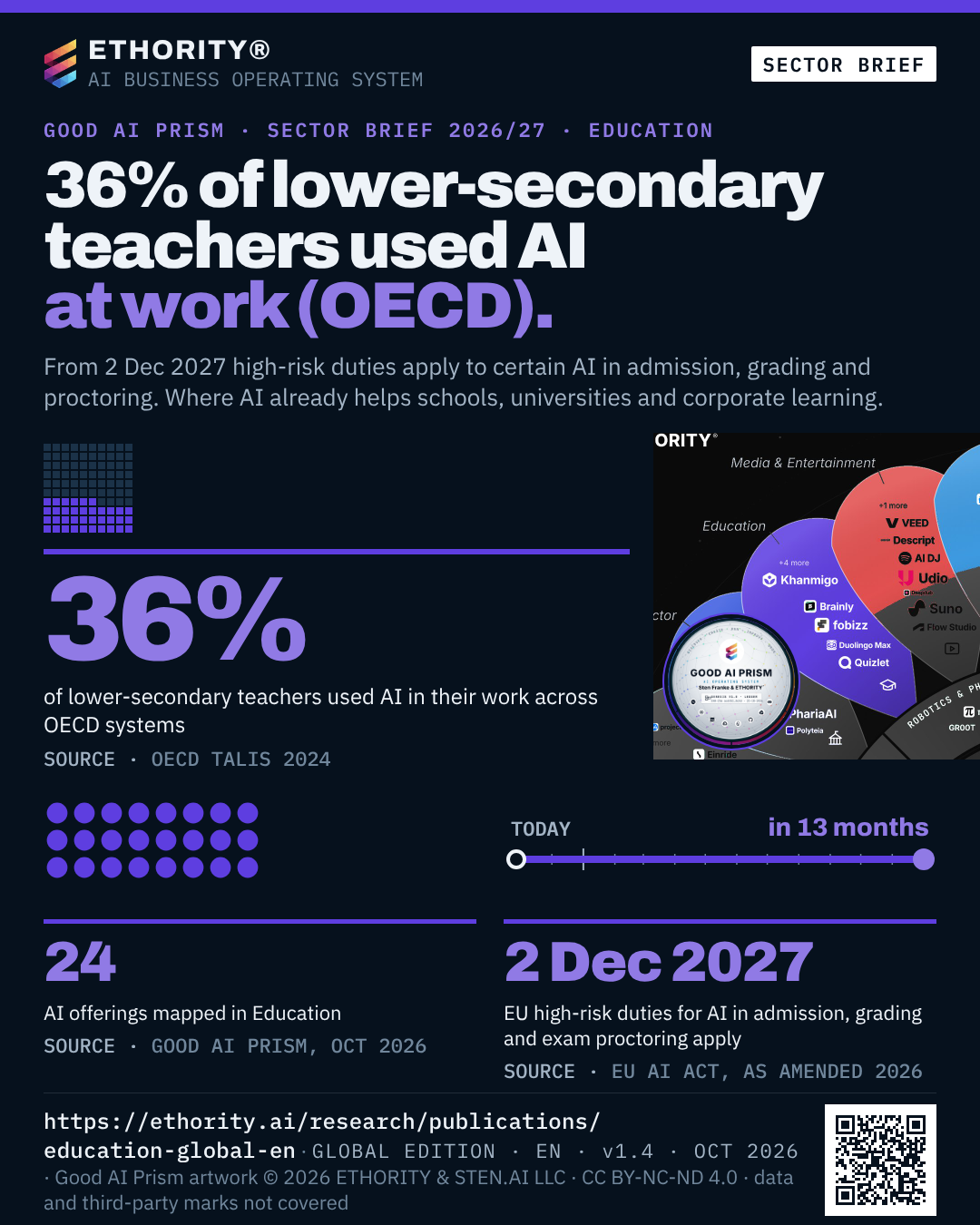
- 1 in 3
- lower-secondary teachers used AI in their work across OECD systemsOECD TALIS 2024 · oecd.org ↗
- 24
- AI offerings mapped in EducationGood AI Prism, Oct 2026
- 2 Dec 2027
- EU high-risk duties for AI in admission, grading and exam proctoring applyEU AI Act (as amended by Reg. (EU) 2026/1744) · eur-lex.europa.eu ↗
The world is 44 million teachers short.
The world needs 44 million more teachers by 2030, so AI arrives in a profession already under pressure.
UNESCO and Teacher Task Force, Global Report on Teachers
Corporate learning leads the market map.
Seven of the 24 offerings mapped in Education serve corporate learning and course creation.
Good AI Prism 2026/27 study dataset, Oct 2026
Guided tutors add 1.5 to 2 years of learning.
Six weeks of guided GPT-4 tutoring in Nigeria raised learning by 0.31 standard deviations, about 1.5 to 2 years of schooling.
World Bank, De Simone et al., 2025
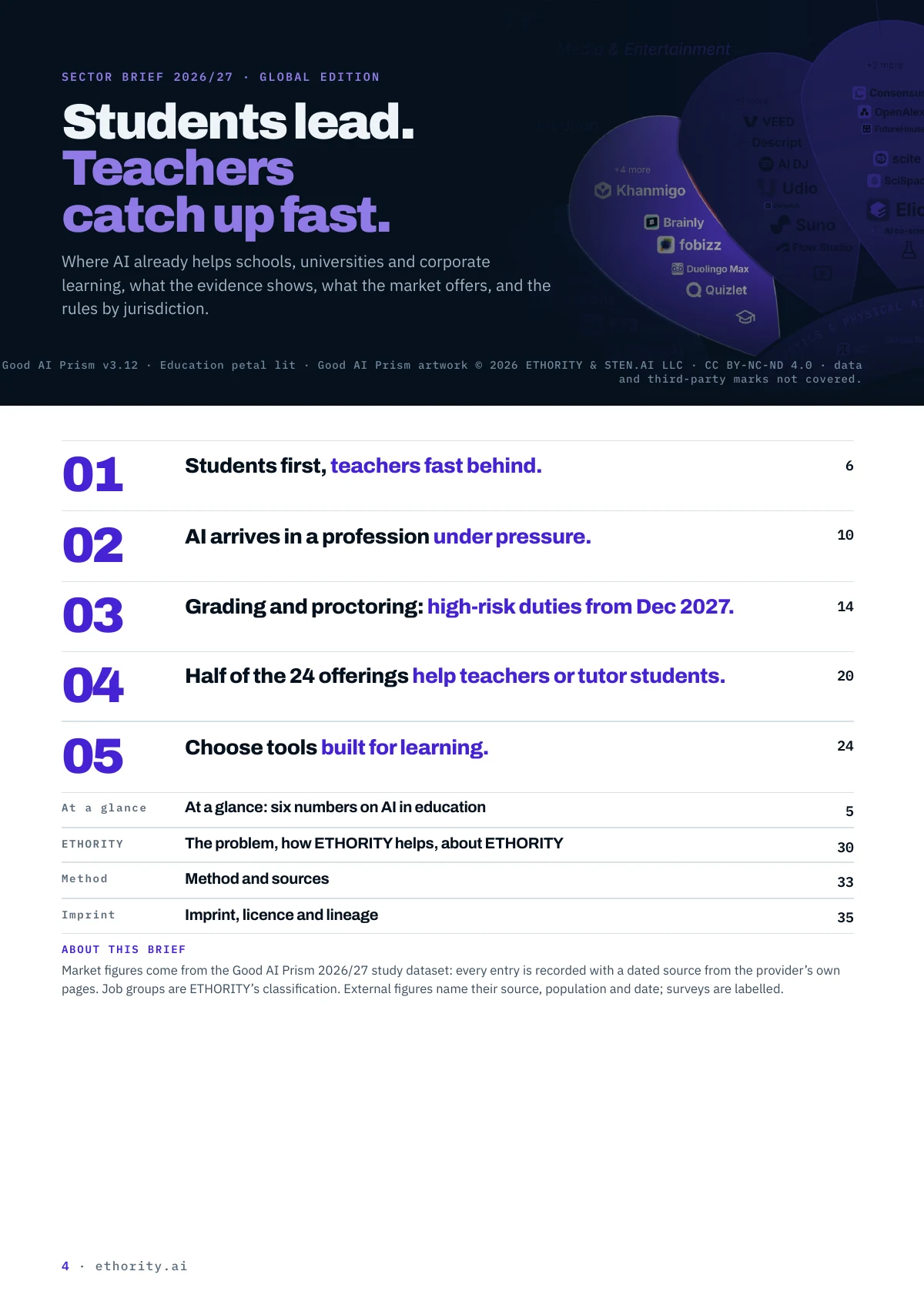
What's inside
- Students first, teachers fast behind. Who uses AI in schools, universities and academies, and why design decides the effect.
- AI arrives in a profession under pressure. Teacher shortages, skills gaps and what teachers expect from AI.
- Grading and proctoring: high-risk duties from Dec 2027. The AI Act dates, Germany's building blocks and the rules in nine jurisdictions.
- Half of the 24 offerings help teachers or tutor students. The market map by job group and headquarters.
- Choose tools built for learning. Seven questions before a pilot, a workforce annex and a 90-day start.
The brief and the studies behind it
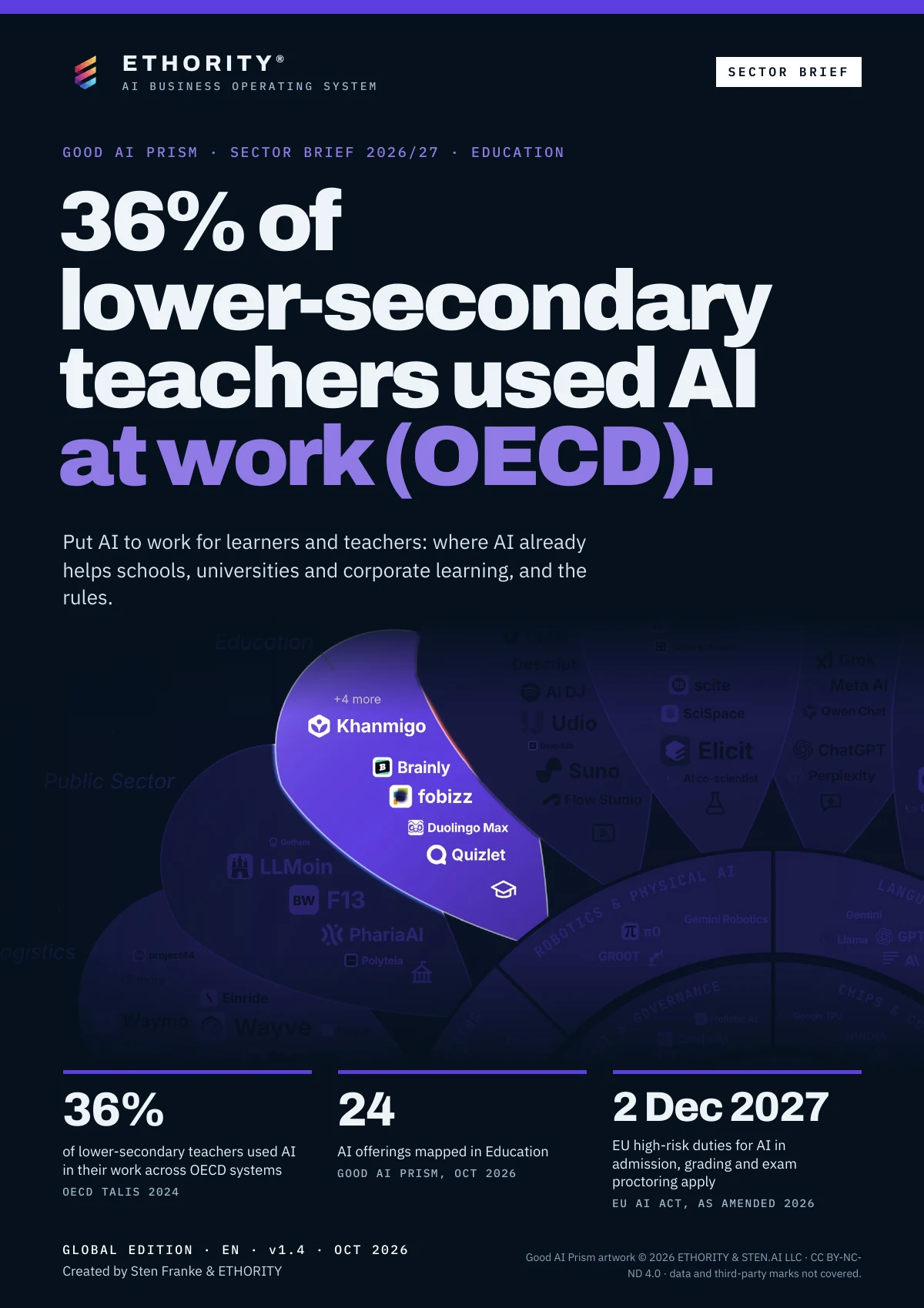
Global edition · EN
36% of lower-secondary teachers used AI at work (OECD).
From 2 Dec 2027 high-risk duties apply to certain AI in admission, grading and proctoring. Where AI already helps schools, universities and corporate learning.
Version 1.4 · 40 pages
Open the study →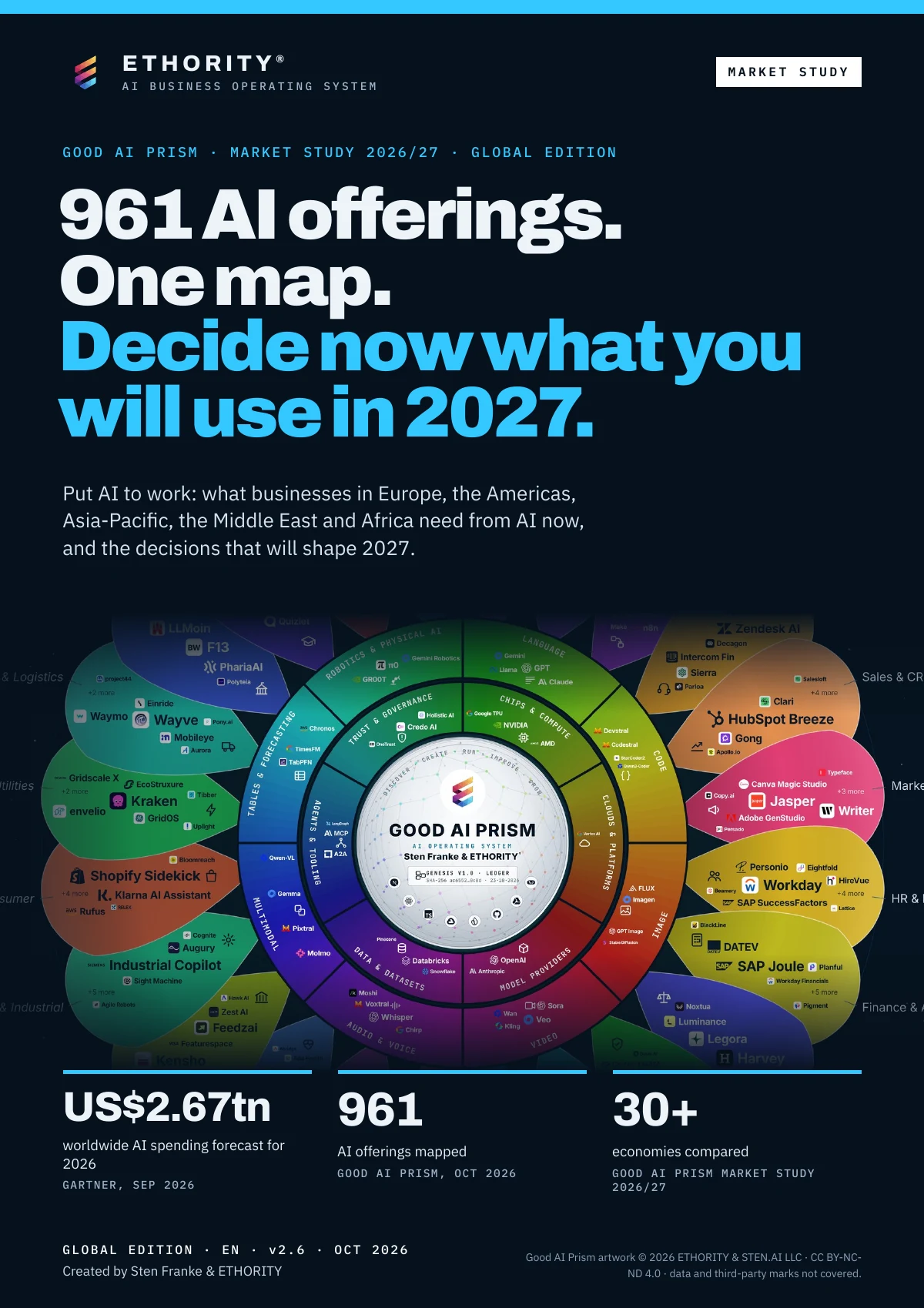
Global edition · EN
961 AI offerings. One map. Decide now what you will use in 2027.
The Good AI Prism helps you find useful AI and compare the evidence behind your options. For organisations already using AI, the question is moving from whether to use AI to which AI, how safely and whether it pays. This Global edition brings together 961 AI offerings across 24 topic areas, 8 data types and 6 technology layers, with sources, dates and limits to guide your next decision.
Version 2.6 · 90 pages
Open the study →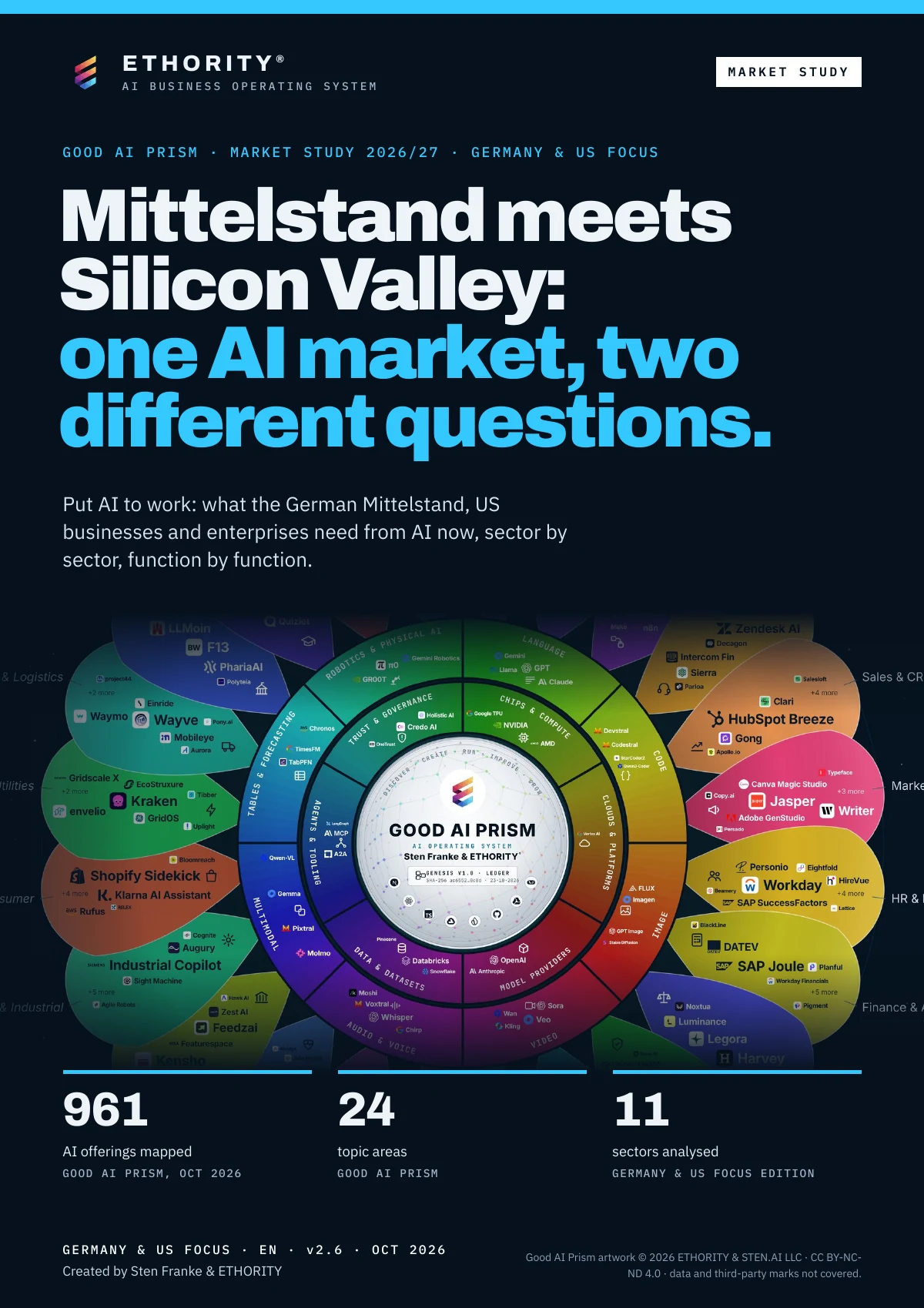
Germany & United States Focus · EN
Germany's mid-sized companies meet Silicon Valley: one AI market, two different questions.
The Mittelstand needs know-how; US firms need cost control. What German and US businesses need from AI now, sector by sector, function by function.
Version 2.6 · 72 pages
Open the study →About this brief
Who is this brief for?
For leaders of school authorities and school groups, universities, vocational schools, corporate academies, education ministries and EdTech providers who need to decide which AI belongs in learning and teaching.
What does the Good AI Prism map?
The Good AI Prism by Sten Franke & ETHORITY® maps the AI market on one wheel of 24 topic areas. In Education it places 24 offerings, each recorded with a dated source from the provider's own pages, and groups them by job: corporate learning, teacher assistants, tutoring, study tools and assessment.
Which edition is this, and where are earlier ones?
This is the Global edition in English, version 1.4 of 27 Oct 2026. Editorial revision: openings, claim scope and legal wording; navigation to ethority.ai added. v1.0 appeared on 22 Oct 2026, and the imprint lists every edition since. Earlier editions remain available, and a German edition for Germany appears alongside.
How do I cite it?
ETHORITY (2026). Good AI Prism Sector Brief: Education. Global edition, v1.4, October 2026. https://ethority.ai/research/publications/education-global-en
ETHORITY · LONG READ
Six weeks of guided AI tutoring, 1.5 to 2 years of learning.
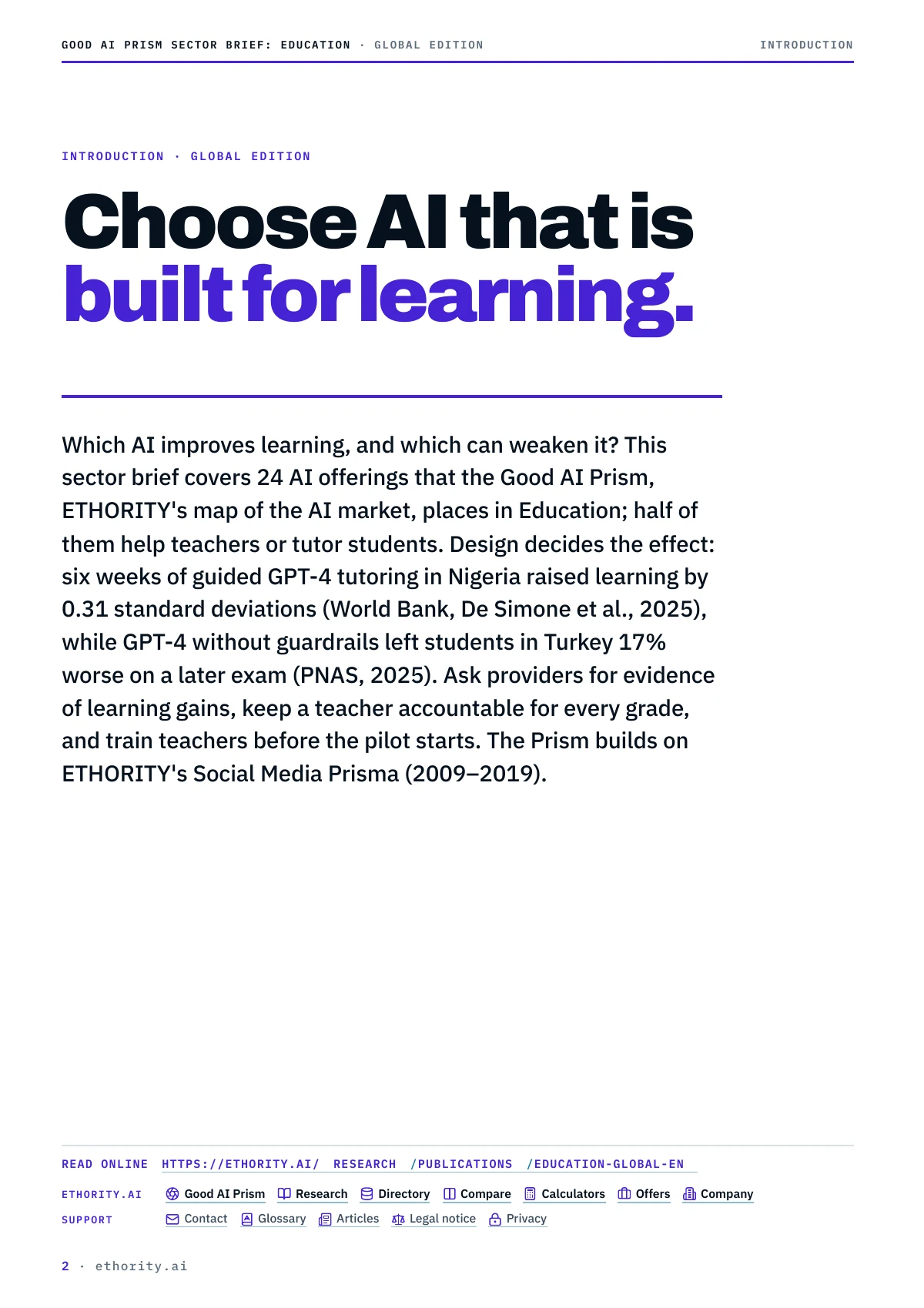
One in three teachers across OECD systems already uses AI, and students are further ahead. The Education brief shows what lifts learning, what the market offers and which rules apply from 2 Dec 2027.
Design decides the effect
Six weeks of guided GPT-4 tutoring in Nigeria raised learning by 0.31 standard deviations, about 1.5 to 2 years of typical schooling, a World Bank study found. The same technology without guardrails did the opposite: Turkish students who practised with plain GPT-4 scored 17% worse on a later exam, according to a study in PNAS. The OECD Digital Education Outlook 2026 reaches the same conclusion: tools built for teaching work better than general chatbots.
That is the central finding of the Good AI Prism Sector Brief: Education. AI is already in every classroom through students' phones. The decision in front of schools, universities and company academies is which AI, designed how, and owned by whom.
Students first, teachers fast behind
Around one in three lower-secondary teachers used AI in their work across OECD systems in 2024, TALIS 2024 reports, from about three in four in Singapore and the UAE to 14% in France. Teachers use it most to learn about a topic (68%) and to plan lessons (64%); only a quarter apply it to student performance data.
Germany moved within a year: the share of teachers using AI for work several times a month or more rose from under a third to 52% (Deutsches Schulbarometer 2026). Students are further ahead. 84% of German 12- to 19-year-olds have used ChatGPT and 74% use AI for homework (JIM 2025). 95% of UK undergraduates use AI, 94% for assessed work (HEPI 2026), and 54% of US teens have used chatbots for schoolwork (Pew Research Center).
A profession under pressure
The world needs 44 million more teachers by 2030 (UNESCO and the Teacher Task Force). In Germany the education ministers project a gap of about 49,000 teachers to 2035, concentrated in lower secondary and vocational schools (KMK, Feb 2025). Skills are the main barrier: three in four teachers who do not use AI cite a lack of knowledge, and 52% of German teachers say they need training. Teachers are cautious, not hostile: two thirds expect negative effects on critical thinking, while 59% see benefits for individual support (Schulbarometer 2026).
The rules: high-risk duties for grading from Dec 2027
Emotion recognition in education institutions has been banned in the EU since 2 Feb 2025. From 2 Dec 2027, AI used for admission, grading, steering learning and exam proctoring carries high-risk duties under Annex III of the AI Act, with dates as amended by Regulation (EU) 2026/1744. Germany adds its own building blocks: the education ministers' recommendation on AI of October 2024, €5 billion for DigitalPakt 2.0 from 1 Sep 2026, and AIS.chat, a shared chatbot for all 16 Länder, hosted in the EU, with data not used for training (FWU). In England, the exam regulator asked exam boards to strengthen detection of AI misuse (Ofqual, Mar 2026).
What the market offers
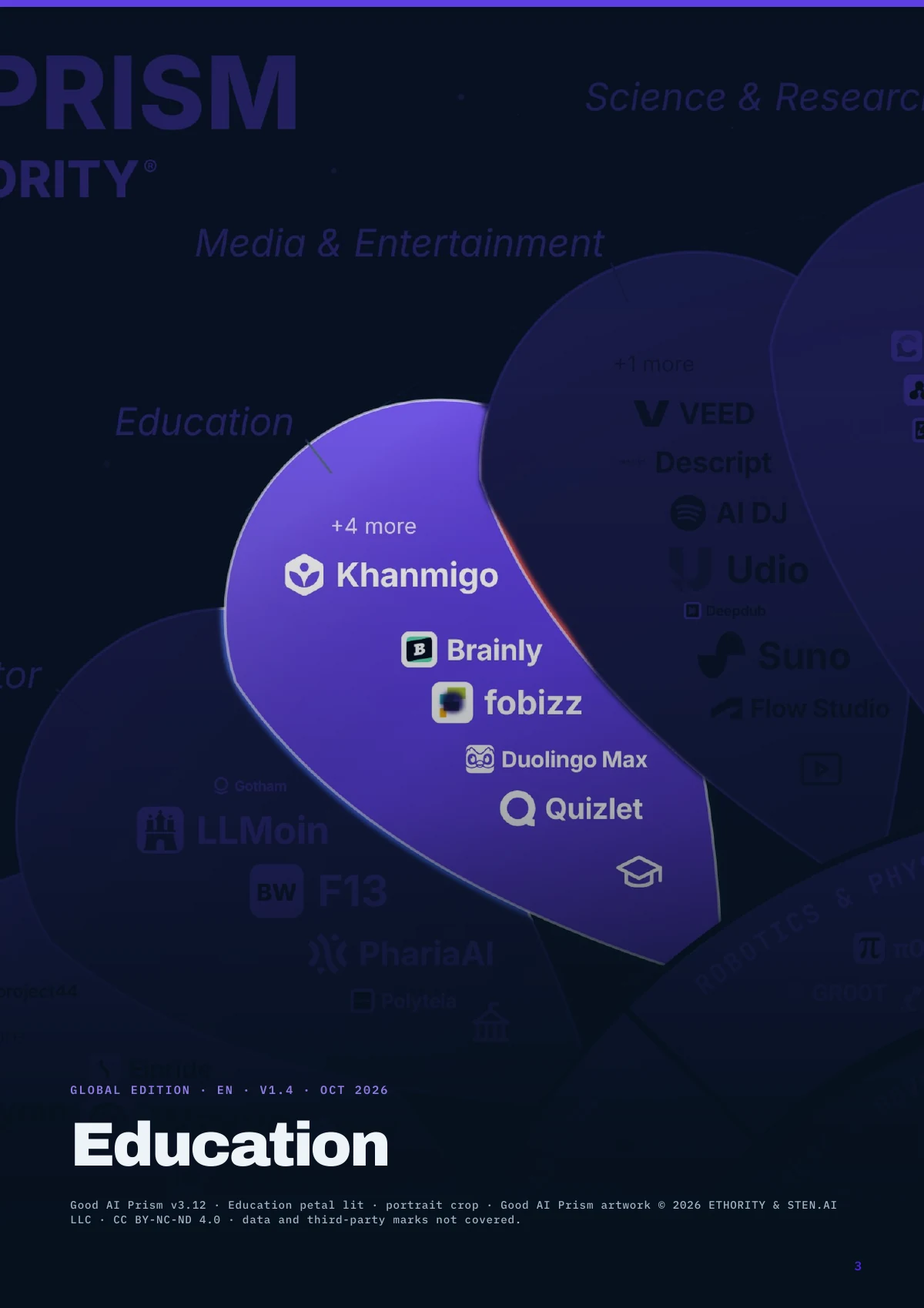
The Good AI Prism places 24 offerings in Education. Seven serve corporate learning and course creation, among them Docebo Harmony, 360Learning AI Content Builder and Sana Learn. Six help teachers prepare lessons, such as MagicSchool, Brisk Teaching and fobizz. Six tutor students directly, including Khanmigo and AIS.chat. Three are course, language and study tools, such as Duolingo Max and NotebookLM, and two support assessment: Gradescope and Kahoot! AI tools. 12 of the 24 offerings come from providers headquartered in Europe, five of them in Germany. The Education area of the Prism shows every entry with its source and date.
What to do Monday
- List every AI tool in use, including the ones teachers and students bring themselves.
- Separate preparation and tutoring from grading, admission and proctoring, and map each use to the rules; the second group carries high-risk duties from 2 Dec 2027.
- Prefer tools built for learning, with pedagogical guardrails and evidence, over general chatbots.
- Train teachers first and document AI literacy measures, with a named teacher accountable for every grade.
- Pilot one guided tutoring or preparation use with a baseline, and scale only on measured learning gains, teacher time and equity.
Sources and further reading
- De Simone et al., World Bank Policy Research Working Paper 11125 ↗ · 2025
- Bastani et al., PNAS 122(26) ↗ · 2025
- OECD, Digital Education Outlook 2026 ↗ · Jan 2026
- OECD, Results from TALIS 2024 ↗ · Oct 2025
- Robert Bosch Stiftung, Deutsches Schulbarometer 2026 (forsa, n = 1,547) ↗ · 23 Jun 2026
- mpfs, JIM-Studie 2025 ↗ · Nov 2025
- HEPI and Kortext, Student Generative AI Survey 2026 ↗ · 2026
- Pew Research Center, How teens use and view AI ↗ · 24 Feb 2026
- UNESCO and Teacher Task Force, Global Report on Teachers ↗ · 2024
- KMK, teacher demand and supply projection ↗ · Feb 2025
- Regulation (EU) 2024/1689 (AI Act), Annex III point 3 ↗ · 2024
- Regulation (EU) 2026/1744, Digital Omnibus on AI ↗ · 2026
- KMK recommendation on AI in schools ↗ · 10 Oct 2024
- BMBFSFJ, DigitalPakt 2.0 starts on 1 September ↗ · 19 Aug 2026
- FWU, telli becomes AIS.chat ↗ · May 2026
- Ofqual, letter to exam board CEOs ↗ · 2 Mar 2026
YOUR NEXT STEP
Discuss your question with Sten Franke.
Bring your business question or the figures you already know. ETHORITY investigates within the agreed scope; together with Sten Franke you agree the next piece of work.