 ETHORITY®

ETHORITY · Products & services
Five ways to start, from €195 net.
Start with the free market map, an entry offer from €195 net or a founder-led service with published terms. Further products keep your AI running once it is in use.
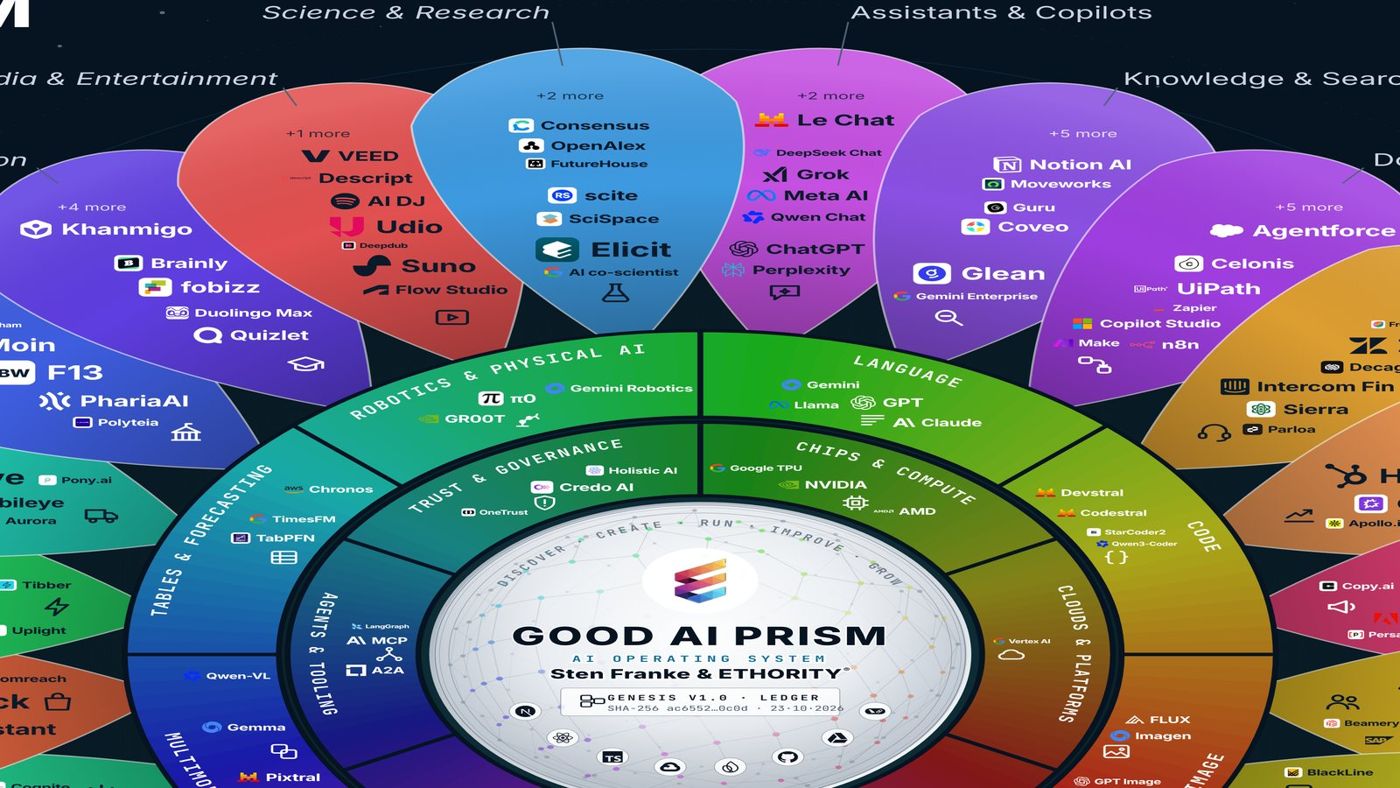
Five ways to start, from €195 net.
All products → Start hereAI Decision Brief€195 netOne-time · 5 working daysCompare up to three AI offerings on dated facts before you buy.See the offer →
 AI Business Blueprint€495 netone-timeTurn one business goal into an AI plan for the next 90 days.See the offer →
 AI Trust Record€4,500 netOne-time · 10 working daysGet a clear answer on one AI system: pilot, redesign, expand or stop.See the offer →
 AI Trust Pilot€25,000 netOne-time · six weeksRun one AI use case under real conditions, with stop rules agreed upfront.See the offer →
 AI Opportunity CasePriced after scopingStandard 4 weeks · Extended 6 weeksKnow what would make an AI investment of about €200,000 or more pay.See the offer →
Portfolio, evidence and full scope
- 3
- offerings compared in an AI Decision BriefETHORITY offer terms, Oct 2026
- 10
- working days for an AI Trust Record, from receipt of the agreed inputsETHORITY offer terms, Oct 2026
- 6 weeks
- for a supervised pilot under real conditions (AI Trust Pilot)ETHORITY offer terms, Oct 2026
- 961
- AI offerings in the October 2026 study · 485 profiles in the online catalogueGood AI Prism, Oct 2026
A shortlist of three needs dated facts.
The AI Decision Brief puts the facts that decide the purchase side by side, each with its source and date.
ETHORITY offer terms, Oct 2026
Four answers for one system: pilot, redesign, expand or stop.
The AI Trust Record writes down whether and why you can trust a system, and when to look again.
ETHORITY offer terms, Oct 2026
One assumption can flip an AI business case.
In a customer-service Scenario, 36 seconds of extra checking turns +€11,336 into −€1,624.
ETHORITY Opportunity Case Scenario, Oct 2026
The five entry offers
AI Decision Brief
€195 net · one-time
Up to three shortlisted AI offerings side by side: decision facts with source and date, open provider questions and a cost sketch on your volumes.
Request scope and delivery
See what this package includes →AI Business Blueprint
€495 net · one-time
One business objective turned into an AI operating plan: work map, opportunity map, human-and-AI model, economic frame and a 30/60/90-day roadmap.
Request scope and delivery
See what this package includes →AI Trust Record
€4,500 net · one-time
Standard scope: one named AI system, one clear answer: pilot, redesign, expand or stop. You also get a Trust Chain (a linked record of who approved what), an evidence register and an owner map.
Request scope and delivery
See what this package includes →AI Trust Pilot
€25,000 net · one-time
One AI use case run under real conditions, with owners, evidence, review and stop conditions agreed before it starts.
Request scope and delivery
See what this package includes →AI Opportunity Case
Priced after scoping
A business case for one large AI investment of about €200,000 or more, compared with real alternatives including no AI, with full economics and a signed decision record. Four to six weeks.
Scope and delivery by agreement
See what this package includes →Read before you decide
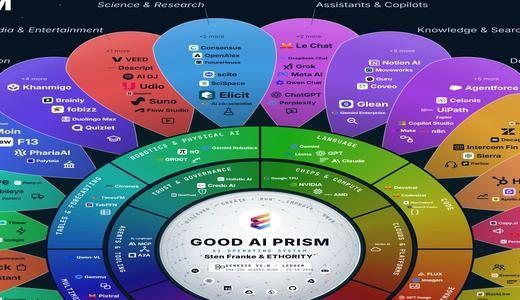
961 AI offerings. Start with the job, not the tool.
A method for going from one business need to a shortlist of AI offerings you can defend.
See the map on one page →
A marketplace listing does not make an AI agent trustworthy.
When you buy AI agents, keep identity, offer, payment, evidence and trust apart, and grant rights only after purchase.
See the map on one page →
Saved hours are not AI value.
Separate a better task, freed-up time and a business result, so you can show the value AI really delivers.
See the map on one page →Test your numbers first
Each decision offer has a matching calculator: Stack Builder for the Brief, Capacity Conversion for large bets, Journey Planner for the Blueprint. All tools sit in the ETHORITY AI calculator suite.
Stack Builder
Area, data type and constraints in; six technology layers with matching registry offerings and models out.
Pilot version · Scenario calculator
Open the calculator →Capacity Conversion calculator
Shows how much of the time AI saves becomes money, including the 36-second checking test as a Scenario.
Pilot version · Scenario calculator
Open the calculator →AI Journey Planner
A plan from the first idea to scaling up, with milestones, owners, checkpoints and the EU AI Act dates in that period.
Pilot version · Scenario calculator
Open the calculator →One decision, four steps
- Choose
Pick the offer that matches your question: shortlist, objective, system, use case or investment.
- Confirm
Sten Franke confirms inputs, scope and delivery date.
- Build
ETHORITY works from dated market facts and your figures.
- Decide
You receive one signed answer with its evidence and next step.
Sten Franke leads every project.

Sten Franke
Founder & CEO
Sten Franke designs and builds AI systems, from model testing and cloud setup to the interfaces people use. He connects business decisions, software architecture and practical implementation.
AI architecture · Model testing · Cloud engineering · UX
His work spans programming, LLM evaluation, Google Cloud and AWS environments, and web applications built with Next.js and React. He connects business requirements, software architecture and practical implementation. Creator of the Good AI Prism, he brings market intelligence into AI decisions. Earlier, he created the Social Media Prisma, led a BVDW Social Media working group and contributed to its Social Media Kompass. His entrepreneurial work includes ethority, Gridpatrol and mediatime, following a practical foundation in electronics and industrial robotics.
sten@ethority.aiQuestions buyers ask
How do these differ from the enterprise services?
Each decision offer answers one bounded question. The founder-led enterprise services cover a whole organisation.
Which offer fits a shortlist?
The AI Decision Brief, requested straight from Compare.
Which fits one system we already use?
The AI Trust Record; if the answer is pilot, the Trust Pilot follows.
Why is the AI Opportunity Case priced after scoping?
Its scope depends on the investment and the number of options, so the fee is agreed in writing after scoping.
Which offer fits a large investment?
The AI Opportunity Case for large bets: three to five options including no AI, full economics and a signed Decision Record.
Next step
If you are unsure where to start, ask what you already hold. A shortlist points to the AI Decision Brief. An objective without a shortlist points to the AI Business Blueprint. A system already in use points to the AI Trust Record. A use case that someone wants to scale points to the AI Trust Pilot. A large budget request points to the AI Opportunity Case. And if the honest answer is all of the above, across the company, the AI Readiness & Maturity Check, one workshop day followed by the written assessment, sorts the questions before any of them is bought.
ETHORITY · LONG READ
One decision at a time: how the five entry offers fit together
Not every AI question needs a programme. Some need a table of facts, some a plan, some a written judgement on one system, some six weeks under real conditions. The five entry offers match the size of the answer to the size of the question.
AI decisions come in different sizes. A team choosing between three customer-service assistants faces a different question from a board weighing a platform commitment. Treating both the same wastes time on the first and takes the second too lightly. The five entry offers are built to match the effort to the decision.
Compare: the AI Decision Brief
The smallest question is often the most common: which of these three offerings fits us? The AI Decision Brief is requested directly from Compare in the Good AI Prism. It puts the facts that decide a purchase side by side, each with its evidence class and read date, applies the pricing to your volumes and lists what to ask each provider before signing. Where a provider does not publish a fact, the Brief turns it into a question for that provider. Facts age fast: research for the Good AI Prism study found 34 product renames within a few weeks.
Plan: the AI Business Blueprint
Sometimes the question comes before any shortlist: where could AI change this part of our work at all? The AI Business Blueprint starts from one business objective and the work behind it. It maps the work, the opportunities and the technology patterns, frames the economics with every figure marked as known or still required, and ends with two to four options and a 30/60/90-day roadmap. Its one-page executive decision is written to be forwarded.
Judge: the AI Trust Record
Many AI systems are already in use and growing quietly. The AI Trust Record asks whether one named system can be used for its purpose with clear responsibility, adequate evidence, known limits and an agreed review path. It answers in ten working days with one of four decisions, pilot, redesign, expand or stop, and a Trust Chain that shows where the evidence is strong and where it is weak. A 90-day list of review triggers keeps the decision alive.
Test: the AI Trust Pilot
When the answer is "pilot", the AI Trust Pilot runs one agreed use case in one department for six weeks. The difference from an ordinary pilot is that success and stop conditions are agreed before the first live case, and the baseline is measured before AI is involved. The pilot ends with a decision package.
Decide: the AI Opportunity Case
The largest decisions, investments of roughly €200,000 or more, go to the AI Opportunity Case. It compares three to five real options, always including doing nothing, and models full costs with the assumptions that can break them. A customer-service Scenario shows the point: a best case of +€11,336 becomes −€1,624 when each AI-written reply needs 36 more seconds of checking. The result is a signed decision record, and the price is set after scoping.
How they connect
The offers lead into each other. A Blueprint often produces a shortlist for a Decision Brief. A Trust Record that says pilot leads into a Trust Pilot. An Opportunity Case that says "test first" hands its pilot plan to the same structure. When a question grows beyond one decision, the founder-led enterprise services take over with a whole-organisation view.
All five share three rules. Facts carry a source and a date. Missing evidence becomes a question or a condition. And a named person, Sten Franke, confirms the scope before work starts and stands behind the result. That turns even a small entry offer into a decision you can defend.
Choosing in practice
If you are unsure where to start, ask what you already hold. A shortlist points to the Brief. An objective without a shortlist points to the Blueprint. A system already in use points to the Trust Record. A use case that someone wants to scale points to the Trust Pilot. A large budget request points to the Opportunity Case. And if the honest answer is all of the above, across the company, the one-day Readiness & Maturity Check sorts the questions before any of them is bought.
Each offer page shows what you receive, how the work runs, what you need to bring and where the boundary lies. Each one is a decision with its evidence attached, sized to the question in front of you.
Sources and further reading
YOUR NEXT STEP
Discuss your question with Sten Franke.
Bring your business question or the figures you already know. ETHORITY investigates within the agreed scope; together with Sten Franke you agree the next piece of work.