 ETHORITY®
GOOD AI PRISM · TECHNOLOGY LAYER · DATASETS
12 training datasets. 5 need a licence check.
Choose data you may use: 12 dataset cards compare size, licence, languages and time span, each with the publisher's source and the date we read it.
- 12
- training datasets profiled fact by factGood AI Prism Registry, read 25 Oct 2026
- 15T
- English tokens in FineWeb, under ODC-By 1.0Hugging Face FineWeb, 2024 · huggingfacefw-blogpost-fineweb-v1.static.hf.space ↗
- 300bn+
- web pages in the Common Crawl archiveAWS Open Data, read 25 Oct 2026 · aws.amazon.com ↗
- 137
- languages in Mozilla Common Voice 22.0Mozilla, 25 Jun 2025 · discourse.mozilla.org ↗
The benchmark classic is research-only.
ImageNet's access agreement limits its 1.28 million training images to non-commercial research and education.
ImageNet access agreement, read 25 Oct 2026
Quality filters drop most of the web.
FineWeb-Edu's stricter threshold removes 92% of FineWeb to keep educational-quality pages.
Hugging Face FineWeb, 2024
Deduplication is half the story.
About 40% of permissively licensed files in The Stack v2 were duplicates before deduplication.
BigCode, The Stack v2 dataset card, read 25 Oct 2026
Web text
Crawled and filtered web corpora. All start from the Common Crawl archive; filters, languages and licences differ.
Common Crawl
Common Crawl · Dataset
Open repository of web crawl data that anyone can access and analyse; widely used to train language models.

FineWeb
Hugging Face · Dataset
Open dataset of more than 18.5 trillion tokens of cleaned, deduplicated English web text from Common Crawl, for language-model pretraining research.
Images, speech and encyclopedia
The widest spread of terms: from research-only to CC0.
LAION-5B
LAION · Dataset
Open dataset of 5.85 billion image-text pairs for training image models.
Datasets and data platforms are different cards
A dataset card describes a corpus: what it contains, under which licence, in which languages and with which gaps. Data platforms and vector databases are software, so they keep product cards with price, hosting and training terms in the Data & Analytics area. Cross-links work both ways: a platform card can name the datasets it hosts, for example Common Crawl on AWS Open Data.
Read the evidence
Global edition · EN
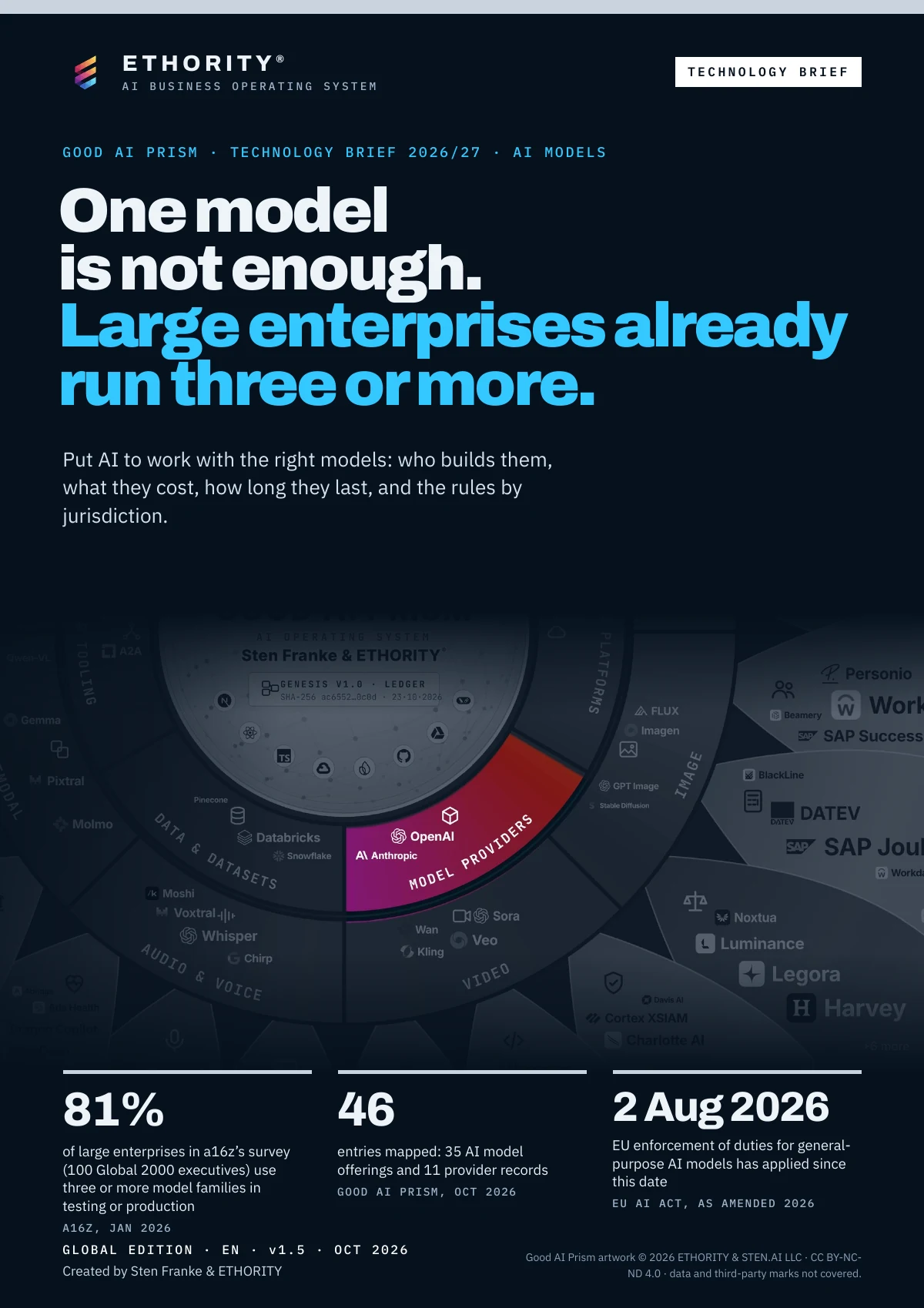
One model is not enough. Large enterprises already run three or more.
81% of large enterprises use three or more model families. Who builds AI models, what they cost, how long they last, and the rules by jurisdiction.
Version 1.5 · 38 pages
Open the study →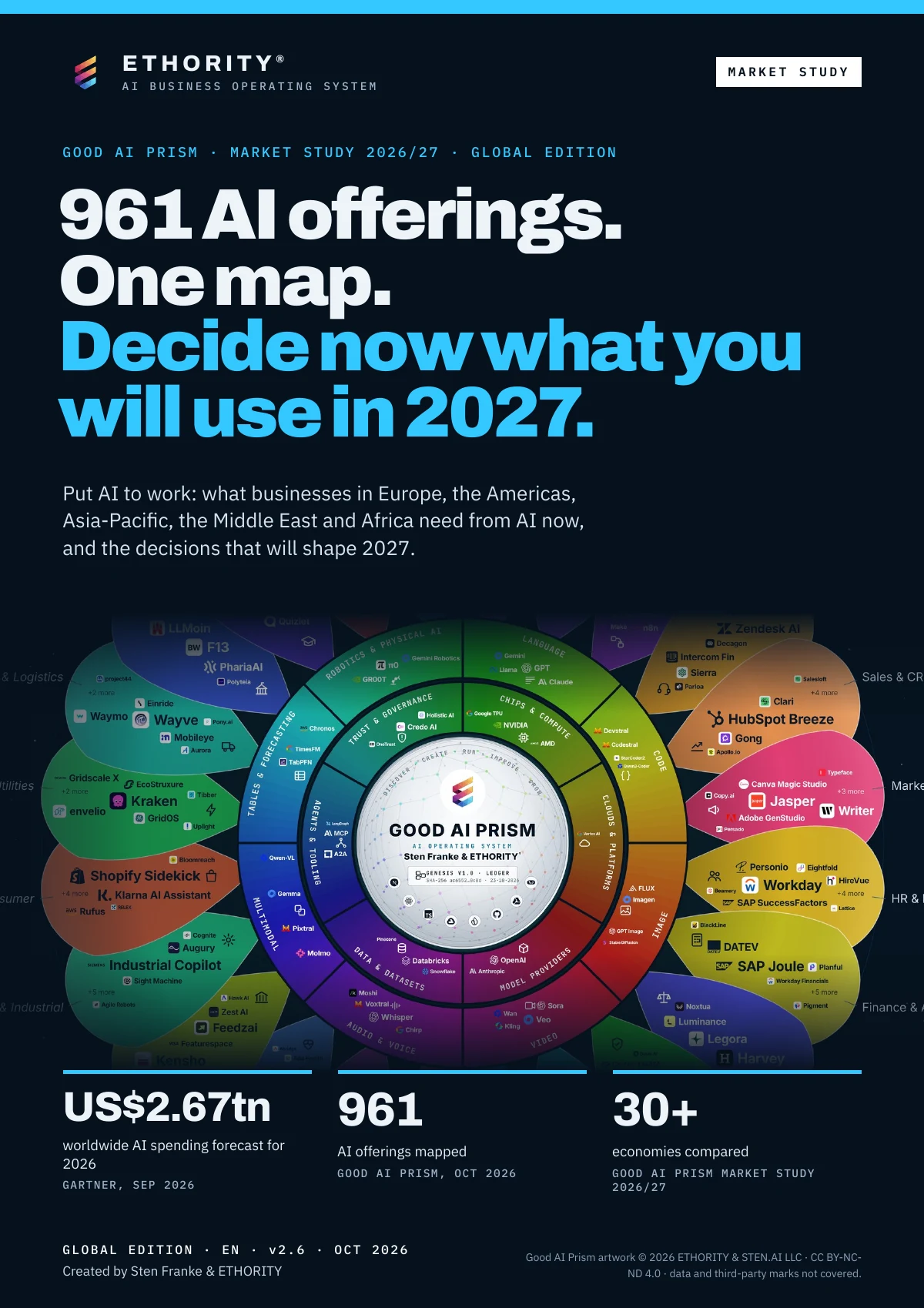
Global edition · EN
961 AI offerings. One map. Decide now what you will use in 2027.
The Good AI Prism helps you find useful AI and compare the evidence behind your options. For organisations already using AI, the question is moving from whether to use AI to which AI, how safely and whether it pays. This Global edition brings together 961 AI offerings across 24 topic areas, 8 data types and 6 technology layers, with sources, dates and limits to guide your next decision.
Version 2.6 · 90 pages
Open the study →Related insights
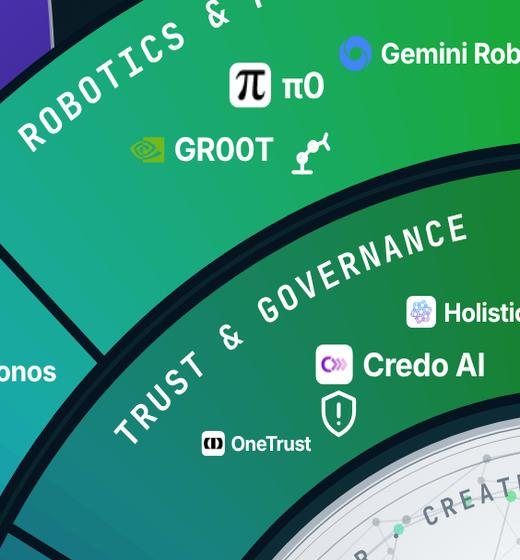
Check every vendor claim before you rely on it.
Tie every vendor claim to the exact product, version, contract and use before you rely on it.
See the map on one page →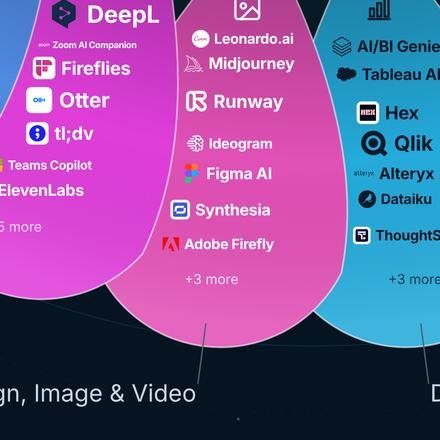
Synthetic media now needs a label almost everywhere.
What has changed for AI-generated faces and voices since Microsoft's VASA-1 model in 2024, and the labelling rules in the EU, China, Korea and India.
See the map on one page →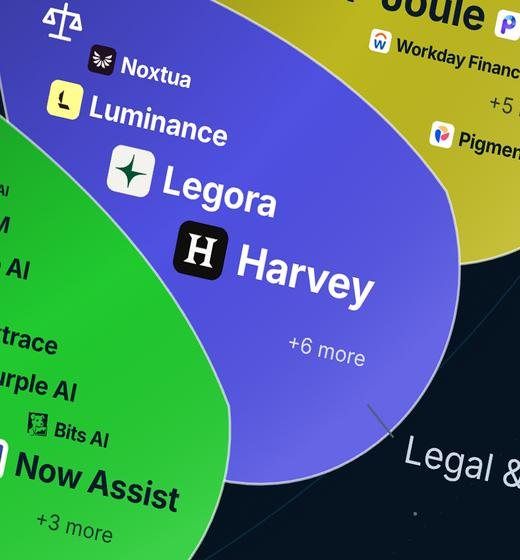
Ten AI ethics issues now have legal dates.
The ten AI ethics issues of 2024 now each have a legal date, a measurable control or published evidence.
See the map on one page →Implement it with ETHORITY
AI Decision Brief
€195 net · one-time
Puts the facts that decide between two or three options side by side, each sourced and dated, with the questions to ask each provider.
Request scope and delivery
See what this package includes →Enterprise AI Opportunity Case
Priced after scoping
Compares real options, including doing nothing, models the economics and the assumptions that can break them, and recommends: start, change, test first or stop.
Scope and delivery by agreement
See what this package includes →Buyer questions
Can we use these datasets in a commercial product?
It depends on the dataset and on the rights underneath. ImageNet is research-only, The Stack v2 follows each file's licence, and LAION advises against product use. Ask counsel before relying on any of them.
Does an open licence clear all rights?
No. ODC-By or CC BY-SA cover the compilation; crawled pages, code files and linked images keep their owners' rights, and the Common Crawl terms of use also apply.
Which datasets cover German?
RedPajama-Data-v2 includes German, Common Voice covers 137 languages and Wikipedia has 300+ editions. FineWeb, FineWeb-Edu and Dolma are English only.
What should we ask a model provider about training data?
Which corpora, which licences, which filters and how removal requests are handled. Under the EU AI Act, providers of general-purpose models must publish a training-content summary.
How current are the cards?
Each fact shows its source and the date we read it; the current cards were read on 25 Oct 2026. The Models hub shows which models were trained on what, where providers say so.
ETHORITY · LONG READ
Which dataset, for which job, under which terms
Five of 12 widely used training datasets carry a condition that matters before product use. Here is what the licences, languages and filters say, and five questions to ask before your model learns from them.
Every AI model is built on data someone else collected. When you fine-tune a model, train your own or buy a tool that did, the dataset's licence, coverage and gaps become your licence, coverage and gaps. The Good AI Prism now profiles 12 of the most widely used public training datasets, fact by fact. Five of them carry a condition that matters before product use.
The web is the base layer, and it is a sample
Most text datasets start from Common Crawl, a non-profit archive of more than 300 billion web pages, with 2.3 to 2.7 billion pages added per monthly crawl, according to the AWS Open Data account. Its own FAQ is precise about what that is: a sample of the web, not a complete copy, collected by a crawler that obeys robots.txt. Copyright in the pages stays with their owners.
Curated corpora filter that base. FineWeb from Hugging Face distils 96 crawl snapshots into 15 trillion English tokens under ODC-By 1.0. FineWeb-Edu goes further: an educational-quality classifier keeps only the best-scoring pages, and at its stricter threshold it removes 92% of FineWeb. RedPajama-Data-v2 takes the other approach. It ships 30 trillion deduplicated tokens in five languages, English, French, Spanish, German and Italian, plus more than 40 quality signals, and leaves the filtering to you.
92%. The share of FineWeb that FineWeb-Edu's stricter quality threshold removes. Most of the web is not what you want a model to learn from.
The lesson for buyers is that "trained on the web" says little. Ask which crawl, which filter, which language filter and which deduplication. FineWeb and Dolma are English only. If your users write in German, that is a coverage fact, not a detail.
Dolma from Ai2 mixes 15 sources, from web pages and scientific papers to code, books and Wikipedia, into about 2.3 trillion tokens under ODC-BY. C4, the corpus behind many early models, is 305 GB of cleaned English web text, with a multilingual sibling, mC4, in more than 100 languages. Both licences also bind you to the terms of their sources.
Code and maths come with their own rules
The Stack v2 holds 67.5 TB of source code in more than 600 programming languages. Each file keeps its original licence, so use must follow those licences, with attribution where required. About 40% of permissive files were duplicates before deduplication, and the dataset may contain e-mail addresses or keys that were once public on GitHub. An opt-out tool and removal requests exist. OpenWebMath adds 14.7 billion tokens of mathematical web text with LaTeX.
Images and speech: read the terms twice
Image datasets show the widest gap between fame and permission. ImageNet, the benchmark classic with 1.28 million training images, is available under an access agreement "only for non-commercial research and educational purposes". LAION-5B lists 5.85 billion image-text links; LAION states that it does not recommend the set for ready-to-go industrial products and that the images stay under their owners' copyright. Its Re-LAION-5B release of 30 August 2024 removed links matched to abuse hash lists and privacy requests.
Speech looks different. Mozilla Common Voice release 22.0 holds 33,815 hours in 137 languages. Mozilla has released the data as CC0, free of copyright restrictions; confirm the terms for the release you use. Wikipedia text is available under CC BY-SA, which allows commercial use with attribution and share-alike duties.
What changes with the EU AI Act
Under the AI Act as amended in 2026, providers of general-purpose AI models must publish a summary of the content used for training and maintain a copyright policy. For buyers, that turns dataset questions into documents you can request. Ask for that summary explicitly, and for the date it was last updated. A provider who cannot say which corpora it used, under which terms, has given you an answer too.
Five questions before you use a dataset
- What does the licence allow for your use: research, commercial product, or redistribution?
- Whose rights sit underneath? Crawled pages, code files and linked images keep their owners' rights.
- Which languages and time span does it cover, and does that match your users?
- How was it filtered and deduplicated, and what did that remove?
- How are personal data and removal requests handled, and can you document it?
The dataset cards answer these where publishers do, each with source and read date. Data platforms and vector databases, the software that stores and serves data, sit in the Data & Analytics area as product cards. The models trained on these corpora are on the Models hub, and the AI Models brief explains what to ask a model provider about its training data.
Sources and further reading
- Common Crawl FAQ ↗ · read 25 Oct 2026
- AWS Public Sector blog: Common Crawl and AWS Open Data ↗ · read 25 Oct 2026
- FineWeb: decanting the web for the finest text data at scale ↗ · 2024
- RedPajama-Data-v2 ↗ · 30 Oct 2023
- The Stack v2 dataset card ↗ · read 25 Oct 2026
- ImageNet access agreement ↗ · read 25 Oct 2026
- LAION-5B ↗ · 31 Mar 2022
- Re-LAION-5B ↗ · 30 Aug 2024
- Common Voice 22.0 release ↗ · 25 Jun 2025
- Common Voice 18 dataset release (licence) ↗ · Jun 2024
- wikimedia/wikipedia dataset ↗ · Nov 2023
- Regulation (EU) 2026/1744 amending the AI Act ↗ · 2026
YOUR NEXT STEP
Discuss your question with Sten Franke.
Bring your business question or the figures you already know. ETHORITY investigates within the agreed scope; together with Sten Franke you agree the next piece of work.