Skip to content
ETHORITY®
Search ETHORITY
DE

GOOD AI PRISM · TOPIC AREA · SOFTWARE DEVELOPMENT

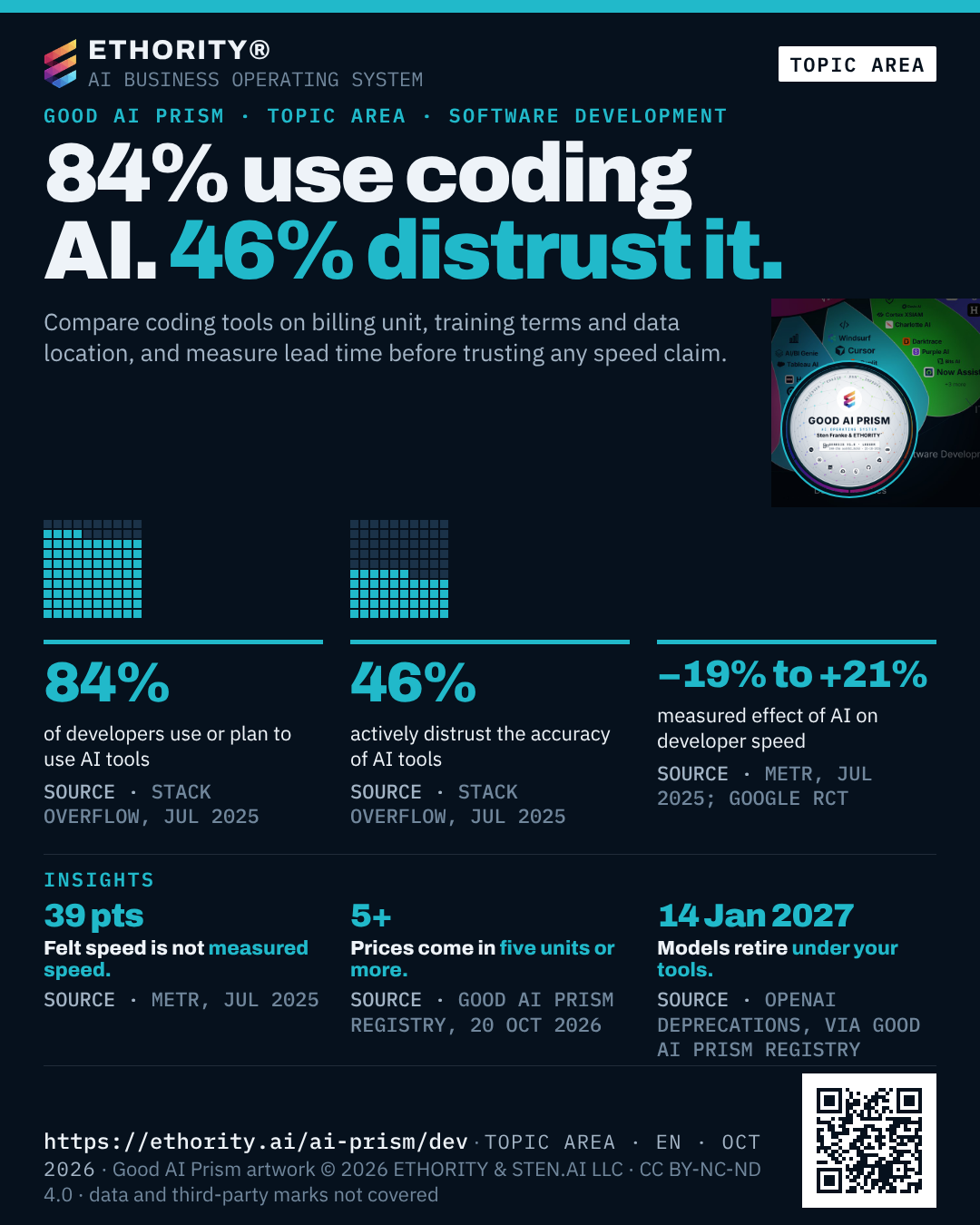
84% use coding AI. 46% distrust it.

Compare coding tools on billing unit, training terms and data location, and measure lead time before trusting any speed claim.
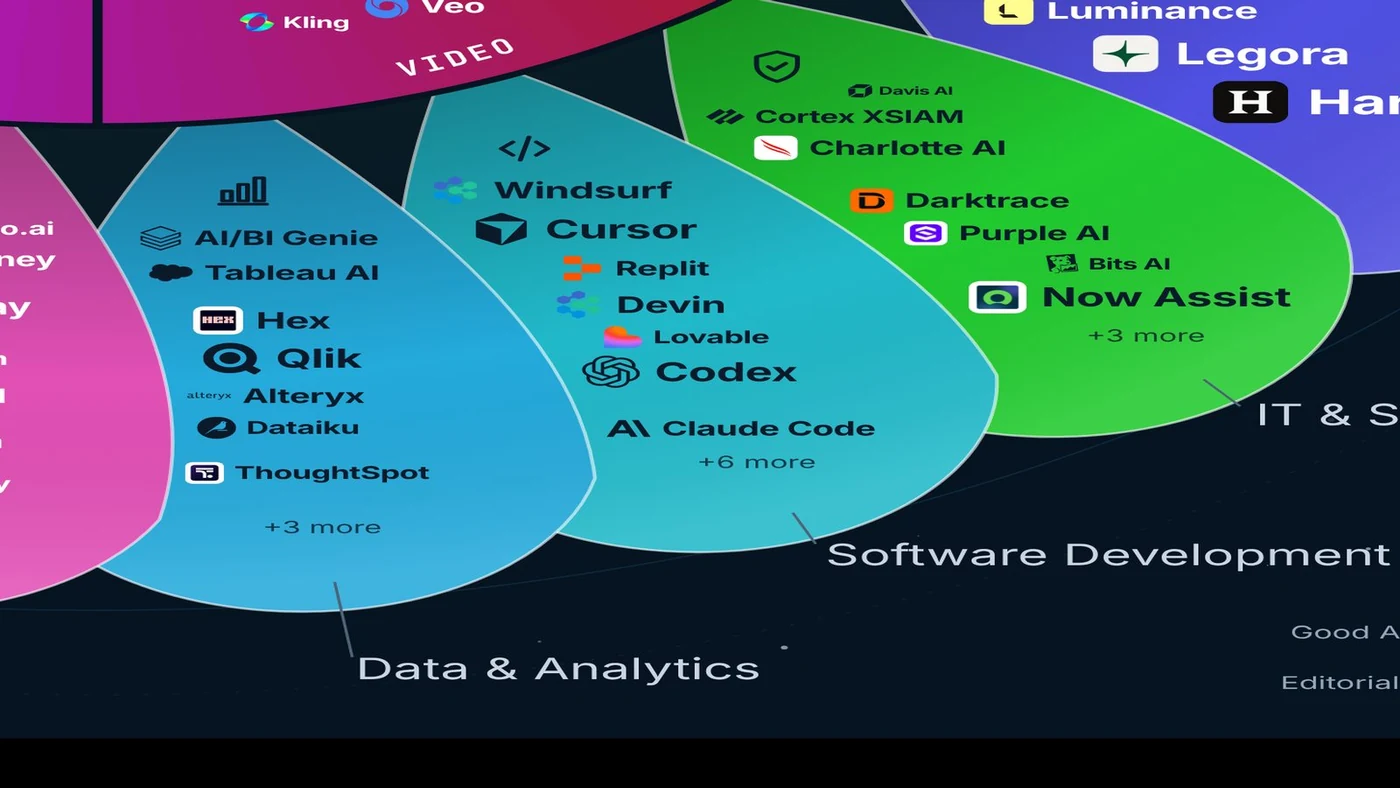
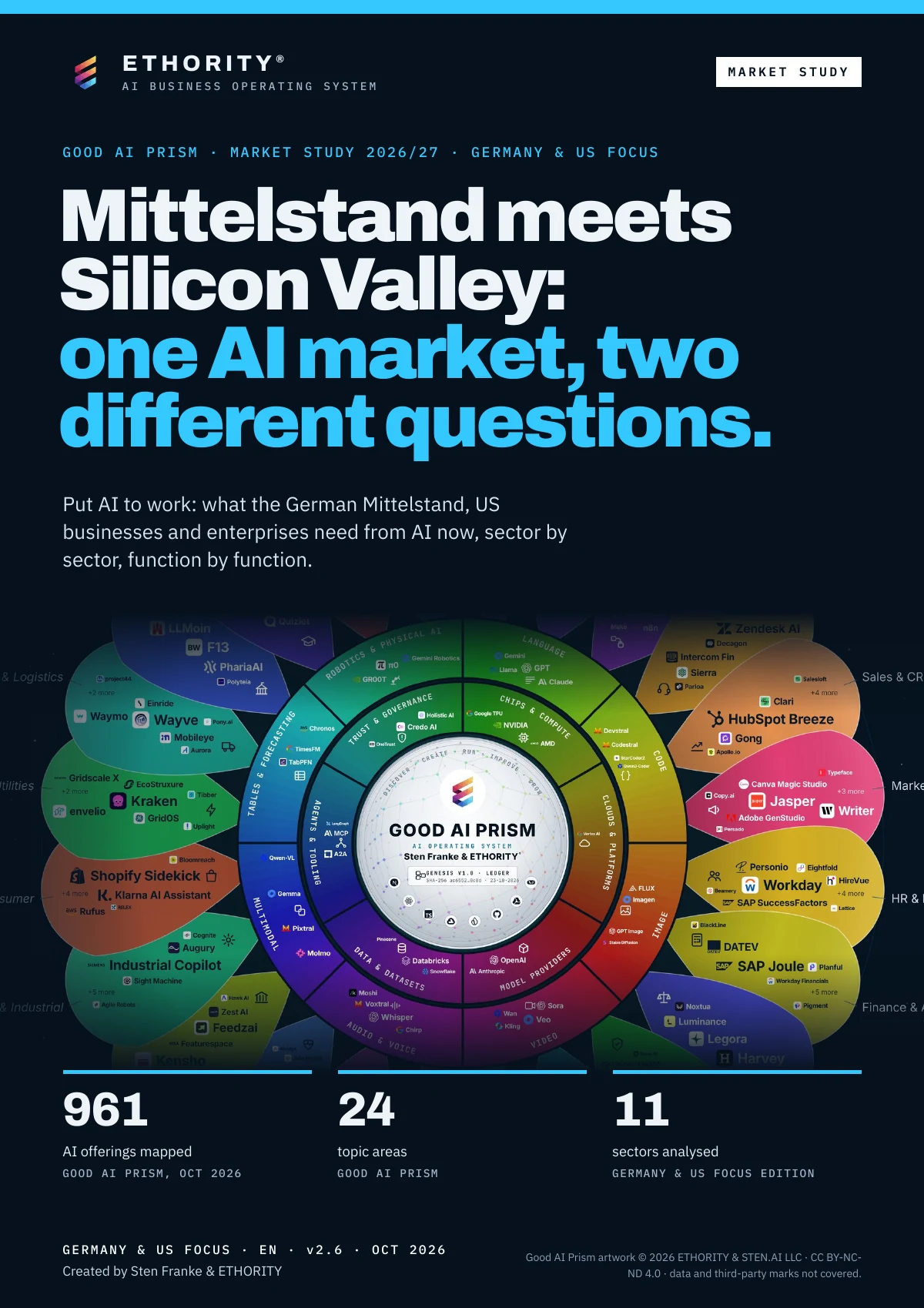
Good AI Prism v3.12 close-up: software dev
24
AI offerings placed in Software DevelopmentGood AI Prism, Oct 2026
84%
of developers use or plan to use AI toolsStack Overflow, Jul 2025 · survey.stackoverflow.co ↗
46%
actively distrust the accuracy of AI toolsStack Overflow, Jul 2025 · survey.stackoverflow.co ↗
−19% to +21%
measured effect of AI on developer speedMETR, Jul 2025; Google RCT · metr.org ↗
39 pts

Felt speed is not measured speed.

Developers in the METR trial believed AI made them 20% faster while it made them 19% slower.

METR, Jul 2025

5+

Prices come in five units or more.

The 12 profiled coding offerings bill in tokens, credits, seats, plan tiers or compute only.

Good AI Prism Registry, 20 Oct 2026

14 Jan 2027

Models retire under your tools.

OpenAI shuts down its GPT-4o and GPT-4.1 snapshots on this date; tools built on them change too.

OpenAI deprecations, via Good AI Prism Registry

How to use this page

Three tools and one offer turn this page into a decision.

Twelve coding offerings, fact by fact

Billing unit, price, training terms, data location and certifications, each with source and date.

● Documented by the provider○ Stated by the provider◐ ETHORITY analysis◌ Independent source
Software Development

xAI's grok-code-fast-1 (now aliased to grok-build-0.1) is a fast reasoning model with native tool calling, built to run multi-step agentic coding loops inside coding tools via an OpenAI-compatible API.

Published price
Context window
Model access
Deployment requirements
Open profile

Grok Build (grok-code-fast-1)

xAI · Model

Facts, sources and conditions

xAI's grok-code-fast-1 (now aliased to grok-build-0.1) is a fast reasoning model with native tool calling, built to run multi-step agentic coding loops inside coding tools via an OpenAI-compatible API.
Stated by the providerdocs.x.ai ↗

The model page is now headed Grok Build0.1 (grok-build-0.1), with grok-code-fast-1 listed as an alias. Provider pages name SpaceXSI. https://docs.x.ai/developers/models/grok-code-fast-1

Where it sits on the map · 1 · 1
What it is used for
Agentic coding model (tool-calling code agent backend)
ETHORITY analysisdocs.x.ai ↗

Derived from prompt-engineering guide and model card.

How it is billed
Per 1M tokens (input, cached input, output)
Unit: USD
Documented by the providerdocs.x.ai ↗

Requests above 200K context charged at different, unlisted rates; regional pricing mentioned but not shown.

Published price
Input $1.00 / cached input $0.20 / output $2.00 per 1M tokens
Unit: USD
Documented by the providerdocs.x.ai ↗

Grok Build 0.1, alias grok-code-fast-1, as described on the model page.

Where data is stored
No EU region stated; model page lists regions us-east-1 and us-west-2. Default endpoint api.x.ai 'does not guarantee a processing region'; US-only endpoint (us.api.x.ai) serves only grok-4.7 and grok-4.6.
Documented by the providerdocs.x.ai ↗

Region statements from https://docs.x.ai/developers/faq/security. No EU processing option found in reviewed pages.

Does it train AI on your data?
Not used for training — "never trains on your API inputs or outputs without your explicit permission"
Stated by the providerdocs.x.ai ↗

Enterprise ToS s.3.1: will not use any User Content to train foundation models/LLMs (https://x.ai/legal/terms-of-service-enterprise). Qualifier: 'without your explicit permission'.

Connects with
OpenAI-compatible API with native tool/function calling; described as a pair-programmer 'inside most common coding tools' and offered via unnamed 'launch partners' / third-party partners. No IDE, Git host or CI/CD named on reviewed pages.
Stated by the providerdocs.x.ai ↗

The model card describes availability through third-party partners.

Certificates and audit reports
SOC 2 Type 2 (self-stated: "We are SOC 2 Type 2 compliant"); scope and auditor not stated
Stated by the providerdocs.x.ai ↗

Provider describes SOC 2 access under NDA. SOC 2 is an attestation.

Limitations
Reasoning traces only accessible in streaming mode; XML-based tool-call output 'may hurt performance'; Grok 4 positioned as better for one-shot Q&A and deep debugging; Batch API not supported; model card reports MASK dishonesty rate 71.9 (higher than Grok 4) and agentic misuse risk.
Stated by the providerdocs.x.ai ↗

Batch API from model page; MASK and risk statements from https://data.x.ai/2025-08-26-grok-code-fast-1-model-card.pdf.

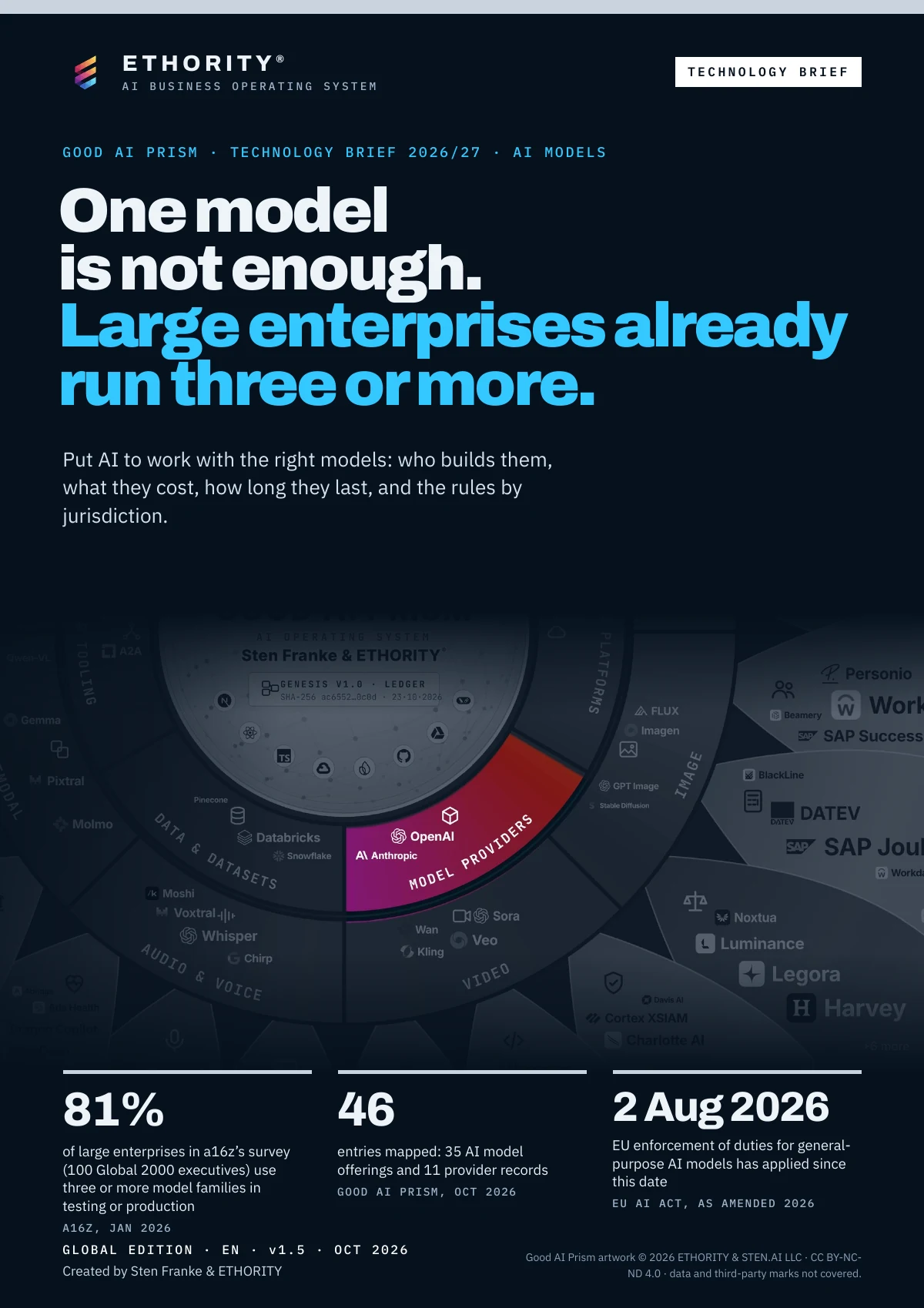
Context window
256,000
Unit: tokens
Documented by the providerdocs.x.ai ↗

Pricing differs above 200K. Model card does not state context window.

Model access
xAI API (OpenAI-compatible) and third-party partners; regions us-east-1, us-west-2; no cloud marketplace or download stated
Documented by the providerdocs.x.ai ↗

Partners from model card https://data.x.ai/2025-08-26-grok-code-fast-1-model-card.pdf; not named.

Deployment requirements
Hosted API (SaaS) only on reviewed pages; no open weights or self-hosting stated
Documented by the providerdocs.x.ai ↗

No self-hosted/VPC option found in reviewed sources.

Published evaluations and scope
Model card reports safety/dual-use evals only, e.g. "AgentHarm answer rate: 17.0", "AgentDojo attack success rate: 26.9", "MASK dishonesty rate: 71.9", "CyBench unguided success rate: 22.5". Guide claims "up to 4x the speed and 1/10th the cost of other leading agentic models". No coding benchmark (e.g. SWE-bench) on reviewed pages.
Stated by the providerdata.x.ai ↗

Performance and cost figures are provider claims; test against your own workload.

Documented limitations
Reasoning traces only accessible in streaming mode; XML-based tool-call output 'may hurt performance'; Grok 4 positioned as better for one-shot Q&A and deep debugging; Batch API not supported; model card reports MASK dishonesty rate 71.9 (higher than Grok 4) and agentic misuse risk.
Stated by the providerdocs.x.ai ↗

Batch API from model page; MASK and risk statements from https://data.x.ai/2025-08-26-grok-code-fast-1-model-card.pdf.

Open the full profile →

Morph Fast Apply

Morph · Model

Software Development

Model that replaces the file-writing layer in AI coding agents and IDE plugins, available as an MCP tool for Claude Code, Cursor and similar environments.

Published price
Context window
Licence and access rights
Model access
Open profile

Morph Fast Apply

Morph · Model

Facts, sources and conditions

Model that replaces the file-writing layer in AI coding agents and IDE plugins, available as an MCP tool for Claude Code, Cursor and similar environments.
Stated by the providermorphllm.com ↗

The provider describes a 7B model and claims 10,500 tokens/second with 98% accuracy for merging code edits. These are provider figures, not independent results for your repository.

Where it sits on the map · 1 · 1
What it is used for
Code edit merge (apply) model for coding agents
ETHORITY analysismorphllm.com ↗

Derived from product page.

How it is billed
Per 1M tokens (input, output); credit-based plans
Unit: USD
Stated by the providermorphllm.com ↗
Published price
morph-v3-fast $0.80 input / $1.20 output per 1M; morph-v3-large $0.90 / $1.90 per 1M; paid plans from $20/month incl. $20 credits
Unit: USD
Stated by the providermorphllm.com ↗
Where data is stored
No EU region named; 'primary data processing occurs in the United States'; regional data centers available to paid/enterprise customers with residency requirements; self-hosted keeps processing in customer environment
Stated by the providermorphllm.com ↗

Specific regions for regional data centers not stated.

Does it train AI on your data?
Not used for training — "We do not use your data to train our models" (except support, debugging, service-quality fixes)
Stated by the providermorphllm.com ↗

ToS s.5 (https://www.morphllm.com/privacy/tos): 'We do not use your code or content to train our models' with same support/debugging exception. Enterprise: 'Zero training'.

Connects with
OpenAI-compatible API (api.morphllm.com/v1); TypeScript and Python SDKs; MCP setup (edit_file, codebase_search) for Claude Code, Codex, Cursor, VS Code
Documented by the providerdocs.morphllm.com ↗

Product page names JetBrains, Vercel, Webflow as users (customer logos, not integrations). No Git host or CI/CD integrations.

Certificates and audit reports
Self-stated: "SOC 2 Type II, ISO 27001 compliance maintained" (auditor/scope not stated); docs list 'SOC2' for enterprise
Stated by the providermorphllm.com ↗

Compliance wording describes alignment; confirm certificate scope. SOC 2 is an attestation.

Limitations
Sections missing the '// ... existing code ...' marker are treated as deletions; ToS: 'Model outputs may be inaccurate, incomplete, or misleading'
Documented by the providerdocs.morphllm.com ↗

ToS s.9.2 https://www.morphllm.com/privacy/tos.

Context window
262K (both morph-v3-fast and morph-v3-large)
Unit: tokens
Stated by the providermorphllm.com ↗
Licence and access rights
Proprietary; open weights: no (listed under 'Specialized', not 'Open Source Models'); ToS: 'No license is granted except as explicitly described in these Terms'
Stated by the providermorphllm.com ↗

Paid/Enterprise terms include bounded IP defence; outputs have a separate IP warranty exclusion. Confirm the applicable model licence.

Model access
Morph API (OpenAI-compatible), SDKs, MCP; models morph-v3-fast, morph-v3-large, auto router; no cloud marketplace or download stated
Documented by the providermorphllm.com ↗

Access paths also from https://docs.morphllm.com/introduction.

Deployment requirements
Hosted API (SaaS); enterprise: dedicated instances, self-hosted deployments, zero data retention
Documented by the providerdocs.morphllm.com ↗

Dedicated-inference page (https://www.morphllm.com/dedicated-inference) does not list Fast Apply in its dedicated catalog and mentions no self-hosted option — self-hosting of Fast Apply not specifically confirmed.

Published evaluations and scope
"98% accuracy" merge accuracy (v3-large) vs 82–94% for other listed models; "10,500 tokens per second" (v3-fast), 5,000+ tok/s (v3-large); ~0.8s for a 500-line file; '100% merge success' with five frontier planning models
Stated by the providermorphllm.com ↗

Provider claims, not verified; benchmark name/method not stated on page.

Documented limitations
Sections missing the '// ... existing code ...' marker are treated as deletions; ToS: 'Model outputs may be inaccurate, incomplete, or misleading'
Documented by the providerdocs.morphllm.com ↗

ToS s.9.2 https://www.morphllm.com/privacy/tos.

Open the full profile →

Mellum

JetBrains · Model family

Software Development

JetBrains' 4B-parameter multilingual model, trained from scratch for code completion, powering cloud-based completion in JetBrains IDEs.

Published price
Licence and access rights
Model access
Deployment requirements
Open profile

Mellum

JetBrains · Model family

Facts, sources and conditions

JetBrains' 4B-parameter multilingual model, trained from scratch for code completion, powering cloud-based completion in JetBrains IDEs.
Stated by the providerblog.jetbrains.com ↗

This description concerns Mellum-4B. The family also includes Mellum2, described as 12B MoE with 2.5B active parameters for routing, RAG and subagents. The later Mellum2.1 page was inaccessible. https://blog.jetbrains.com/ai/2026/06/mellum2-goes-open-source-a-fast-model-for-ai-workflows/

Where it sits on the map · 1 · 1
What it is used for
Code-completion / fast workflow LLM (open weights)
ETHORITY analysisblog.jetbrains.com ↗
How it is billed
Bedrock: compute only (“no additional model fees”); in IDE: AI Pro subscription
Stated by the providerblog.jetbrains.com ↗blog.jetbrains.com ↗
Published price
Open weights “free to use under the Apache 2.0 license”; Bedrock “no additional model fees”
Stated by the providerblog.jetbrains.com ↗

No AI Pro price read (not in scope pages)

Where data is stored
Detailed code-related data (if collected) “remains stored within the European Economic Area (EEA)”
Documented by the providerjetbrains.com ↗

Concerns collected telemetry data, not inference hosting region for cloud completion; no inference region found

Does it train AI on your data?
Only with opt-in – commercial users: “explicit, informed consent has been obtained in advance”; orgs: “disallowed by default”
Documented by the providerjetbrains.com ↗jetbrains.com ↗
Where the provider's own sources disagree

The provider’s own sources say different things here. Contradiction: data-collection notice says individual non-commercial users are opted in by default (can opt out); data-handling page says setting is off by default. Model trained “solely on publicly available, permissively licensed code” (https://blog.jetbrains.com/blog/2024/10/22/introducing-mellum-jetbrains-new-llm-built-for-developers/)

Connects with
JetBrains AI Assistant / cloud completion in JetBrains IDEs; local completion in paid IntelliJ-based IDEs; Amazon Bedrock Marketplace; Hugging Face

No Git host/CI integrations (model)

Limitations
“Mellum isn't a plug-and-play solution”; Mellum2 “is not multimodal”; 2024 languages: Java, Kotlin, Python, Go, PHP
Licence and access rights
Apache 2.0 (open-source Hugging Face versions, Mellum-4B and Mellum2) – open weights: yes
Stated by the providerblog.jetbrains.com ↗blog.jetbrains.com ↗
Where the provider's own sources disagree

The provider’s own sources say different things here. Contradiction over time: 2024 launch post calls Mellum “a proprietary large language model”; open-sourced 2025. HF model card https://huggingface.co/JetBrains/Mellum-4b-base

Model access
Downloadable (Hugging Face); Amazon Bedrock Marketplace; JetBrains AI Assistant in IDEs
Deployment requirements
Open weights (Hugging Face), self-hosted/local (“Run Mellum2 locally or self-host it”); Amazon Bedrock Marketplace deployment on chosen GPU; JetBrains cloud completion (SaaS)
Published evaluations and scope
Provider-stated Mellum-4B-base: HumanEval Infilling single-line 66.2, multi-line 38.5; RepoBench 1.1 (2K, py) 28.2; SAFIM avg 38.1. In-product: “acceptance rate … about 40%”, latency “one third of its previous time”
Stated by the providerblog.jetbrains.com ↗blog.jetbrains.com ↗

Provider benchmark charts; evaluate on your own workload.

Documented limitations
“Mellum isn't a plug-and-play solution”; Mellum2 “is not multimodal”; 2024 languages: Java, Kotlin, Python, Go, PHP
Open the full profile →

voyage-code

Voyage AI (MongoDB) · Model family

Software Development

Voyage AI's voyage-code family (code-4 current; code-3, code-2 older) turns source code into Matryoshka-sized, quantisable embedding vectors so coding agents and code search can retrieve relevant files.

Published price
Context window
Licence and access rights
Model access
Open profile

voyage-code

Voyage AI (MongoDB) · Model family

Facts, sources and conditions

Voyage AI's voyage-code family (code-4 current; code-3, code-2 older) turns source code into Matryoshka-sized, quantisable embedding vectors so coding agents and code search can retrieve relevant files.
Stated by the providermongodb.com ↗

The provider’s release article states that voyage-code-4 is available and recommends it for new code-retrieval uses. https://blog.voyageai.com/2026/08/13/voyage-code-4/

Where it sits on the map · 1 · 1
What it is used for
Code embedding model for code retrieval / RAG
ETHORITY analysismongodb.com ↗

Derived from model overview.

How it is billed
Per 1M tokens embedded
Unit: USD
Documented by the providermongodb.com ↗

Billed to the Atlas account linked to the API key.

Published price
voyage-code-4 $0.12 / 1M tokens; voyage-code-3 $0.18 / 1M; voyage-code-2 $0.12 / 1M. EU/US-scoped endpoints +10%.
Unit: USD
Documented by the providermongodb.com ↗

10% uplift from https://www.mongodb.com/docs/voyageai/api-reference/overview/.

Where data is stored
Europe Geography endpoint eu.ai.mongodb.com (EEA cloud regions; GA 29 Sep 2026), inference and retained payload logging within Europe; requires paid tier; 'Scoped endpoints don't serve every model'
Documented by the providermongodb.com ↗

Geography details from https://www.mongodb.com/company/blog/product-release-announcements/europe-data-residency-for-atlas-embedding-reranking. Availability of voyage-code models on the EU endpoint NOT confirmed on reviewed pages. Account metadata shared globally.

Does it train AI on your data?
Used unless you opt out — Customer Content may be used "to train, improve, and otherwise further develop the Service" unless you opt out
Stated by the providervoyageai.com ↗

Opt-out applies prospectively and requires a payment method. Atlas has a separate model-improvement setting.

Connects with
Voyage API and MongoDB Atlas Embedding and Reranking API (ai.mongodb.com); positioned as complement to grep-style search for coding agents. No IDE, Git host or CI/CD integrations named.
Stated by the providerblog.voyageai.com ↗
Limitations
Quantization and shorter embeddings reduce retrieval quality; free-trial rate limits 3 RPM / 10K TPM without payment method; scoped endpoints have lower rate limits and don't serve every model
Stated by the providerblog.voyageai.com ↗

Rate-limit statements from https://www.mongodb.com/docs/voyageai/api-reference/overview/.

Context window
voyage-code-4: 32,000; voyage-code-3: 32,000; voyage-code-2: 16,000
Unit: tokens
Documented by the providermongodb.com ↗
Licence and access rights
Proprietary hosted models; no licence stated; open weights: no (code models not listed as open-weight)
Documented by the providermongodb.com ↗

Only voyage-4-nano is open-weight on that page. Exact licence name not applicable/not stated.

Model access
Voyage API and MongoDB Atlas Embedding and Reranking API (ai.mongodb.com; eu./us. scoped endpoints); not downloadable; marketplaces not confirmed
Documented by the providermongodb.com ↗
Deployment requirements
Hosted API (Voyage API / MongoDB Atlas Embedding and Reranking API, SaaS); no open weights for code models
Documented by the providermongodb.com ↗

Only voyage-4-nano listed as open-weight. EU post lists air-gapped/self-managed deployment as out of scope.

Published evaluations and scope
voyage-code-4 (NDCG@10, avg relative improvement): vs voyage-code-3 "27.54%" agentic / "13.98%" traditional; vs OpenAI v3 large "48.58%" / "40.06%"; vs Gemini Embedding 2 "31.03%" / "16.01%"; vs Cohere Embed v4 "28.25%" / "19.21%". voyage-code-3: outperforms OpenAI-v3-large and CodeSage-large by "13.80% and 16.81%" across 32 datasets.
Stated by the providerblog.voyageai.com ↗
Where the provider's own sources disagree

The provider’s own sources say different things here. Provider claims, not verified. voyage-code-3 figures from https://blog.voyageai.com/2024/12/04/voyage-code-3/. Minor Source conflict: code-3 blog cites 32 datasets, code-4 blog says code-3 was evaluated on 28 datasets.

Documented limitations
Quantization and shorter embeddings reduce retrieval quality; free-trial rate limits 3 RPM / 10K TPM without payment method; scoped endpoints have lower rate limits and don't serve every model
Stated by the providerblog.voyageai.com ↗

Rate-limit statements from https://www.mongodb.com/docs/voyageai/api-reference/overview/.

Open the full profile →

Auggie CLI

Augment Code · Agent

Software Development

Terminal agent from Augment Code that brings its codebase context engine to the command line, running interactively or in --print mode for CI pipelines such as GitHub Actions PR reviews.

Published price
How it is billed
Does it train AI on your data?
Certificates and audit reports
Open profile

Auggie CLI

Augment Code · Agent

Facts, sources and conditions

Terminal agent from Augment Code that brings its codebase context engine to the command line, running interactively or in --print mode for CI pipelines such as GitHub Actions PR reviews.
Stated by the providerdocs.augmentcode.com ↗docs.augmentcode.com ↗

Description follows provider documentation.

Where it sits on the map · 1 · 1
What it is used for
Terminal coding agent with codebase context
ETHORITY analysisdocs.augmentcode.com ↗
How it is billed
credits (“A credit is the unit we use to measure usage in Augment Code”), monthly plans
Stated by the provideraugmentcode.com ↗

Blog dated Oct 2025 announcement; current pricing page

Published price
Indie $20 (40,000 credits); Standard $60 (130,000); Max $200 (450,000); Enterprise custom
Unit: USD/month
Stated by the provideraugmentcode.com ↗

Per Oct 2025 pricing-change blog; not confirmed against current pricing page

Does it train AI on your data?
Not used for training – “We never train on our customer's proprietary data.”
Stated by the provideraugmentcode.com ↗

Confirm which plan includes the feature you need.

Connects with
GitHub Actions (PR Description, PR Review workflows); native integrations GitHub, Linear, Notion; MCP (client and --mcp server); Augment for VS Code / JetBrains IDEs; Python SDK
Certificates and audit reports
SOC 2 Type II “Attested” (auditor not named); “ISO/IEC 42001-certified Artificial Intelligence Management System”
Stated by the provideraugmentcode.com ↗

Provider claim, not registry-verified; GDPR/CCPA/HIPAA listed as “Compliant” are laws, not certifications

Limitations
“Non-interactive mode is an additional feature that may be disabled if it is not included in your agreement (enterprise)”; requires Node 20+; permissions “not enforced in the Augment code extension”
Documented by the providerdocs.augmentcode.com ↗docs.augmentcode.com ↗
Open the full profile →

CodeRabbit

CodeRabbit · Product

Software Development

AI pull-request reviewer for GitHub, GitLab, Bitbucket and Azure DevOps that automatically reviews every PR, ranks incoming PRs via Triage and opens security fixes as PRs.

Published price
How it is billed
Does it train AI on your data?
Connects with
Open profile

CodeRabbit

CodeRabbit · Product

Facts, sources and conditions

AI pull-request reviewer for GitHub, GitLab, Bitbucket and Azure DevOps that automatically reviews every PR, ranks incoming PRs via Triage and opens security fixes as PRs.
Stated by the providercoderabbit.ai ↗docs.coderabbit.ai ↗
Where it sits on the map · 1 · 1
What it is used for
AI pull-request code review
ETHORITY analysiscoderabbit.ai ↗
How it is billed
per user per month (developer seat); annual plans “saves 20%”
Stated by the providercoderabbit.ai ↗
Published price
Essentials $24/user/mo; Team $48/user/mo; Advanced $72/user/mo; Enterprise “Contact Us”
Unit: USD
Stated by the providercoderabbit.ai ↗
Does it train AI on your data?
Not used for training – “Neither CodeRabbit nor its Third-Party AI Model Providers use Customer's code to train any AI models.”
Documented by the providercoderabbit.ai ↗docs.coderabbit.ai ↗

Consistent with docs FAQ: “CodeRabbit never uses customer code for training”

Connects with
GitHub, GitLab (cloud and self-hosted), Bitbucket, Azure DevOps; VS Code extension (also Cursor, Windsurf); CLI
Documented by the providerdocs.coderabbit.ai ↗

CI/CD integrations not stated on reviewed pages

Limitations
“100% accuracy isn't guaranteed due to AI's evolving nature”; works with all languages “with varying proficiency”
Documented by the providerdocs.coderabbit.ai ↗
Open the full profile →

Bolt

StackBlitz · Product

Software Development

StackBlitz tool, from the team behind WebContainers, that builds full-stack web applications using a wide range of JavaScript web frameworks.

Published price
How it is billed
Does it train AI on your data?
Certificates and audit reports
Open profile

Bolt

StackBlitz · Product

Facts, sources and conditions

StackBlitz tool, from the team behind WebContainers, that builds full-stack web applications using a wide range of JavaScript web frameworks.
Stated by the providersupport.bolt.new ↗

The accessible introduction also describes mobile apps through Expo. The originally listed introduction URL was inaccessible. https://support.bolt.new/building/intro-bolt

Where it sits on the map · 1 · 1
What it is used for
Prompt-to-app full-stack builder
ETHORITY analysissupport.bolt.new ↗
How it is billed
AI tokens per month; Teams per member; Enterprise “billed by consumption”
Stated by the providerbolt.new ↗
Published price
Free $0 (1M tokens/month, 300K daily limit); Pro $18/month billed annually (10M tokens); Teams $27/month per member billed annually; Enterprise custom
Unit: USD
Stated by the providerbolt.new ↗
Does it train AI on your data?
Used unless you opt out – “Unless you opt out … we may use Bolt Model Development Content”; EEA/UK/CH accounts excluded; Team/Enterprise under MSA/DPA excluded
Documented by the providerstackblitz.com ↗bolt.new ↗

Bolt Forge: prompts/code “de-identified, then stored and used by Bolt's partners to train open-source AI models” (opt-out not applicable while Forge enabled) – https://support.bolt.new/account-and-subscription/bolt-forge

Connects with
GitHub (version control, repo import), Supabase, Stripe, Figma, Expo, Google SSO, MCP servers, Google Stitch, Lovable import; bolt.host publishing and custom domains
Documented by the providersupport.bolt.new ↗

No CI/CD integrations stated

Certificates and audit reports
SOC 2 Type 2 (“Bolt is SOC 2 Type 2 certified”); auditor not named
Stated by the providerbolt.new ↗bolt.new ↗

SOC 2 is an attestation; enterprise page says “HIPAA, FedRAMP, and SOC 2 ready” – “ready” is not a certification; GDPR/CCPA are laws

Limitations
“LLMs are predictive, not deterministic”; “Sometimes, they generate false information”; may not know latest framework versions; Code view desktop-only; AI Output “may be inaccurate, incomplete, insecure”
Open the full profile →

Tricentis Tosca AI agents

Tricentis · Product

Software Development

According to Tricentis: “AI agents built for the Tosca environment generate complete, end-to-end tests from plain-language descriptions.”

How it is billed
Where data is stored
Does it train AI on your data?
Certificates and audit reports
Open profile

Tricentis Tosca AI agents

Tricentis · Product

Facts, sources and conditions

According to Tricentis: “AI agents built for the Tosca environment generate complete, end-to-end tests from plain-language descriptions.”
Stated by the providertricentis.com ↗

The product page was inaccessible. The Tosca Cloud documentation describes test cases from natural language: https://docs.tricentis.com/tosca-cloud/en-us/content/ai_integration/agentic_test_automation/landing_page.htm

Where it sits on the map · 1 · 1
What it is used for
Agentic generation of end-to-end UI test cases
ETHORITY analysisdocs.tricentis.com ↗

Derived from docs.

How it is billed
AI credits — each agent interaction (click, text input, verification, buffer action) costs one AI credit
Unit: credits
Documented by the providerdocs.tricentis.com ↗

'All interactions count, even if they don't match your original test intent.' Tosca Cloud licence required.

Where data is stored
Yes — data processed in region chosen at Tosca Cloud tenant setup; Azure OpenAI in Europe (France, EU-WEST-3); Anthropic Claude region 'Europe' (no code); also US and Australia
Documented by the providerdocs.tricentis.com ↗

Trust page https://www.tricentis.com/trust/ai: administrators may select EU, US or Australia region. Doc lists Japan under AP-SOUTHEAST-2 and Canada under US-EAST-1 (provider labelling).

Does it train AI on your data?
Not used for training — "we don't use your queries for model training purposes"; opt-out available for anonymised product-improvement use
Stated by the providerdocs.tricentis.com ↗

Trust AI page (https://www.tricentis.com/trust/ai): inputs/outputs not used to improve third-party models; customers can opt out of anonymised inputs/outputs being used for Tricentis product improvement (i.e. default use for product improvement, scope vs 'training' not specified).

Connects with
Tosca Cloud; qTest (imported manual tests via 'Automate with ATA'); Test outline API; TBox and Vision AI engines; supported apps: generic web, SAP Fiori, SAP GUI, Salesforce. No IDE/Git/CI integration stated for the agent.
Documented by the providerdocs.tricentis.com ↗

qTest/API from landing page doc.

Certificates and audit reports
ISO/IEC 42001 scope includes Agentic Test Automation; ISO/IEC 27001:2022, ISO 27701, ISO 9001 and SOC 2 Type 2 cover Tosca Cloud (ISO also Tosca On Prem); auditors not named
Stated by the providertricentis.com ↗

Provider statement; SOC 2 is an attestation.

Limitations
Creates new test cases only (cannot update existing); one AI credit per interaction, tool unavailable when credits run out; requires 1920x1080 at 100% scale (pixel-level screen reading), Chrome/Edge; attachments ≤4 MB text-based; AI Solutions prohibited in 'high risk' deployments
Documented by the providerdocs.tricentis.com ↗

Credit/display limits from landing page doc; high-risk prohibition from https://www.tricentis.com/trust/ai.

Open the full profile →

GitLab Duo Agent Platform

GitLab · Platform

Software Development

GitLab's agent layer for GitLab.com, Self-Managed and Dedicated where agents and flows turn issues into merge requests, review code and fix CI/CD pipelines, billed via GitLab Credits.

Published price
How it is billed
Does it train AI on your data?
Certificates and audit reports
Open profile

GitLab Duo Agent Platform

GitLab · Platform

Facts, sources and conditions

GitLab's agent layer for GitLab.com, Self-Managed and Dedicated where agents and flows turn issues into merge requests, review code and fix CI/CD pipelines, billed via GitLab Credits.
Stated by the providerdocs.gitlab.com ↗about.gitlab.com ↗

Description follows the cited product documentation.

Where it sits on the map · 1 · 1
What it is used for
DevOps lifecycle AI agents and flows
ETHORITY analysisdocs.gitlab.com ↗
How it is billed
GitLab Credits (usage-based); on-demand “list price of $1 per credit used”; Agent Platform Self-Hosted: “flat fee per customer” (ELA)
Documented by the providerdocs.gitlab.com ↗docs.gitlab.com ↗
Published price
$1 per credit on-demand; e.g. on GitLab-managed models one credit covers 4 Code Review Flow executions; Premium/Ultimate credited $12/$24 per user per month (“for a limited time”)
Unit: USD
Documented by the providerdocs.gitlab.com ↗about.gitlab.com ↗

Included-credit amounts stated in GA blog only; docs say the number per seat is not stated

Does it train AI on your data?
Not used for training – “GitLab does not train generative AI models”; sub-processors “restricted from using model input and output to train models”
Documented by the providerdocs.gitlab.com ↗
Connects with
GitLab (issues, MRs, pipelines); IDEs: VS Code, JetBrains IDEs, Cursor, Windsurf; external agents Claude Code and Codex CLI; MCP; LDAP/SAML
Stated by the providerabout.gitlab.com ↗docs.gitlab.com ↗
Certificates and audit reports
ISO/IEC 27001:2022 (GitLab.com, GitLab Dedicated); ISO/IEC 27017:2015 and 27018:2019 “compliance”; SOC 2 Type 2 report (Security, Confidentiality, Availability) for GitLab.com and Dedicated; CSA STAR
Stated by the providerabout.gitlab.com ↗

Company/SaaS-level, not Agent-Platform-specific; SOC 2 is an attestation; auditor not named in text (certificate links point to Schellman directory – not verified); GDPR is a law, not a certification

Limitations
“Beta features that don't consume credits can change to generally available with usage billing at any time”; some agents/flows beta or experimental; “In GitLab 18.9 and earlier, you cannot use the Agent Platform with the GitLab Duo Enterprise add-on”
Documented by the providerdocs.gitlab.com ↗
Open the full profile →

Snyk DeepCode AI

Snyk · Product

Software Development

According to Snyk: “Snyk's DeepCode AI code analyzer was designed to find, autofix, and prioritize vulnerabilities”

Published price
How it is billed
Where data is stored
Does it train AI on your data?
Open profile

Snyk DeepCode AI

Snyk · Product

Facts, sources and conditions

According to Snyk: “Snyk's DeepCode AI code analyzer was designed to find, autofix, and prioritize vulnerabilities”
Stated by the providersnyk.io ↗

The product page was inaccessible. Documentation names the autofix function Snyk Agent Fix, formerly DeepCode AI Fix; confirm the relevant product and plan.

Where it sits on the map · 1 · 1
What it is used for
SAST vulnerability detection and AI autofix
ETHORITY analysisdocs.snyk.io ↗
How it is billed
Free/Team per month (Team for up to 10 developers); Enterprise prepaid credits (“1 credit = $1”) per “Active Contributor / per Day”
Stated by the providersnyk.io ↗

DeepCode AI/Agent Fix inclusion per plan not stated

Published price
Free $0/month (Snyk Code 100 tests/month); Team “Starting at” $25/month (1,000 tests/month); Enterprise “Contact Sales”
Unit: USD
Stated by the providersnyk.io ↗

Platform plans, not DeepCode-specific

Where data is stored
“Snyk EU” region; Snyk Code source cache 24–48 h for AWS tenants in EU, AU and Private Tenant
Documented by the providersnyk.io ↗docs.snyk.io ↗
Does it train AI on your data?
Not used for training – “Snyk does not use customer proprietary software code to train, optimize, fine-tune, or improve any AI models”
Documented by the providerdocs.snyk.io ↗docs.snyk.io ↗

Fix model trained on permissively licensed public repositories (https://docs.snyk.io/snyk-data-and-governance/how-snyk-handles-your-data)

Connects with
IDE plugins: VS Code, Visual Studio, Eclipse, JetBrains IDEs; Jira (Team plan); Snyk Code repository scanning
Documented by the providerdocs.snyk.io ↗snyk.io ↗
Certificates and audit reports
ISO 27001, SOC2 Type II (“We uphold ISO 27001, SOC2 Type II, and GDPR compliance”)
Stated by the providertrust.snyk.io ↗

Company-level; scope and auditor not stated; SOC 2 is an attestation; GDPR is a law

Limitations
“Snyk Agent Fix focuses on single-file fixes”; some large-file requests up to 2 minutes; no suggestion shown if it cannot meet “security and functional benchmarks”; “Human review required”
Documented by the providerdocs.snyk.io ↗
Open the full profile →

SonarQube AI CodeFix

Sonar · Product

Software Development

According to Sonar: “AI CodeFix then proposes an edit that resolves the problem without changing the code's functionality.”

Published price
How it is billed
Where data is stored
Certificates and audit reports
Open profile

SonarQube AI CodeFix

Sonar · Product

Facts, sources and conditions

According to Sonar: “AI CodeFix then proposes an edit that resolves the problem without changing the code's functionality.”
Stated by the providerdocs.sonarsource.com ↗

The description is supported by the SonarQube Server documentation; the Cloud documentation was inaccessible. Confirm which deployment the terms cover. https://docs.sonarsource.com/sonarqube-server/ai-capabilities/ai-codefix

Where it sits on the map · 1 · 1
What it is used for
LLM-generated fixes for static-analysis issues
ETHORITY analysisdocs.sonarsource.com ↗

Derived from Server AI CodeFix doc.

How it is billed
AI CodeFix available within SonarQube Cloud Team/Enterprise plans and Server Enterprise/Data Center editions; Cloud Team priced per month by lines of code analysed; monthly AI CodeFix usage allowance
Unit: USD
Documented by the providerdocs.sonarsource.com ↗

Plan pricing basis from https://www.sonarsource.com/plans-and-pricing/. No separate AI CodeFix price found.

Published price
SonarQube Cloud Team 'Starts at $34 monthly' for up to 100k LOC; Enterprise custom. No separate AI CodeFix charge stated.
Unit: USD
Stated by the providersonarsource.com ↗
Where the provider's own sources disagree

The provider’s own sources say different things here. CONTRADICTION on same page: FAQ says 'prices start at $32 per month (previously listed at $65)'. Pricing page does not mention AI CodeFix.

Where data is stored
SonarQube Cloud EU region (default) hosted in Frankfurt, Germany (AWS eu-central-1), backups in AWS eu-west-1; US region (sonarqube.us) Enterprise-only. Code snippet sent to the selected LLM; LLM processing location not stated. Server: self-hosted LLM endpoint option.
Stated by the providersonarsource.com ↗

Region list also at https://docs.sonarsource.com/sonarqube-cloud/getting-started/choosing-your-region (AI CodeFix availability per region not stated). AI terms mention only 'cloud servers' — LLM inference location not confirmed as EU.

Connects with
SonarQube Cloud / Server UI ('Generate AI fix'); SonarQube for IDE connected mode in VS Code and IntelliJ ('Open in IDE'); open fix as pull request in Azure DevOps (Cloud bound to Azure DevOps)
Documented by the providerdocs.sonarsource.com ↗
Certificates and audit reports
ISO 27001:2022 certification and SOC 2 Type II attestation 'for all products and services' (auditor not named)
Stated by the providersonarsource.com ↗

Self-stated; not registry-verified. AWS certifications on same page are the host's, not Sonar's. Iron Bank acceptance is not a certification. SOC 2 report under NDA.

Limitations
Monthly usage allowance (resets 1st of month; error when reached); Suggestions 'may be incorrect, incomplete, or contain vulnerabilities'; non-recommended models 'may produce unexpected fix suggestions'; self-hosted LLMs subject to provider rate limits
Documented by the providerdocs.sonarsource.com ↗

Suggestion caveat from AI Annex s.5.1 https://www.sonarsource.com/legal/ai/; model caveat from enable-ai-codefix doc.

Open the full profile →

Zencoder

Zencoder · Platform

Software Development

Zencoder runs multi-model coding agents in VS Code and JetBrains IDEs and as headless CI workers, indexing several repositories to turn Jira, Linear or GitHub Issues tickets into multi-file changes.

Published price
How it is billed
Does it train AI on your data?
Certificates and audit reports
Open profile

Zencoder

Zencoder · Platform

Facts, sources and conditions

Zencoder runs multi-model coding agents in VS Code and JetBrains IDEs and as headless CI workers, indexing several repositories to turn Jira, Linear or GitHub Issues tickets into multi-file changes.
Stated by the providerzencoder.ai ↗

Headless CI agents are described in the provider’s CI/CD automation guide. https://docs.zencoder.ai/learn/enterprise-best-practices/ci-cd-automation.

Where it sits on the map · 1 · 1
What it is used for
AI coding agent platform (IDE and CI)
ETHORITY analysiszencoder.ai ↗

Derived from product page and docs.

How it is billed
Per seat per month plus monthly credit allowance consumed by LLM usage (premium models consume more credits); BYOK calls don't consume credits
Unit: USD
Documented by the providerdocs.zencoder.ai ↗

Model multipliers 0.25x–5x on https://docs.zencoder.ai/features/models.

Published price
Free $0 (BYOK only); Pro $45/mo ($40 annual), 30,000 credits; Pro Plus $95 ($85), 80,000 credits; Pro Max $195 ($175), 180,000 credits; Enterprise custom (pre-paid commit)
Unit: USD per seat/month
Documented by the providerdocs.zencoder.ai ↗
Does it train AI on your data?
Only with opt-in (trial/paid: training only "with Your further consent"); free accounts: used — data may be used to "fine-tune or train AI models"
Stated by the providerzencoder.ai ↗
Where the provider's own sources disagree

The provider’s own sources say different things here. ToS s.4.1, last updated June 15, 2026 (entity: For Good AI Inc., dba Zencoder Inc.). Source conflict: enterprise page states "zero model training on your data" and FAQ "does not train its models on your code or data" (https://zencoder.ai/enterprise) without the free-account caveat.

Connects with
IDEs: VS Code, IntelliJ, PyCharm, WebStorm, Android Studio (JetBrains). Issue trackers: Jira, Linear, GitHub Issues. Git hosts: GitHub, GitLab, Bitbucket (CI triggers). CI/CD: headless agents in GitHub/GitLab/Bitbucket pipelines via workflow file or webhook. CLIs: Zencoder CLI, Claude Agent, OpenAI Codex.
Stated by the providerzencoder.ai ↗

Git/CI from https://docs.zencoder.ai/learn/enterprise-best-practices/ci-cd-automation and https://zencoder.ai/enterprise.

Certificates and audit reports
Self-stated: SOC 2 Type II, ISO 27001, ISO 42001 (auditors/scope not stated)
Stated by the providerzencoder.ai ↗
Where the provider's own sources disagree

The provider’s own sources say different things here. The page claims SOC 2 Type II but its FAQ describes the report as in progress. Confirm the current attestation; ISO 27001 is a separate claim.

Limitations
Model availability depends on plan and is 'subject to change'; model providers 'may retain prompts, code inputs, files, context, outputs' for limited periods; trial credits don't carry over; ToS: no warranty of 'noninfringement of the Output'
Documented by the providerdocs.zencoder.ai ↗

Trial carry-over follows the pricing FAQ; warranty terms follow the service agreement.

Open the full profile →

Compare baseline: three units, one team

Per seat, per credit and per month with credits: convert all three to cost per merged change.

OfferingPriceBillingTrainingSource
CodeRabbit$24–72 /user/moPer user per monthNot used for trainingCodeRabbit pricing page
GitLab Duo Agent Platform$1 per creditGitLab Credits (usage)Not used for trainingGitLab Duo pricing page
Snyk DeepCode AIFree · from $25 /moMonthly · credits (Ent.)Not used for trainingSnyk DeepCode AI documentation

Registry facts as stated on each provider's own pages, read 21 Oct 2026. Add your own volumes in Compare before deciding.

Rules and dates

Model retirements and price changes reach your tools first.

  1. 2 Aug 2025

    Obligations for general-purpose AI models apply.

    Reg. (EU) 2024/1689

  2. 2 Aug 2026

    Art. 50: people must be told when they interact with an AI system.

    Reg. (EU) 2026/1744

  3. 30 Nov 2026

    Anthropic retires the claude-sonnet-4-5-20250929 model snapshot.

    Anthropic model deprecations

  4. 1 Dec 2026

    Gemini 4 Argon list price doubles to US$4 / US$20 per million tokens.

    Google Gemini API pricing

  5. 14 Jan 2027

    OpenAI shuts down its GPT-4o and GPT-4.1 snapshots; tools built on them change.

    OpenAI deprecations

Read the evidence
Related insights

Read the area analysis →
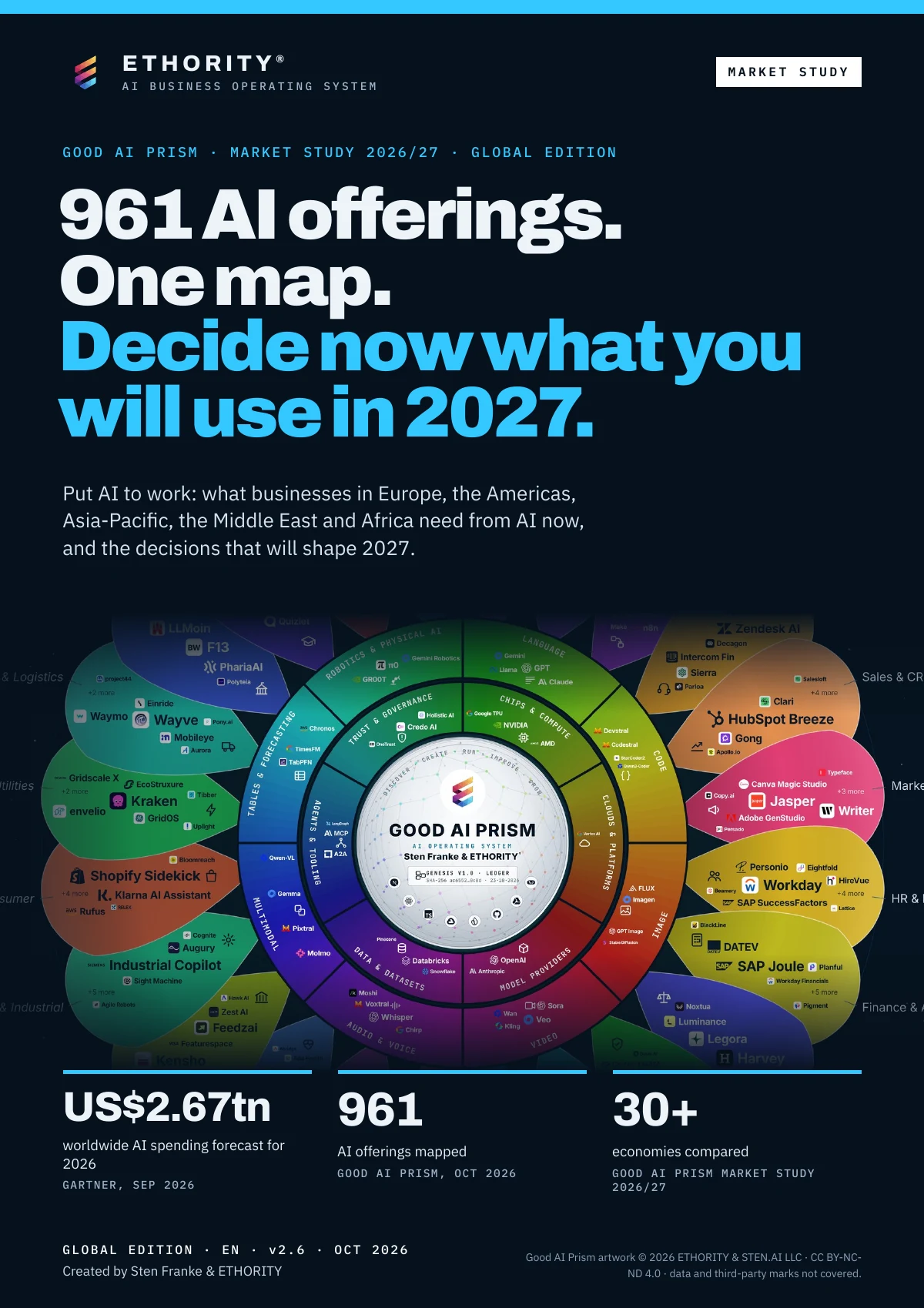
961 AI offerings. Start with the job, not the tool.

961 AI offerings. Start with the job, not the tool.

A method for going from one business need to a shortlist of AI offerings you can defend.

See the map on one page →
Saved hours are not AI value.

Saved hours are not AI value.

Separate a better task, freed-up time and a business result, so you can show the value AI really delivers.

See the map on one page →
Check every vendor claim before you rely on it.

Check every vendor claim before you rely on it.

Tie every vendor claim to the exact product, version, contract and use before you rely on it.

See the map on one page →
AI does not scale by itself. Redesign the work.

AI does not scale by itself. Redesign the work.

Start with one objective, choose the simplest approach for each task and measure the cost of every result you accept.

See the map on one page →

Implement it with ETHORITY

AI Decision Brief

€195 net · one-time

Puts the facts that decide between two or three AI offerings side by side, each sourced and dated, with the questions to ask each provider.

Request scope and delivery

See what this package includes →

Enterprise AI Opportunity Case

Priced after scoping

Compares real options, including doing nothing, models the economics and the assumptions that can break them, and recommends: start, change, test first or stop.

Scope and delivery by agreement

See what this package includes →

AI Literacy & Adoption

€2,400 one-time · net

Builds AI literacy and everyday adoption in your teams, in step with the AI-literacy duty of the EU AI Act.

Scope and delivery by agreement

See what this package includes →

Buyer questions

Do AI coding tools make developers faster?

Sometimes. Controlled studies range from 19% slower (METR trial, Jul 2025) to about 21% faster (Google RCT). Measure lead time and change failure rate for your own team before and after.

Is our code used to train the provider's models?

It depends on the plan. Six of the 12 profiled offerings state customer code is not used for training; one allows training on free-account data. Read the terms of the plan you will buy, as the Zencoder registry card shows.

How do we compare prices billed in tokens, credits and seats?

Convert every option into cost per accepted change at your own volume, including review time. The buyer's guide to 961 offerings sets out the method.

Which tools keep data in the EU?

Three of the 12 profiled cards name an EU region or EU default: Snyk, SonarQube and Tricentis. The SonarQube AI CodeFix card lists Frankfurt as its default.

What happens when the model under a tool retires?

Behaviour, price or quality can change. Record the model behind each tool and its retirement date; the AI Models technology brief lists the current dates.

The evidence at a glance
84% use coding AI. 46% distrust it.
Download the figure ↓

ETHORITY · LONG READ

Coding AI: 19% slower to 21% faster. Measure yours.

84% of developers use AI and 46% distrust it. Controlled studies disagree on the gain. The Good AI Prism shows what to compare instead: billing units, training terms, data location and the models underneath.

Software teams use AI every day. Most of them do not trust it yet. In the Stack Overflow 2025 survey, 84% of developers said they use or plan to use AI tools in their development process. In the same survey, 46% said they actively distrust the accuracy of those tools, against 33% who trust it. Two thirds, 66%, named their biggest frustration: AI solutions that are "almost right, but not quite".

That gap between use and trust is the market finding of 2026 in software development. It decides what a buyer should ask for, what a team should measure and which offerings belong on a shortlist.

Measured effects point both ways

The best evidence on coding AI comes from controlled studies, and they disagree. In a randomised trial published by METR in July 2025, 16 experienced open-source developers worked on 246 real issues in their own repositories. With AI tools allowed, they took 19% longer. Before the study they had expected a 24% speed-up. Afterwards, they still believed AI had made them 20% faster.

A randomised trial at Google found the opposite direction: engineers with AI features finished an enterprise task about 21% faster. The Global Market Study 2026/27 puts both results side by side for a reason. Both are real. They measure different work, different developers and different tools.

−19% to +21%. The measured range of AI effects on software work. Your own number sits somewhere in it, and only your own baseline shows where.

The lesson for buyers is narrow and practical. A supplier's productivity claim is not your baseline. The effect depends on the codebase, the task type and the developer's experience. Teams that measure lead time and change failure rate before and after adoption know where they stand. Teams that rely on how fast the work feels can be badly wrong: in the METR study, felt and measured speed were 39 points apart.

Where the money and the agents go

Software engineering is one of the places where companies report a return. In the McKinsey State of AI 2025, respondents most often reported cost benefits in software engineering, manufacturing and IT. The August 2026 edition adds that organisations scale AI agents most often in IT, knowledge management and software engineering.

Spending follows. Gartner's September 2026 AI spending forecast puts AI application development platforms at US$9.5bn in 2026, up from US$6.9bn in 2025, and generative AI models at US$28.3bn. Coding tools sit on top of those models, so the model layer is part of every coding decision. The AI Models technology brief shows why: 81% of large enterprises already use three or more model families (a16z, Jan 2026).

What the Prism shows about coding offerings

The Good AI Prism places 24 AI offerings in Software Development, from code completion and review to testing agents and code-specific embeddings. Twelve of them carry a full registry card with sourced decision facts, read from provider pages on 20 Oct 2026.

Exhibit: twelve profiled coding offerings, by the facts a buyer needs

Decision factWhat the 12 cards show
Billing unitAt least five units: tokens, credits, seats, plan tiers and compute only
Training on your code6 state customer code is not used for training; others offer opt-in or opt-out terms
EU data location3 state an EU region or EU default (Snyk, SonarQube, Tricentis)
Self-hosting6 offer self-hosted, self-managed, on-prem or open weights
Published price11 publish a list price

Source: Good AI Prism Registry, provider pages read 20 Oct 2026.

Three patterns stand out. First, prices come in units that cannot be compared directly. CodeRabbit's registry card bills US$24–72 per user per month. GitLab Duo bills US$1 per credit. Grok's coding model bills US$1 per million input tokens and US$2 per million output tokens. A team of 40 developers needs all three converted into cost per merged change before the comparison means anything.

Second, training terms differ even inside one product. One profiled assistant states in its terms that trial and paid data is used for training only with further consent, while data from free accounts may be used. A pilot on a free plan can therefore set different terms from the contract you later sign.

Third, data location is rarely the headline. Only three of the twelve cards name an EU region or an EU default. SonarQube AI CodeFix states Frankfurt as its EU default. For a European buyer with client code under contract, that single fact can decide the shortlist.

Scenario. A team of 40 developers on CodeRabbit at US$24–72 per user pays US$960–2,880 a month. If the team merges 1,200 changes a month, that is US$0.80–2.40 per merged change before review time. Run the same sum for credits and tokens, then compare.

Models retire, and your tools move with them

Coding tools inherit the life cycle of the models underneath. The registry records that OpenAI retires its GPT-4o and GPT-4.1 snapshots on 14 Jan 2027. Anthropic lists Claude Opus 5.5 at US$4 per million input tokens and US$20 per million output tokens, with retirement not before 22 Sep 2027. A coding assistant pinned to an older model may change behaviour, price or quality when its provider switches.

Ask every supplier which model and which cloud their product depends on, and how they announce a change. The buyer's guide to 961 offerings treats this as a standard question for every shortlist. In software, it matters twice: a model switch can change the code your team ships.

46% of developers actively distrust the accuracy of AI tools, while 84% use or plan to use them (Stack Overflow, 2025).

Pricing moves to usage

Seat licences are giving way to credits, tokens and actions. Gartner, cited by Deloitte in the Global Market Study, expects at least 40% of SaaS spend to be usage-, agent- or outcome-based by 2030. For engineering leaders, the budget question changes from "how many seats" to "how many accepted changes at what cost". Usage pricing rewards teams that know their volume. It punishes teams that discover it on the invoice.

The value question changes too. Saved minutes in an IDE are not yet business value. As the ETHORITY evidence synthesis Saved hours are not AI value argues, a time gain becomes value only when the released capacity goes into work that changes an outcome you can attribute.

What to do Monday

  1. Measure two numbers before any tool decision. Record lead time for changes and change failure rate for one team over four weeks. Without that baseline, no supplier claim can be checked.
  2. Compare three tools on cost per accepted change. Convert seats, credits and tokens to one unit at your own volume. Include review time for AI-written code, which the 66% "almost right" finding says will not be zero.
  3. Read the training and data terms for the plan you will actually buy. Free and trial tiers can carry different terms. Ask for the EU region in writing if client code is involved.
  4. Name the model under every tool. Record model, provider and announced retirement date, and set a review when a model changes.
  5. Set a stop condition. Agree in advance what result ends the pilot. If lead time and failure rate do not improve at your volume, stop and keep the evidence.

The Good AI Prism keeps the registry cards for this area current, with every decision fact sourced and dated. For a written comparison of two or three coding offerings, the AI Decision Brief offer puts the deciding facts side by side.

Sources and further reading

Put the thinking to work

AI Opportunity Case →

A defensible proceed, test, redesign, defer or stop decision. The fee is independent of which outcome the evidence supports.

YOUR NEXT STEP

Discuss your question with Sten Franke.

Bring your business question or the figures you already know. ETHORITY investigates within the agreed scope; together with Sten Franke you agree the next piece of work.

Draft your request by email →