 ETHORITY®
ETHORITY · TRUST INFRASTRUCTURE · RESEARCH & ARCHITECTURE
Agents cross company lines. 7 trust designs.
Work with AI across company lines: profiles, passports, handshakes and authorisation protocols that carry evidence and permission with each AI system.
- 7
- trust and operating-system designs in research and architectureETHORITY product portfolio, 17 Oct 2026
- 6,700
- dated market changes trackedETHORITY AI Universe, Oct 2026
- 2 Aug 2026
- Article 50 transparency duties applyReg. (EU) 2026/1744 · White & Case, Aug 2026 · whitecase.com ↗
- 2 Dec 2027
- Annex III high-risk obligations of the AI Act applyReg. (EU) 2026/1744 · White & Case, Aug 2026 · whitecase.com ↗
Seven designs, one question: can this system be trusted here?
Profiles, passports, handshakes, protocols, a network, a marketplace and an operating system.
ETHORITY product portfolio, 17 Oct 2026
Transparency duties already apply to AI interactions.
Article 50 requires people to know when they deal with AI; agents acting across firms raise the same question between systems.
White & Case, Aug 2026
Trust has to survive change.
Thousands of dated changes to AI products show why a one-time approval does not stay valid.
ETHORITY AI Universe, Oct 2026
Trust infrastructure designs
AI Business Operating System
Fee configured to agreed scope
Intelligence, decisions, governed work and improvement connected in one operating-system architecture. Research and architecture today.
Architecture & roadmap
See what this package includes →AI Trust Profiles
Fee configured to agreed scope
A profile that connects an AI system, its intended use and the evidence relevant to that use.
Architecture & roadmap
See what this package includes →Trust Passport
Fee configured to agreed scope
How evidence could travel with its identity, scope and validity conditions intact.
Architecture & roadmap
See what this package includes →Trust Handshake
Fee configured to agreed scope
How participants could establish identity, evidence and permission before two systems interact.
Architecture & roadmap
See what this package includes →Agent Authorization & Trust Protocols
Fee configured to agreed scope
An agent's actor, scope, constraints and human intervention points made explicit in a protocol design.
Architecture & roadmap
See what this package includes →Trust Network
Fee configured to agreed scope
Participation defined around distinct identities, evidence, obligations and admission conditions.
Architecture & roadmap
See what this package includes →Trusted Capability Marketplace
Fee configured to agreed scope
Discovery designed around capability identity, evidence and the permissions needed for use.
Architecture & roadmap
See what this package includes →The questions behind the designs
Access to a tool does not give an AI agent the right to act.
How to define what each AI agent may do: by action, limit, time and consequence, rather than by the tools it can reach.
See the map on one page →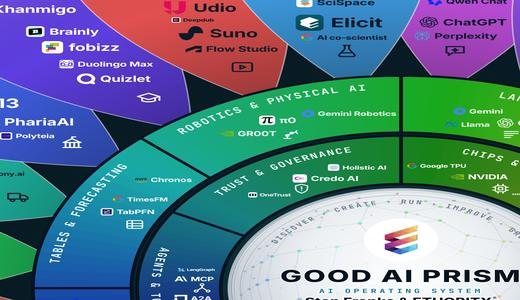
A list of AI agents does not control them.
What controls AI agents in daily operation: clear rights, a record of how well each fact is supported, checks matched to the risk, data limits and alerts when something changes.
See the map on one page →
A marketplace listing does not make an AI agent trustworthy.
When you buy AI agents, keep identity, offer, payment, evidence and trust apart, and grant rights only after purchase.
See the map on one page →Test your numbers first
The EU AI Act Navigator shows duties by role; the Stack Builder shows where agents sit in the stack. All tools sit in the ETHORITY AI calculator suite.
EU AI Act Navigator
Seven questions give an indicative risk class, your duties, the dates and the missing evidence, ready to take to your lawyer.
Pilot version · Scenario calculator
Open the calculator →Stack Builder
Area, data type and constraints in; six technology layers with matching registry offerings and models out.
Pilot version · Scenario calculator
Open the calculator →Compare three offerings
Puts two to four offerings side by side in the same units, each fact with its source and the date it was checked.
Sten Franke leads every project.

Sten Franke
Founder & CEO
Sten Franke designs and builds AI systems, from model testing and cloud setup to the interfaces people use. He connects business decisions, software architecture and practical implementation.
AI architecture · Model testing · Cloud engineering · UX
His work spans programming, LLM evaluation, Google Cloud and AWS environments, and web applications built with Next.js and React. He connects business requirements, software architecture and practical implementation. Creator of the Good AI Prism, he brings market intelligence into AI decisions. Earlier, he created the Social Media Prisma, led a BVDW Social Media working group and contributed to its Social Media Kompass. His entrepreneurial work includes ethority, Gridpatrol and mediatime, following a practical foundation in electronics and industrial robotics.
sten@ethority.aiQuestions buyers ask
Can we buy these today?
They are research and architecture today, shown with their design. The Trust Chain they build on is in use now, in the AI Trust Record and the AI Governance Setup.
What is the AI Business Operating System?
ETHORITY's architecture for connecting intelligence, decisions, governed work and improvement in one system. ETHORITY runs its own work on it as an AI-first organisation.
Can we take part in the research?
Yes. Organisations with agents acting across company boundaries can join design discussions; contact us for a research call.
How do they relate to certification?
They carry evidence and permission between systems; certification stays with accredited bodies.
Where can we use the Trust Chain today?
In the AI Governance Setup, where each claim is labelled vendor claim, measured or verified.
Next step
Join a research call on the architecture. To use the Trust Chain now, request an AI Trust Record for one system.
ETHORITY · LONG READ
When AI systems deal with each other, who vouches for them?
AI governance was built for one organisation approving its own tools. Agents now book, buy, answer and negotiate across company boundaries. Trust infrastructure asks how evidence and permission can travel with them.
For most of the last three years, AI governance has been an internal matter. A company decides which tools it allows, who approves them and how it checks them. The AI Governance Setup and the AI Trust Record do exactly that, and they remain the right first steps.
Agents change the question. A purchasing agent places orders with a supplier's sales agent. A customer's assistant asks a company's service agent to change a booking. A research agent pulls data from a partner's system. In each case, an AI system acting for one organisation meets an AI system acting for another. Neither side's internal approval tells the other side anything. The insight on the governance gap that agents open describes the problem in detail.
Seven designs
The trust infrastructure class collects ETHORITY's research and architecture work on that problem. All seven are shown today as designs, with their purpose, structure and open questions.
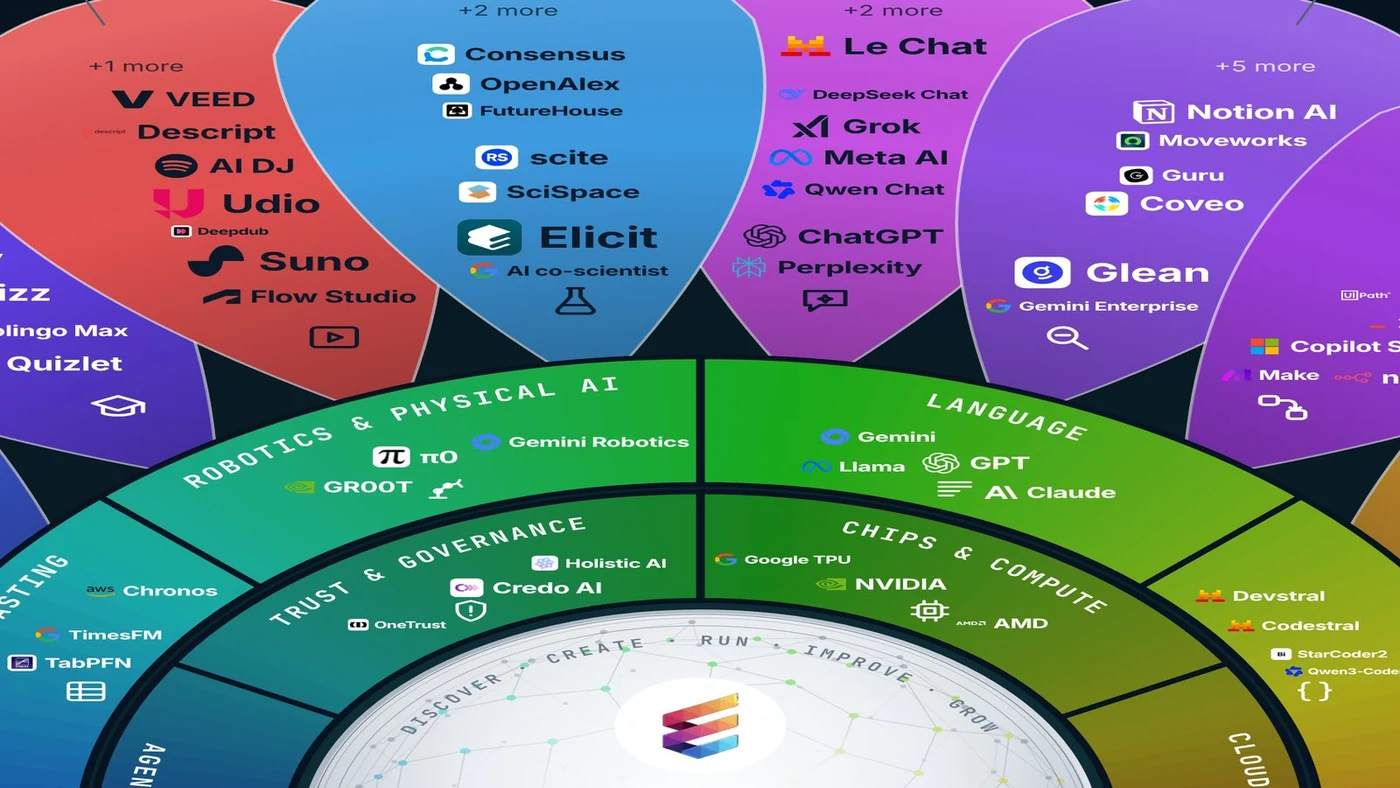
AI Trust Profiles connect an AI system, its intended use and the evidence relevant to that use. They extend the profile cards of the Good AI Prism from "what this product is" to "what this deployment may do".
Trust Passport explores how evidence could travel with a system while keeping its identity, scope and validity conditions intact, so that a statement made about a system in one context is not silently reused in another.
Trust Handshake explores how two systems could establish identity, evidence and permission before they interact, the AI equivalent of checking a counterparty before signing.
Agent Authorization & Trust Protocols make an agent's actor, scope, constraints and human intervention points explicit in a protocol design. The insight on agent authority and its limits shows why: an agent's effective reach is often larger than anyone approved.
Trust Network defines participation around distinct identities, evidence, obligations and admission conditions. Trusted Capability Marketplace designs discovery around capability identity, evidence and the permissions needed for use.
The AI Business Operating System connects intelligence, decisions, governed work and improvement in one architecture. ETHORITY is built as an AI-first organisation and runs its own research and delivery on this architecture; the SaaS edition is a design for others.
Why build on the Trust Chain
All seven designs extend one structure that is already in use: the Trust Chain. In every Trust Record, it links the outcome a system should deliver to its owner, data, AI component, human authority, evidence and review. The designs ask what happens when that chain has to be read by someone outside the company, or by another system.
The AI Act transparency duties under Article 50 have applied since 2 August 2026: people must be told when they interact with AI. Between organisations, the same principle points further. A system should be able to show who it acts for, what it may do and what evidence stands behind it.
Research first, product later
These designs are not sold as live services, and the pages say so plainly. Credentials, networks and marketplaces need identity infrastructure, security, legal agreements and operating support that must exist before anyone relies on them. Showing the architecture now lets clients, providers and researchers shape it while it is still a design.
What clients can use today is the foundation: a Trust Record decision document for one system, a governance model for the organisation and an estate inventory that knows which agents exist. Organisations whose agents already act across company boundaries are invited into the design discussions, and the insight on buying an AI agent sets out the questions to ask in the meantime.
What would make it real
Three conditions decide when a design becomes a product. Identity: participants must be able to prove who they are and who their agents act for. Evidence: statements about a system must carry their source, date and scope, the way registry facts already do. Authority: every agent action must map to a person or role that permitted it. The research tracks progress on each condition in public, so the move from architecture to product will be visible when it happens. Until then, the most useful thing an organisation can do is to write down, for each agent it runs, who it acts for, what it may do and what evidence stands behind it. That record is the seed every one of these designs grows from.
Sources and further reading
YOUR NEXT STEP
Discuss your question with Sten Franke.
Bring your business question or the figures you already know. ETHORITY investigates within the agreed scope; together with Sten Franke you agree the next piece of work.