 ETHORITY®
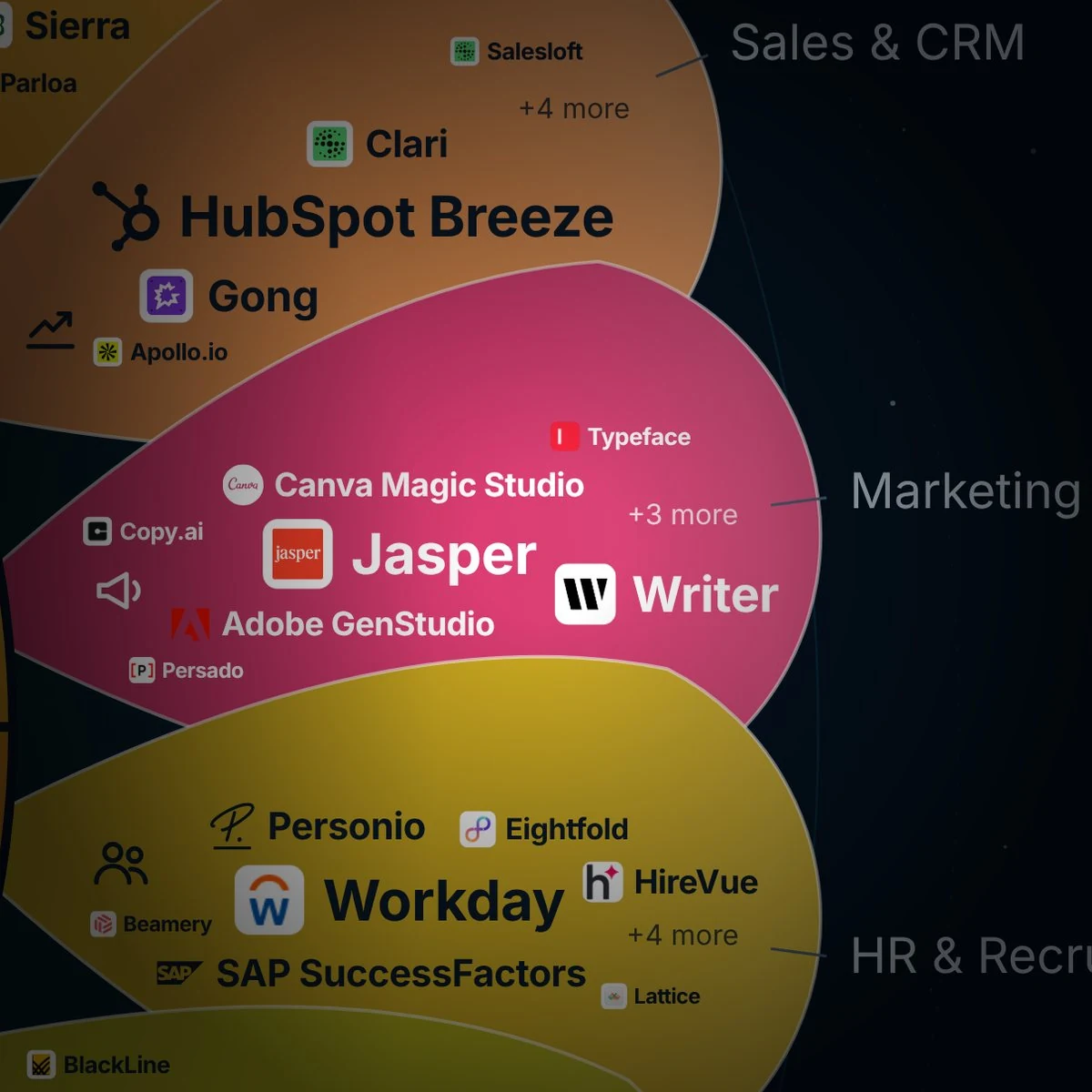
GOOD AI PRISM · TOPIC AREA · MARKETING & CONTENT
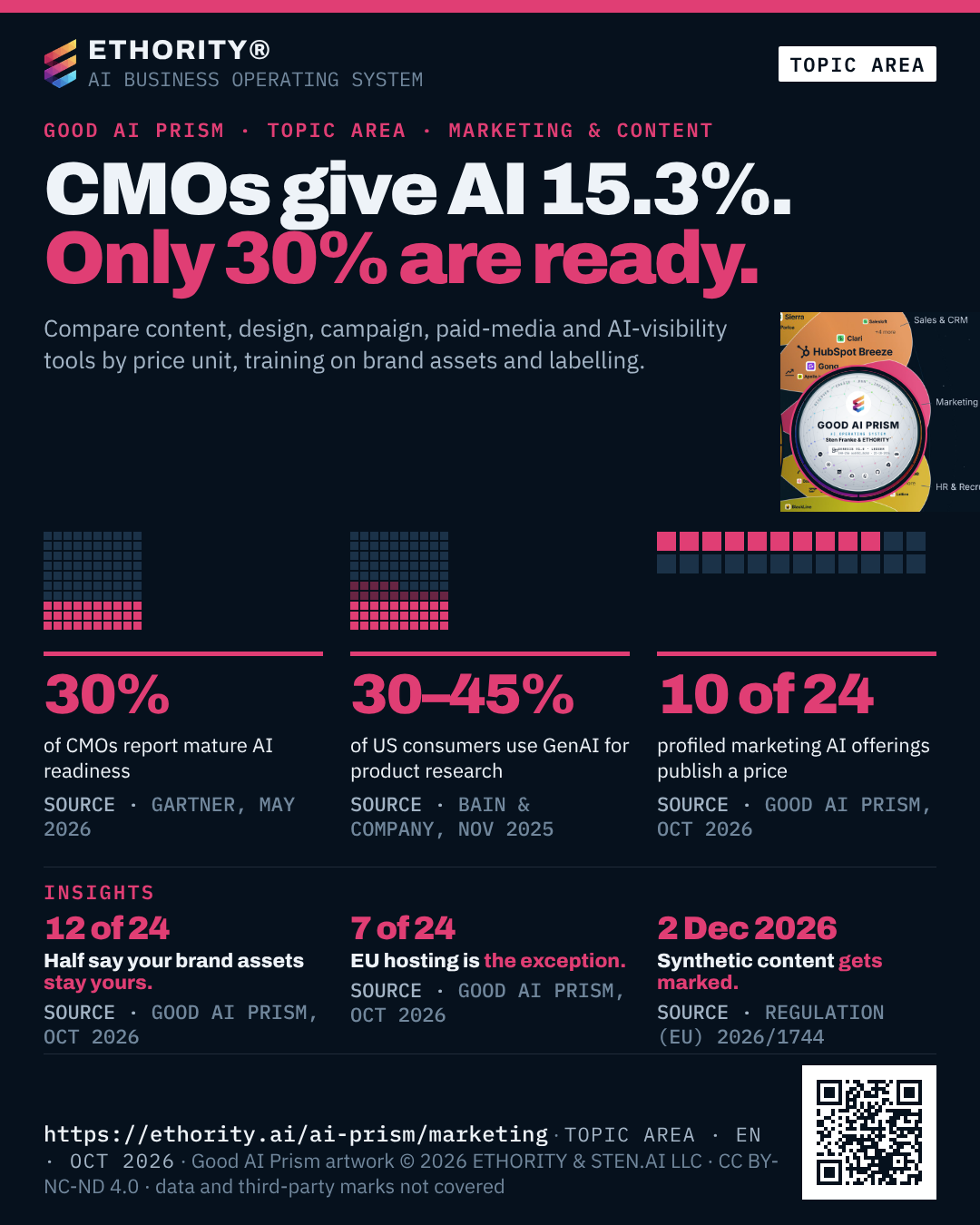
CMOs give AI 15.3%. Only 30% are ready.
Compare content, design, campaign, paid-media and AI-visibility tools by price unit, training on brand assets and labelling.
- 15.3%
- of marketing budgets go to AI initiativesGartner, May 2026 · gartner.com ↗
- 30%
- of CMOs report mature AI readinessGartner, May 2026 · gartner.com ↗
- 30–45%
- of US consumers use GenAI for product researchBain & Company, Nov 2025 · bain.com ↗
- 10 of 24
- profiled marketing AI offerings publish a priceGood AI Prism, Oct 2026
Half say your brand assets stay yours.
12 of the 24 profiled marketing offerings document that customer data is not used for training or only with opt-in.
Good AI Prism, Oct 2026
EU hosting is the exception.
Seven of the 24 profiled marketing offerings document an EU hosting or data-residency option, among them Bynder and neuroflash.
Good AI Prism, Oct 2026
Synthetic content gets marked.
Generative systems already on the EU market must mark outputs machine-readably by 2 Dec 2026.
Regulation (EU) 2026/1744
How to use this page
Three tools and one offer turn this page into a decision.
- Open the Marketing & Content map: 24 offerings on one petal of the Good AI Prism, with logos and provider facts.
- Compare up to three offerings: decision facts side by side, each with its source and date.
- Run the Task economics calculator: turn saved hours into capacity you can attribute, before a pilot is approved.
- Offer: AI Act Readiness Sprint: every AI use in marketing mapped to the AI Act dates, including the marking duty from 2 Dec 2026.
Compare baseline: three training postures
Credits with no training, tokens with no training, and seats where data may train: read the clause before the price.
| Offering | Price | Billing | Training | Source |
|---|---|---|---|---|
| neuroflash | From €42 /mo | Credits | Not used | neuroflash pricing page |
| Writer | From $2 /1M tokens | Per user | Not used | Writer pricing and API |
| Hootsuite Wisdom | From $99 /user/mo | Per user | Used | Hootsuite AI terms |
Registry facts as stated on each provider's own pages, read 22 Oct 2026. Add your own volumes in Compare before deciding.
Rules and dates
The labelling dates for synthetic text, images, video and voice.
- 2 Aug 2025
Obligations for general-purpose AI models apply.
Reg. (EU) 2024/1689
- 2 Aug 2026
Art. 50: people must be told when they interact with an AI system.
Reg. (EU) 2026/1744
- 2 Dec 2026
Machine-readable marking for generative systems already on the EU market.
Reg. (EU) 2026/1744
The brief and the study
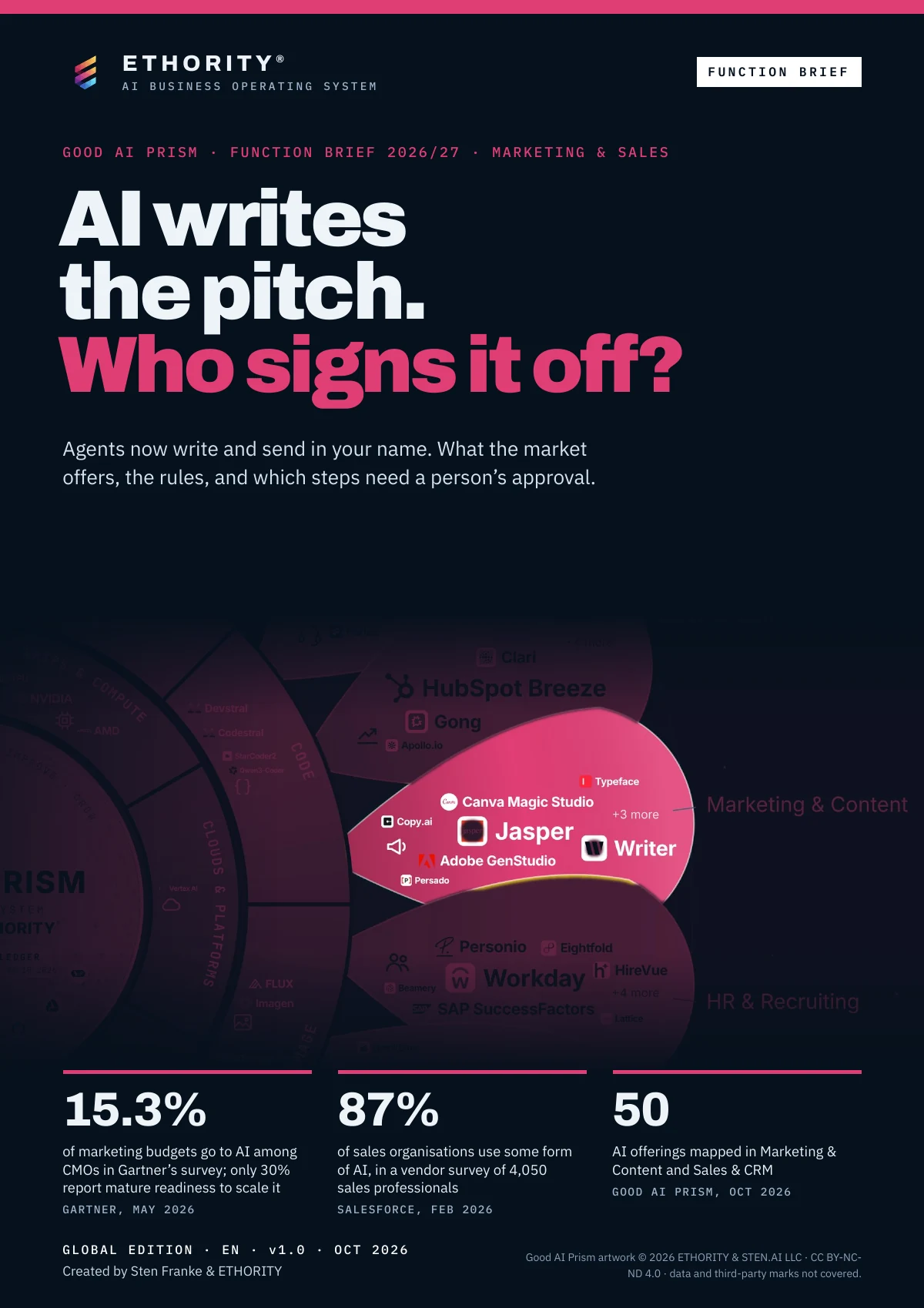
New: the Marketing & Sales function brief, first edition of 27 Oct 2026, covering this topic area and Sales & CRM. The Global Market Study 2026/27 reads Marketing & Content in its business-functions chapter.
Global edition · EN
AI writes the pitch. Who signs it off?
Agents now write and send in your name. What the market offers, the rules, and which steps need a person’s approval.
Version 1.0 · 40 pages
Open the study →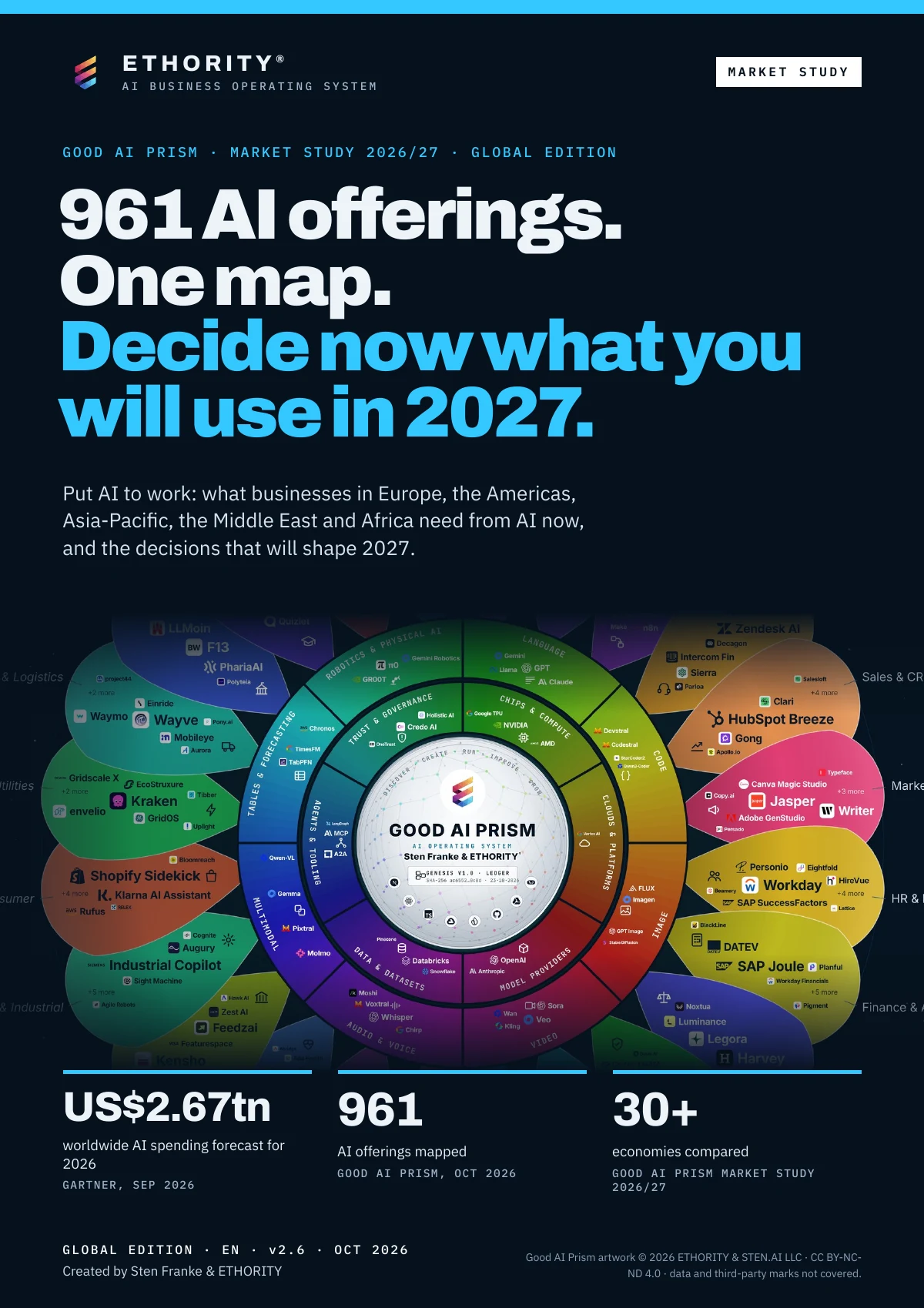
Global edition · EN
961 AI offerings. One map. Decide now what you will use in 2027.
The Good AI Prism helps you find useful AI and compare the evidence behind your options. For organisations already using AI, the question is moving from whether to use AI to which AI, how safely and whether it pays. This Global edition brings together 961 AI offerings across 24 topic areas, 8 data types and 6 technology layers, with sources, dates and limits to guide your next decision.
Version 2.6 · 90 pages
Open the study →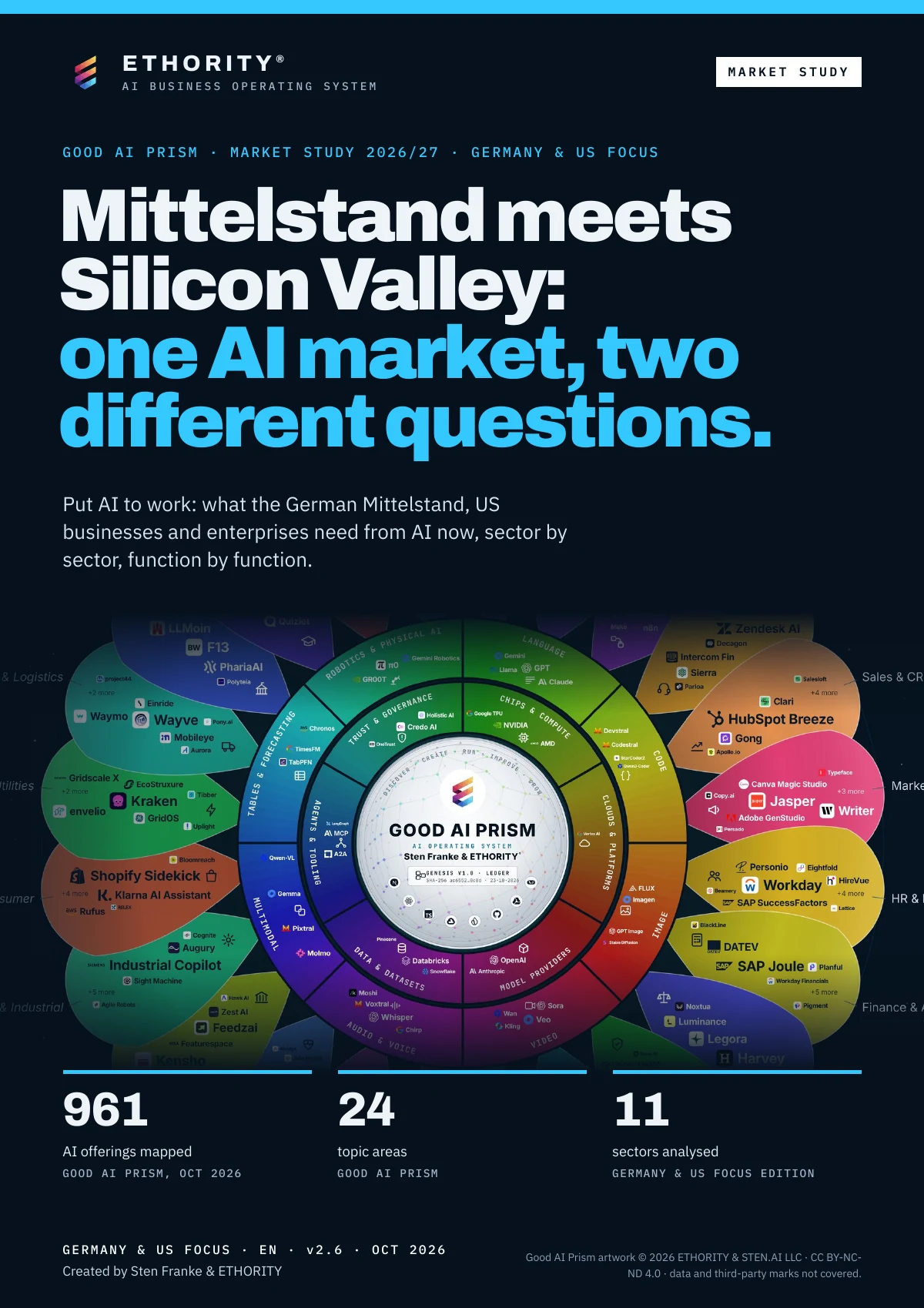
Germany & United States Focus · EN
Germany's mid-sized companies meet Silicon Valley: one AI market, two different questions.
The Mittelstand needs know-how; US firms need cost control. What German and US businesses need from AI now, sector by sector, function by function.
Version 2.6 · 72 pages
Open the study →Read on
Our long read on marketing AI, plus labelling rules for synthetic media and AI in retail pricing.
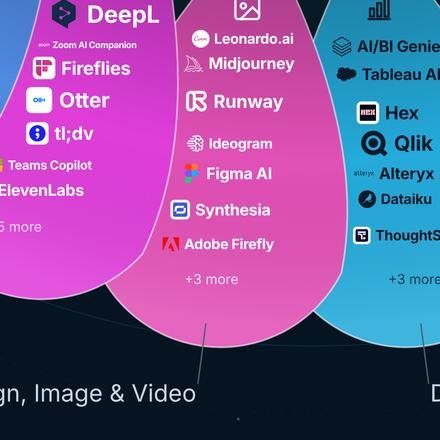
Synthetic media now needs a label almost everywhere.
What has changed for AI-generated faces and voices since Microsoft's VASA-1 model in 2024, and the labelling rules in the EU, China, Korea and India.
See the map on one page →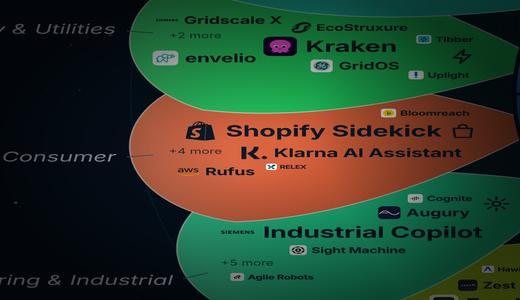
Shoppers move to AI faster than retailers.
Why consumer trust and measured results now matter as much as algorithms in pricing and personalisation.
See the map on one page →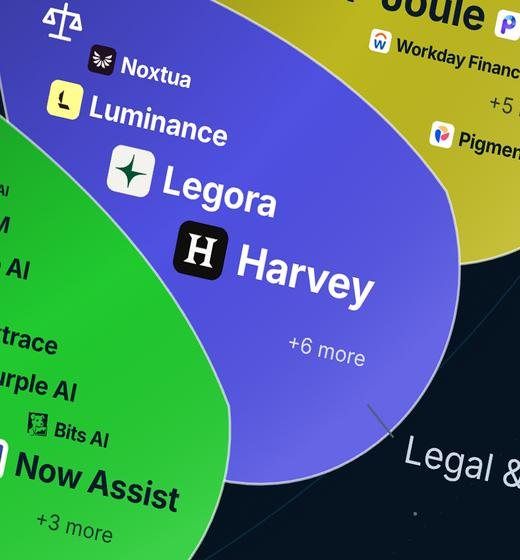
Ten AI ethics issues now have legal dates.
The ten AI ethics issues of 2024 now each have a legal date, a measurable control or published evidence.
See the map on one page →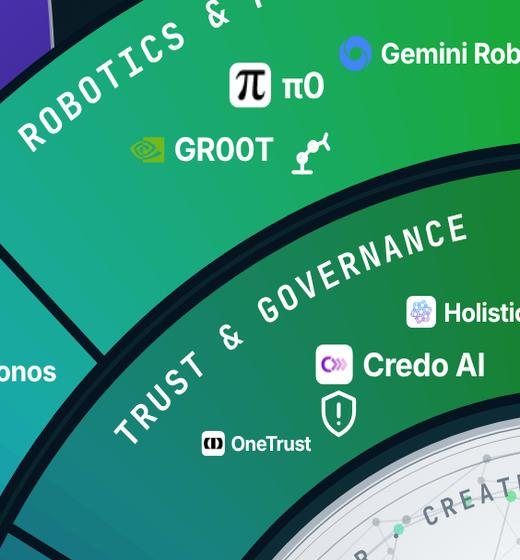
Check every vendor claim before you rely on it.
Tie every vendor claim to the exact product, version, contract and use before you rely on it.
See the map on one page →Implement it with ETHORITY
From tool sprawl to a governed content stack.
AI Decision Brief
€195 net · one-time
Up to three marketing AI offerings compared fact by fact, with training, hosting and licence terms and the questions to ask.
Request scope and delivery
See what this package includes →AI Act Readiness Sprint
€6,900 one-time · net
Article 50 labelling, inventory and owner set-up for every generative tool in your marketing stack.
Date and place by agreement
See what this package includes →AI Literacy & Adoption
€2,400 one-time · net
Role-based AI skills for marketing and content teams, tied to the tools they use and the rules that apply.
Scope and delivery by agreement
See what this package includes →Buyer questions
How much of the marketing budget goes to AI elsewhere?
Gartner's 2026 CMO Spend Survey puts it at 15.3% of marketing budgets on average, while only 30% of CMOs report mature AI readiness.
Will a content tool train on our brand assets?
Check each contract. In our review, 12 of the 24 profiled marketing offerings document no training on customer data or opt-in only; Hootsuite and Typeface state uses of customer data, Typeface for customer-dedicated models.
What are AI visibility tools, and do we need one?
Tools such as Peec AI, the AI Visibility Toolkit, Surfer and BrightEdge Copilot track how a brand appears in assistant answers. With 30–45% of US consumers researching products with GenAI, the question is real; ask each provider how it samples assistants and prompts.
What must we label, and by when?
Article 50 transparency duties apply since 2 Aug 2026. Generative systems already on the market must mark outputs machine-readably by 2 Dec 2026, and published deepfakes must be disclosed. See our synthetic media article.
How should we compare prices?
On cost per approved asset or per conversion. Seats (Jasper from US$69 per month), subscriptions (neuroflash from €42 per month) and tokens (Writer API) follow different cost curves; paid-media tools carry the cost in media spend.
The evidence at a glance
ETHORITY · LONG READ
Up to 45% of US shoppers ask AI first. Marketing follows.
CMOs now put 15.3% of their budgets into AI, and shoppers research with assistants. We read the prices, training and hosting terms of 24 marketing AI offerings.
Marketing has stopped asking whether to use AI and started asking how much to spend on it. Gartner's 2026 CMO Spend Survey found that chief marketing officers allocate 15.3% of their marketing budgets to AI initiatives, while total marketing budgets barely moved, to 7.8% of company revenue from 7.7%. Only 30% of the 401 marketing leaders surveyed report mature AI readiness. Money is moving faster than capability.
At the same time the customer has moved. Bain estimates that 30% to 45% of US consumers already use generative AI for product research and comparison. A growing share of discovery now happens inside an assistant that summarises, ranks and recommends before a shopper ever reaches a brand's site.
ETHORITY reviewed 24 marketing AI offerings for the Good AI Prism in October 2026, reading each provider's own pricing, security and legal pages. This piece reports what they publish, and what a buyer should ask before signing.
Five jobs, from brief to visibility
The Marketing & Content area map sorts the offerings by job. Content creation and brand voice: Jasper, Writer, Copy.ai, neuroflash, Typeface and Markup AI. Design and assets: Canva Magic Studio, Adobe GenStudio and Bynder AI Agents. Campaign orchestration and messaging: BrazeAI, SAP Engagement Cloud, Optimizely Agent Platform, Jacquard and Persado. Paid media automation: Meta Advantage+, Google Performance Max and Albert. Social and listening: Hootsuite Wisdom, Iris AI and Composer.
A fifth job is new in this edition: visibility in AI answers. Peec AI, the AI Visibility Toolkit, Surfer and BrightEdge Copilot measure or improve how a brand appears in assistant answers, not only in search results. It is the market's response to the Bain numbers, and it is still young enough that method matters more than dashboards. Ask each provider which assistants it samples, how often, and with which prompts.
Prices you can see, units you must compare
Ten of the 24 publish a price. The units range from seats to tokens. Jasper lists its Pro plan at US$69 per seat per month, or US$59 billed yearly. Canva Pro costs US$12 per person per month billed yearly. neuroflash starts at €42 a month billed annually. Writer publishes API prices per million tokens, for example US$2 input and US$8 output for Palmyra X6. Hootsuite lists from US$99 per user per month.
Seat prices are easy to budget and easy to waste, because licences outlive enthusiasm. Token and credit prices follow usage and can spike in a campaign month. Paid media tools such as Advantage+ and Performance Max carry no licence fee at all; the cost sits in the media spend and in the control you hand to the platform. Compare on cost per approved asset or per conversion, not on the list price.
15.3% of marketing budgets now go to AI initiatives, according to Gartner's 2026 CMO Spend Survey. Only 30% of CMOs report mature AI readiness.
Scenario. Five Jasper Pro seats cost US$345 a month, or US$295 at the yearly rate of US$59. Canva Pro for the same five people costs US$60 a month billed yearly. Neither figure means much until it is divided by approved assets or conversions.
Brand data, training and where it lives
Marketing tools hold the assets that make a brand: voice guides, images, customer segments and campaign results. Training terms decide who else learns from them. Twelve of 24 document that customer data is not used for training, or only with opt-in. Some state that it can be used. Hootsuite's AI terms allow use of customer data for training. Typeface fine-tunes on a customer's content and brand assets for that customer's dedicated models, which is often exactly what a brand wants, provided the contract says the models stay dedicated.
Hosting is thinner still. Seven of 24 document an EU hosting or data-residency option, among them Bynder with an EU-only option in Frankfurt and neuroflash with servers in Germany. Braze states that EU data routing is not implemented for its Operator assistant. For a European brand with customer segments in the prompt, that is a contract question, not a footnote.
30–45% of US consumers already use generative AI for product research and comparison (Bain & Company, Nov 2025).
The labelling deadline
AI-generated content now has dates attached. Under the AI Act, as amended by Regulation (EU) 2026/1744, the Article 50 transparency duties apply since 2 Aug 2026. Providers of generative systems must mark synthetic outputs in a machine-readable format, and systems already on the market before that date have until 2 Dec 2026. Deployers that publish deepfakes must disclose them. Our article on synthetic faces and voices covers the rules in the EU, China, India and South Korea.
For marketing teams this means two checks. Does each image, video and voice tool mark its output? And does the publishing workflow keep the marks, or strip them in export and compression?
How to run a 30-day test
A fair test of a marketing AI tool takes a month, one channel and two teams. Pick a channel with steady volume, such as product pages, newsletters or paid social. Split the work: one team produces with the tool, one without, both under the same brief and the same approval rules. Record four numbers for each asset: time from brief to approval, rounds of revision, cost including licences and agency hours, and the channel result, whether click-through, conversion or reach.
Two rules for an honest test
Two rules keep the test honest. First, count rejected outputs as cost, because a tool that drafts fast but needs heavy rework is slower than it looks. Second, keep the legal check in the loop: who owns the output, which licence covers images and fonts, and whether the tool marks synthetic content. A test that ignores rights saves time now and spends it later in takedowns.
At the end, the decision is simple. Scale the tool where the numbers moved, drop it where they did not, and write down why. That record becomes the evidence base for the next budget round, which is exactly what the readiness gap in the Gartner survey says most teams lack.
What the readiness gap means
In early 2025, 27% of CMOs reported limited or no GenAI adoption in their teams. A year later budgets have moved, but readiness has not caught up. The Global Market Study's advice for this function is plain: choose tools by job, check IP and licence terms, and measure content cost per asset and conversion. That beats buying a platform for every job and hoping usage follows.
What to do Monday
- Inventory every AI tool already in use. Include free and personal accounts; brand assets often sit there.
- Pick one job and one measure. Cost per approved asset, time to publish or conversion rate for one channel.
- Shortlist three per job. Use the area map, and keep visibility tools separate from content tools.
- Ask four questions in writing. Price unit, training on your assets, hosting region and output marking.
- Set the labelling rule. Decide by 2 Dec 2026 how synthetic images, video and voice are marked and disclosed.
Retail teams should read our piece on AI in pricing and personalisation. For the hand-over from campaign to pipeline, see the Sales & CRM topic area.
Sources and further reading
- ETHORITY, Good AI Prism research on 24 marketing offerings (provider pages read 22 Oct 2026) → · 22 Oct 2026
- ETHORITY, Good AI Prism Global Market Study 2026/27 → · 22 Oct 2026
- Gartner, 2026 CMO Spend Survey press release ↗ · 11 May 2026
- Communicate Online, CMOs increase AI spending despite limited readiness (report on the Gartner survey) ↗ · 16 May 2026
- Gartner, over a quarter of marketing organisations have limited or no GenAI adoption ↗ · 18 Feb 2025
- Bain & Company, agentic AI poised to disrupt retail ↗ · 13 Nov 2025
- Regulation (EU) 2026/1744 (Digital Omnibus on AI) ↗ · in force 27 Jul 2026
- Lewis Silkin, The Digital Omnibus on AI enters into force ↗ · 27 Jul 2026
- Jasper, pricing ↗ · read 22 Oct 2026
- Canva, Pro vs Enterprise ↗ · read 22 Oct 2026
- neuroflash, pricing ↗ · read 22 Oct 2026
- Writer, API pricing ↗ · read 22 Oct 2026
- Hootsuite, AI terms ↗ · read 22 Oct 2026
- Typeface, trust and safety ↗ · read 22 Oct 2026
- Braze, BrazeAI Operator data privacy and security ↗ · read 22 Oct 2026
Put the thinking to work
AI Opportunity Case →
A defensible proceed, test, redesign, defer or stop decision. The fee is independent of which outcome the evidence supports.
A written comparison of up to three AI offerings · €195 net →
Start with one question and up to three offerings. Request a sourced comparison, provider questions and a cost sketch using your assumptions.
YOUR NEXT STEP
Discuss your question with Sten Franke.
Bring your business question or the figures you already know. ETHORITY investigates within the agreed scope; together with Sten Franke you agree the next piece of work.