 ETHORITY®
Global edition · EN
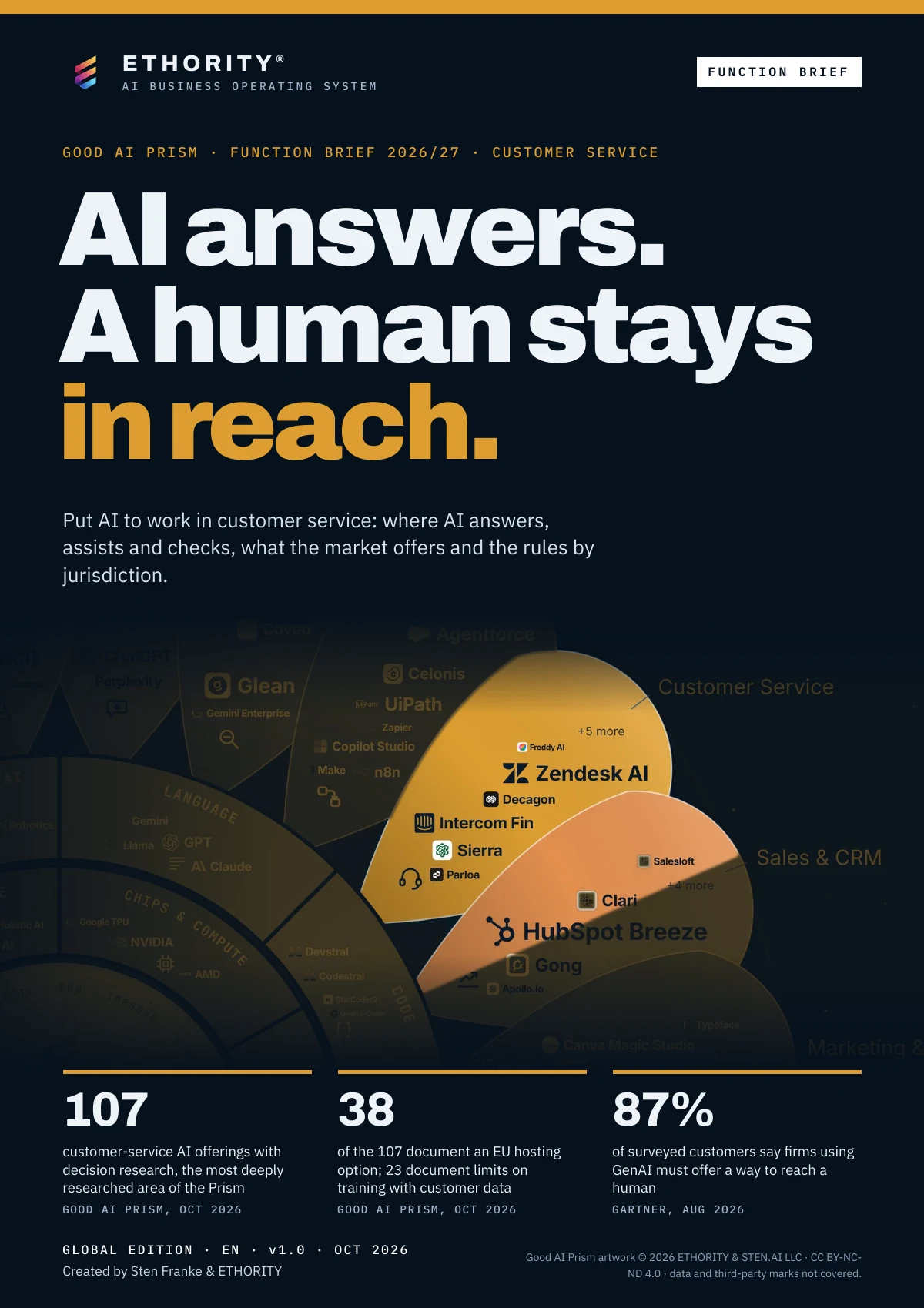
AI answers. A human stays in reach.
Answered is not solved: 87% of surveyed customers want a way to reach a human. Where AI answers, assists and checks, what 107 offerings do and the rules.
Version 1.0 · 42 pages
Open the study →Germany & United States Focus · EN
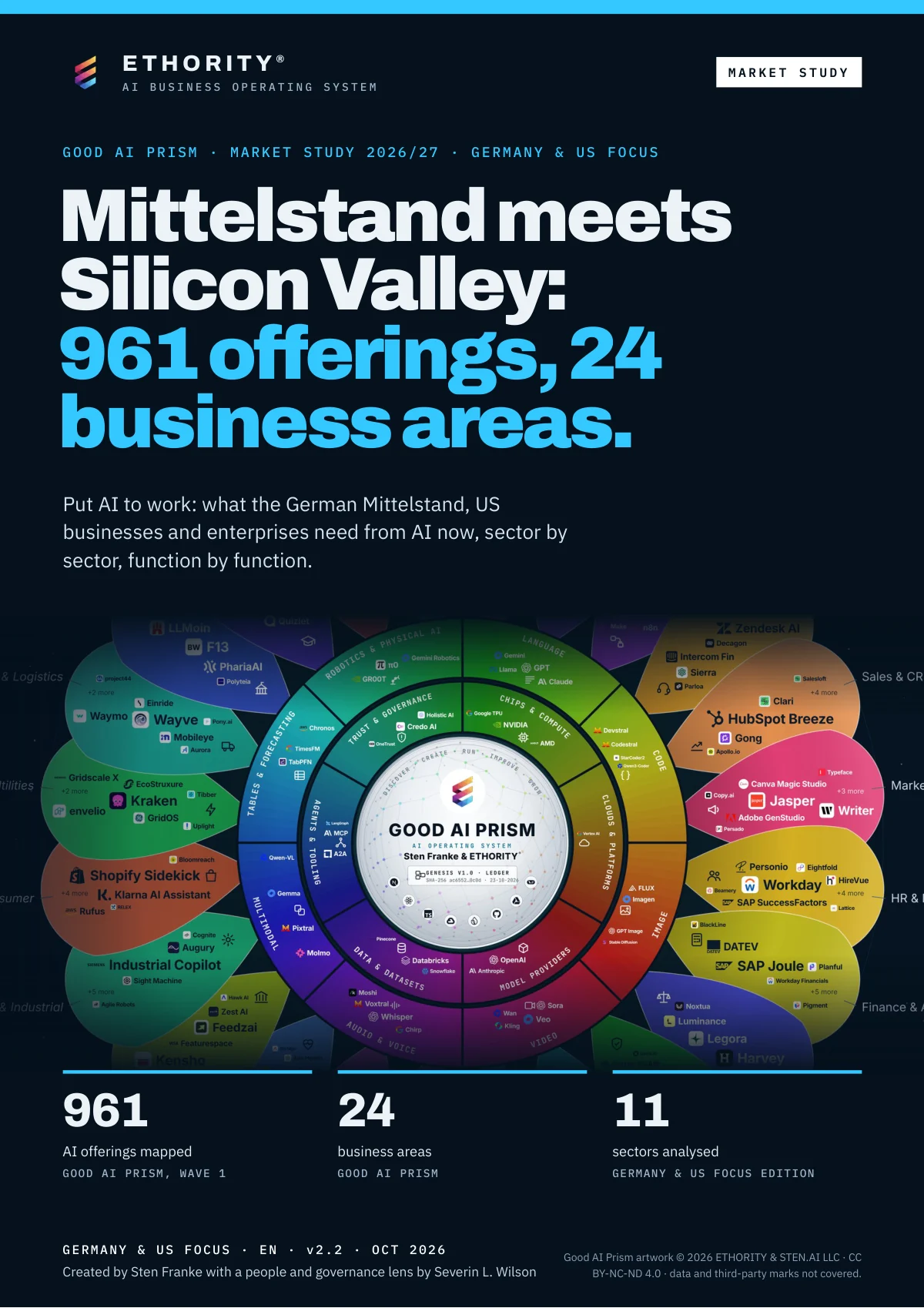
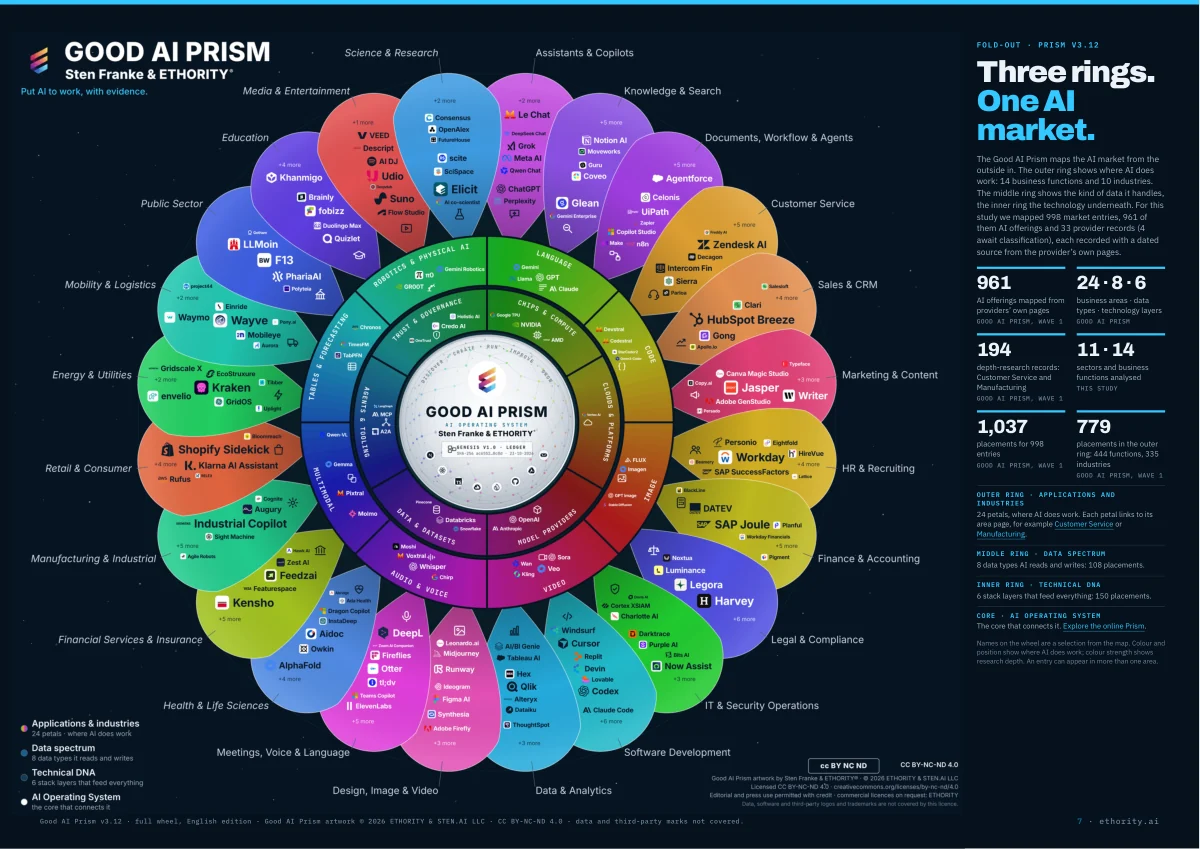
Germany's mid-sized companies meet Silicon Valley: 961 offerings, 24 business areas. · Good AI Prism research
What mid-sized German companies, US businesses and large enterprises need from AI now, sector by sector.
v2.2 · 66 pages · 25 Oct 2026 · Edition
Archived edition, preserved unchanged. Contributor and contact credits in this predecessor are superseded; use the current edition and media kit for current authorship and contact. The study describes the research edition of 20 October 2026: 998 market entries, including 961 AI offerings. Its 194 depth-research records include 107 Customer Service records (95 in this edition plus 12 researched earlier) and 87 Manufacturing records. Research records may overlap and are not a verified count of distinct products. They describe a different population from the 485 website identities. Population note: the imprint (page 65) flags one combined Customer Service total for re-checking without identifying the affected aggregate. Read the stated populations separately; a consolidated Customer Service total is not confirmed here.
market-focus-en-v2.2.pdf · Edition 2.2
Archived edition, preserved unchanged. Contributor and contact credits in this predecessor are superseded; use the current edition and media kit for current authorship and contact. The study describes the research edition of 20 October 2026: 998 market entries, including 961 AI offerings. Its 194 depth-research records include 107 Customer Service records (95 in this edition plus 12 researched earlier) and 87 Manufacturing records. Research records may overlap and are not a verified count of distinct products. They describe a different population from the 485 website identities. Population note: the imprint (page 65) flags one combined Customer Service total for re-checking without identifying the affected aggregate. Read the stated populations separately; a consolidated Customer Service total is not confirmed here.
Research method and catalogue coverage →EXECUTIVE SUMMARY
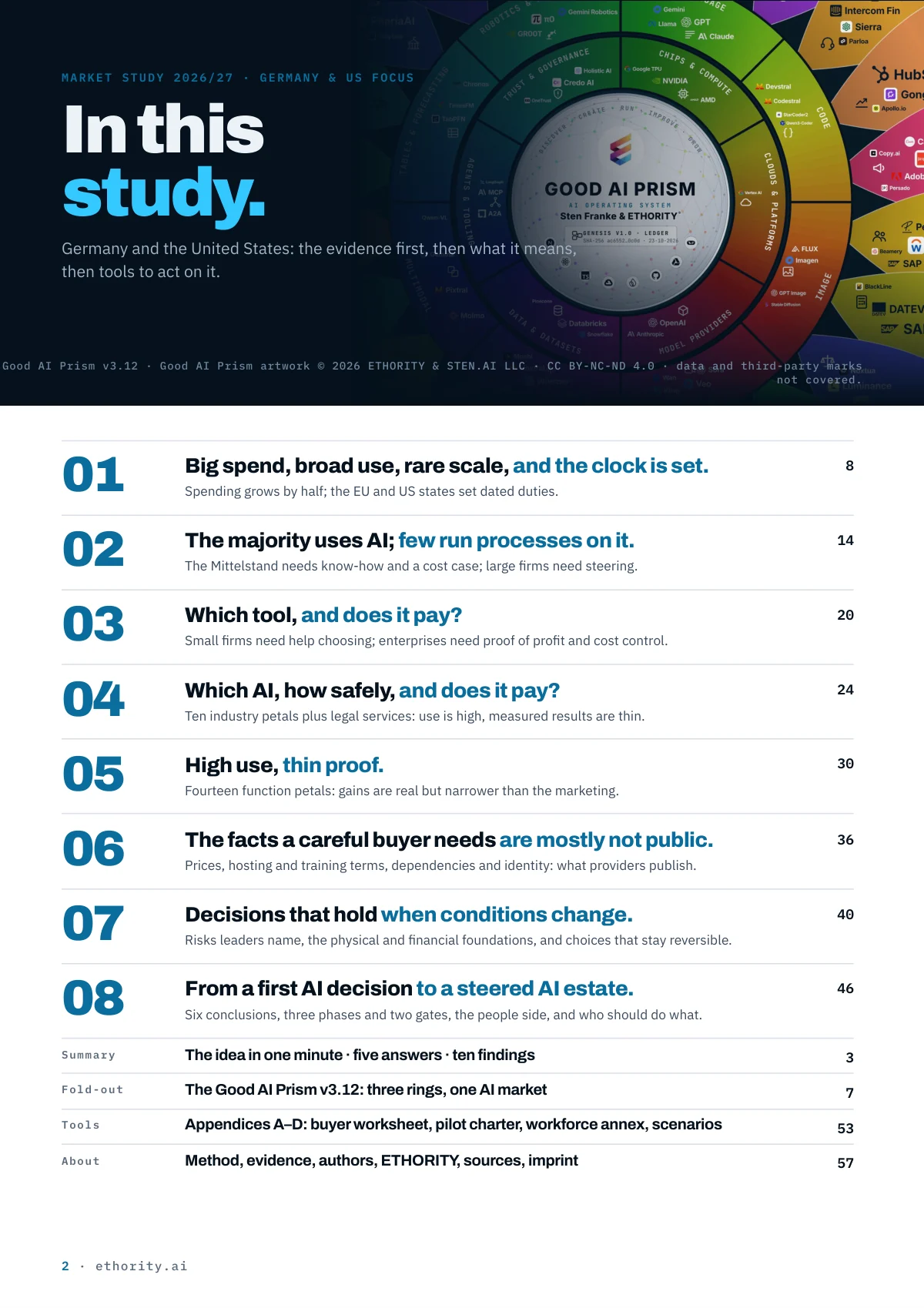
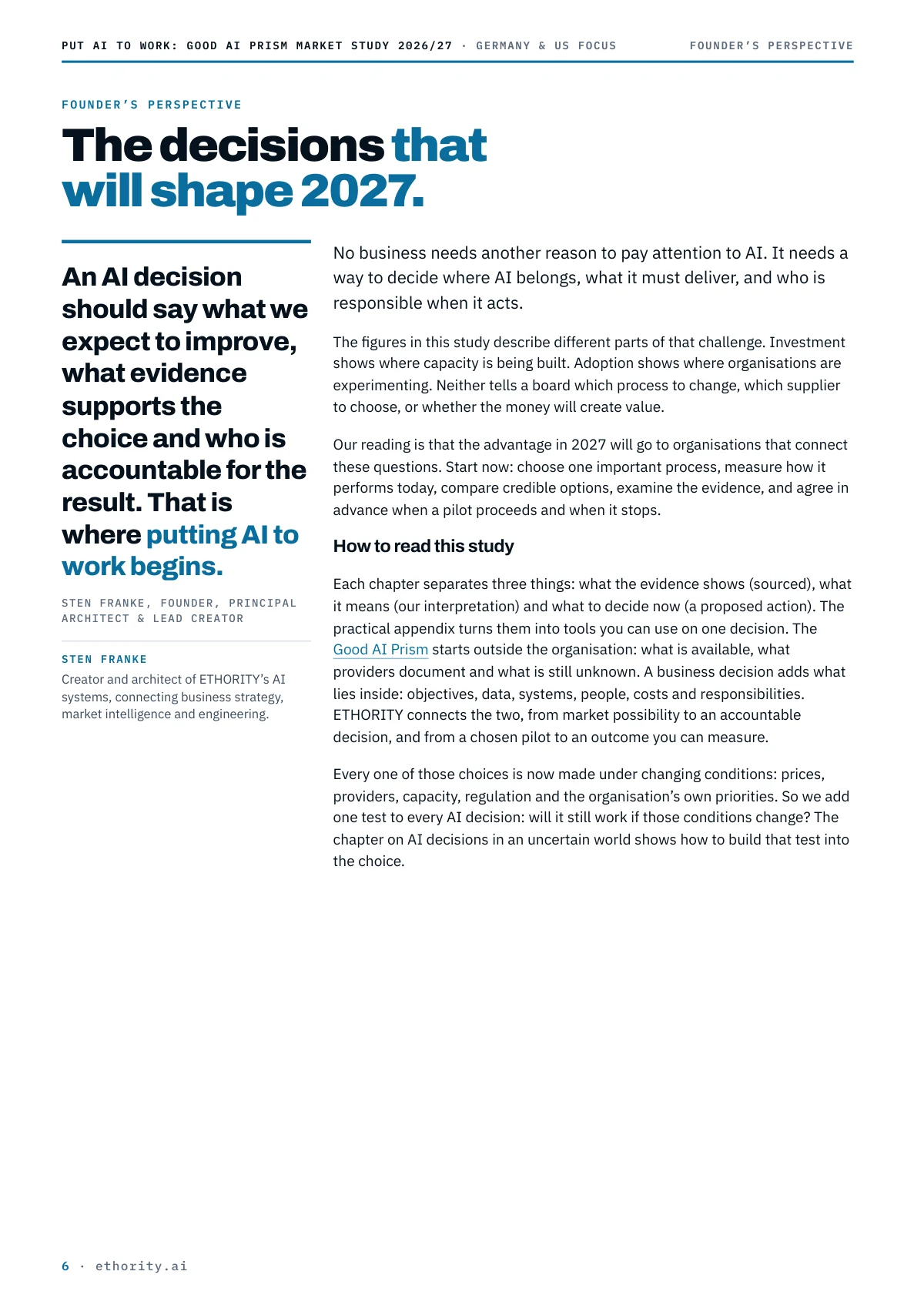
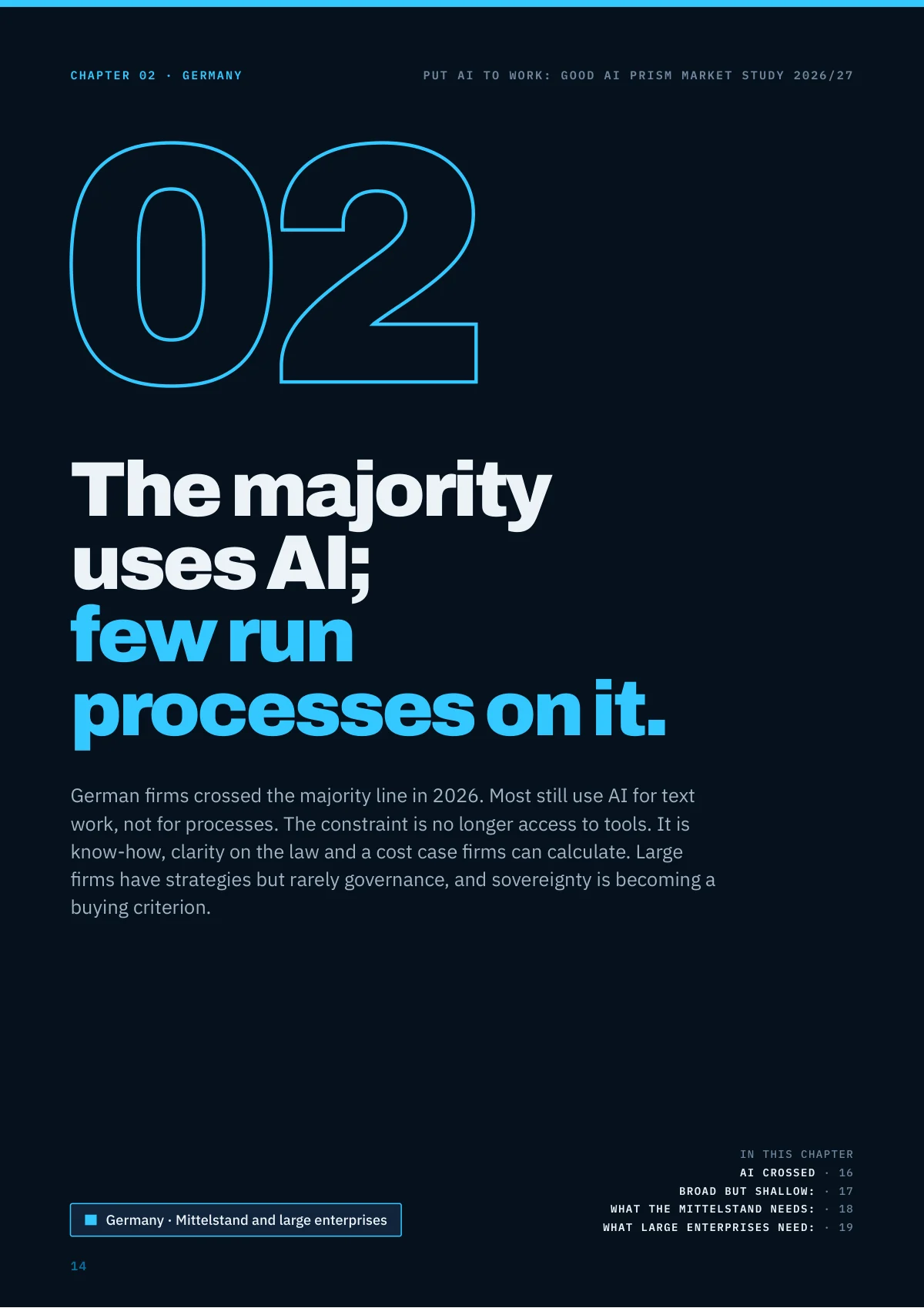
The Germany & United States Focus edition helps teams connect AI market developments with the decisions facing businesses in those two countries. It gives regulation, German and US conditions, sectors and business functions a dedicated reading path. Start with one process your organisation wants to improve, rather than a preferred supplier. Market spending and adoption research help explain the environment; they do not establish the return from your own project. The Focus edition is a distinct publication, not a translation of the broader Global edition.
The study separates sourced observations, the authors’ interpretation and proposed actions. That distinction matters when comparing offers. A capability claim, a contractual condition and a tested outcome answer different questions. Specify the product, plan, deployment region and intended workflow before drawing conclusions. The Good AI Prism provides a route into the market; individual profiles and their sources supply the detail. A provider’s headquarters cannot establish where your data is processed, and a certification claim needs its applicable scope. Keep unanswered material questions with the shortlist.
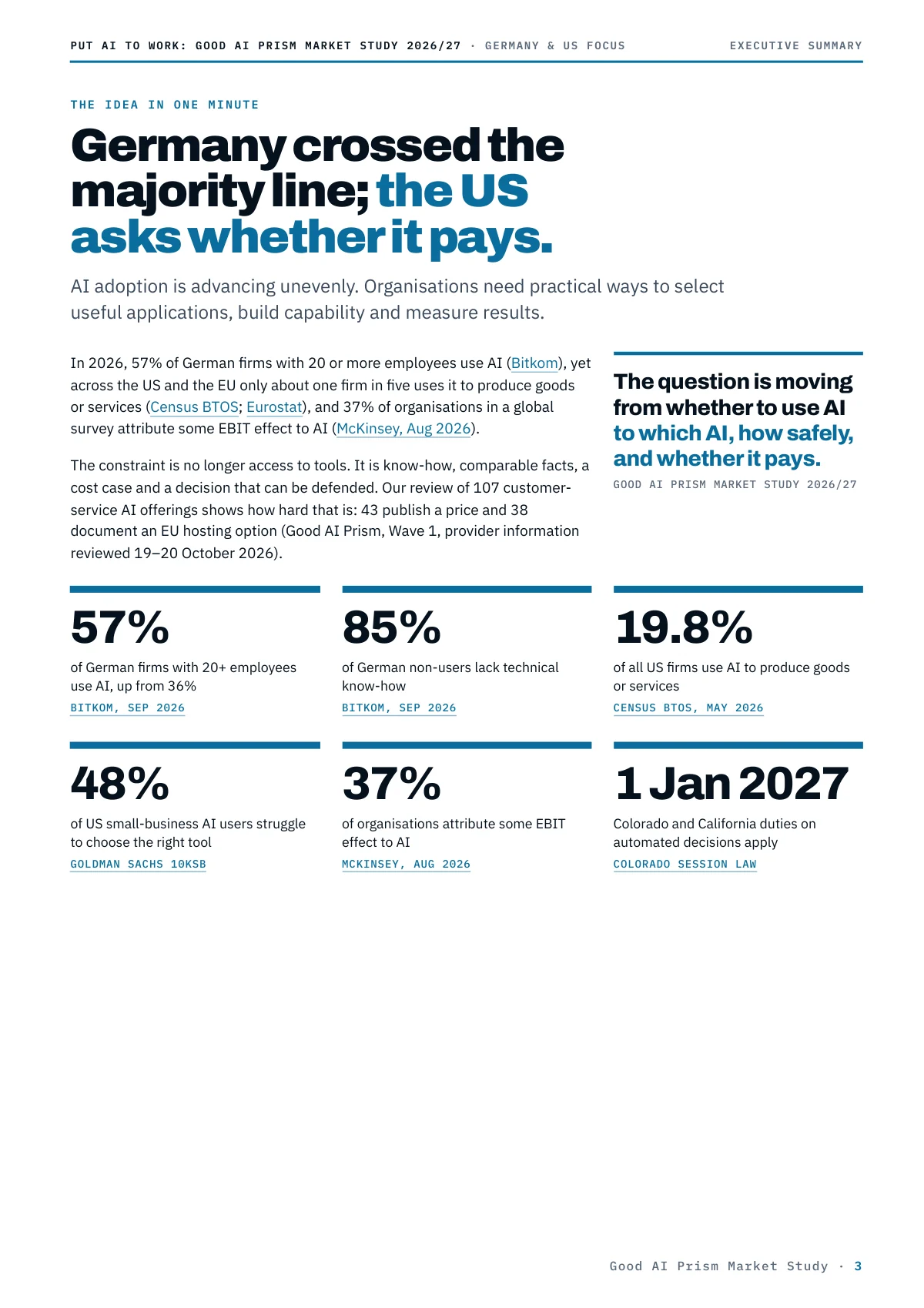
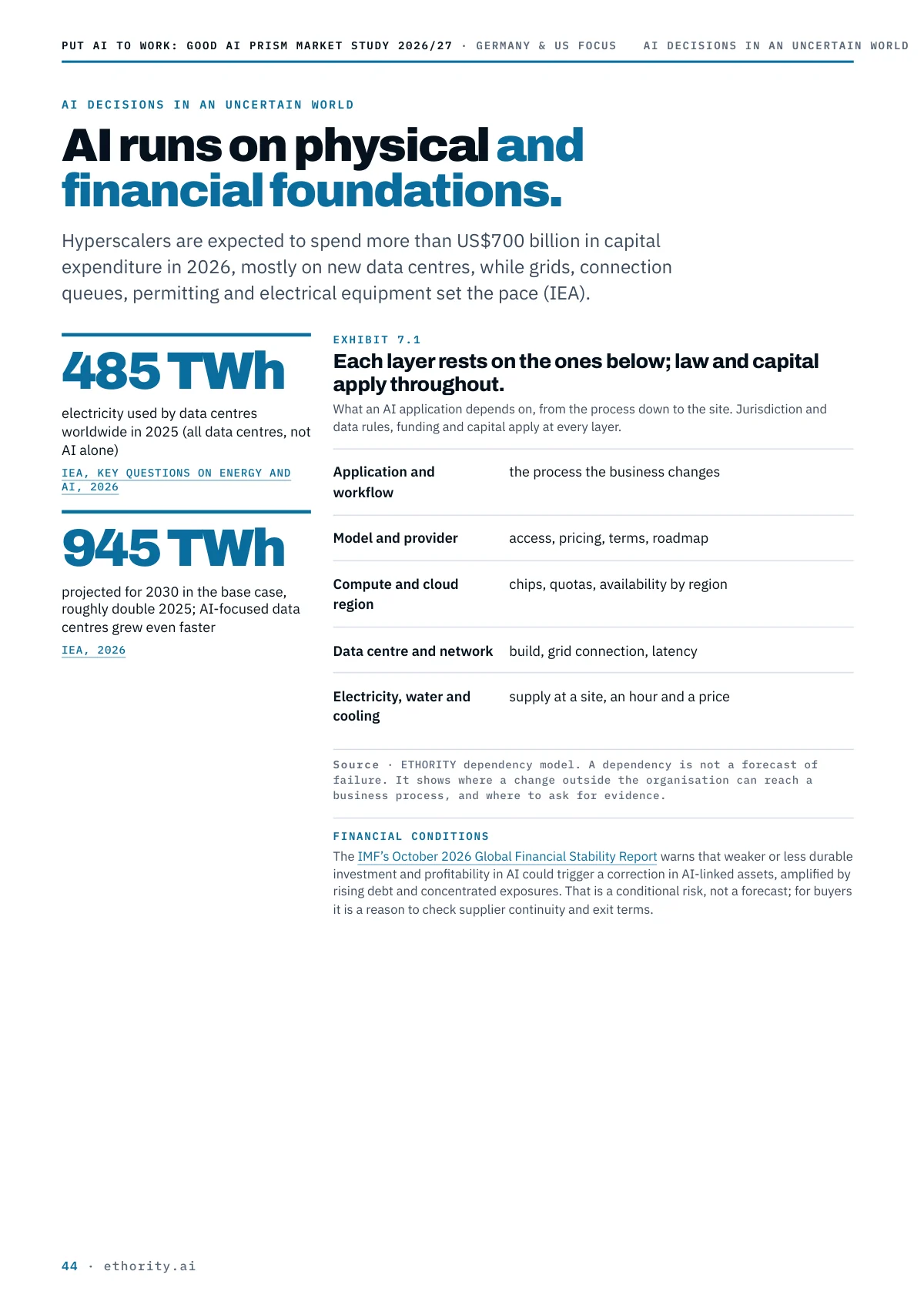
The selected edition examines what providers publicly document about price, hosting, training with customer data and integrations. Read each condition separately: a hosting option and a training-use clause do not establish the same thing. Provider documentation is a starting point for a shortlist, while operational assurance needs testing in the intended deployment. Ask suppliers to identify the product, plan, region and contractual terms that apply to your account. The study population, artwork selection and live website catalogue have different coverage. Keep each count with its source date and population, and retain the selected edition’s qualifications when sharing a finding.
A useful cost case includes licences or usage, integration, data preparation, human review, rework and change. Compare options at the volume and quality your business actually requires. Time released by a task is potential capacity; financial value depends on what happens to that capacity and which costs or outcomes change. The study’s buyer worksheet, pilot charter, workforce annex and scenario worksheet help make those assumptions explicit. Choose a responsible owner and define the evidence that would support continuing, redesigning or stopping a pilot before committing to a wider rollout.
Use the selected edition’s contents and source notes to pursue your question, then inspect the corresponding Prism area. Compare a small number of offerings against the same requirements. Carry their documented conditions and remaining questions into the calculator or an enquiry. Sten Franke contributes the business and systems perspective. A discussion can establish a bounded next piece of work. This review edition supports orientation and preparation; a customer engagement still needs its own agreed scope, responsibilities and acceptance criteria. Before a supplier conversation, write down the accepted outcome, expected volume, permitted data use and the person who can approve a trial. Ask each shortlisted provider to answer the same material questions in writing. Revisit the comparison when the product, price, integration or your operating assumptions change. The practical aim is a traceable decision that colleagues can examine, rather than a permanent ranking of suppliers.
Source: selected study v2.2 · EN. This editorial reading guide preserves the source edition’s scope; practical next steps are recommendations, not observed outcomes. Read the source overview ↗ · Inspect documented provider terms ↗
Global edition · EN
Answered is not solved: 87% of surveyed customers want a way to reach a human. Where AI answers, assists and checks, what 107 offerings do and the rules.
Version 1.0 · 42 pages
Open the study →
Article collection · EN
Read six perspectives connecting AI capability, business decisions and practical implementation.
Version 1.0 · 20 pages
Open the study →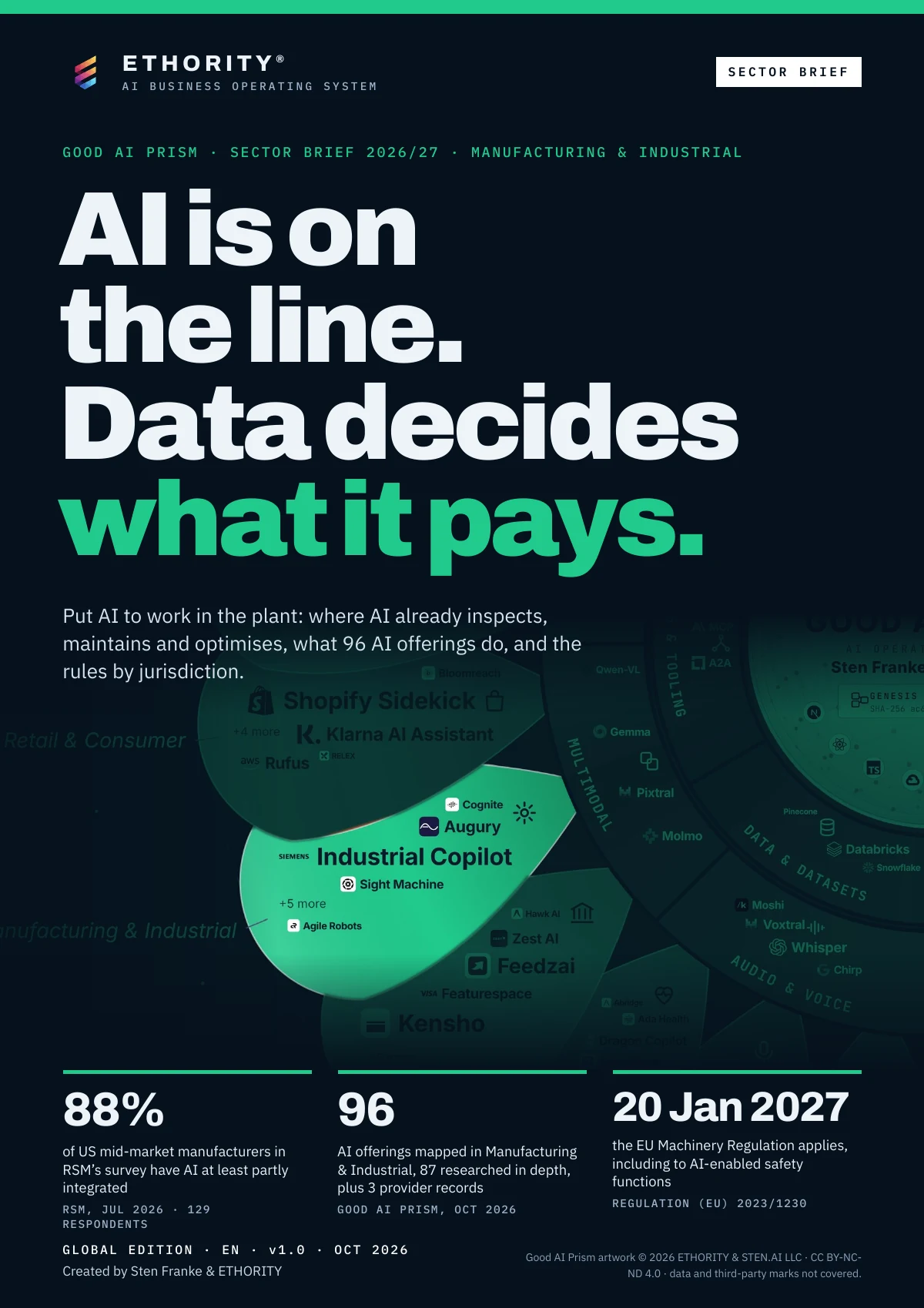
Global edition · EN
Start where data already flows. Where AI already inspects, maintains and optimises in the plant, what the market offers and the rules by jurisdiction.
Version 1.0 · 42 pages
Open the study →