 ETHORITY®
Global edition · EN
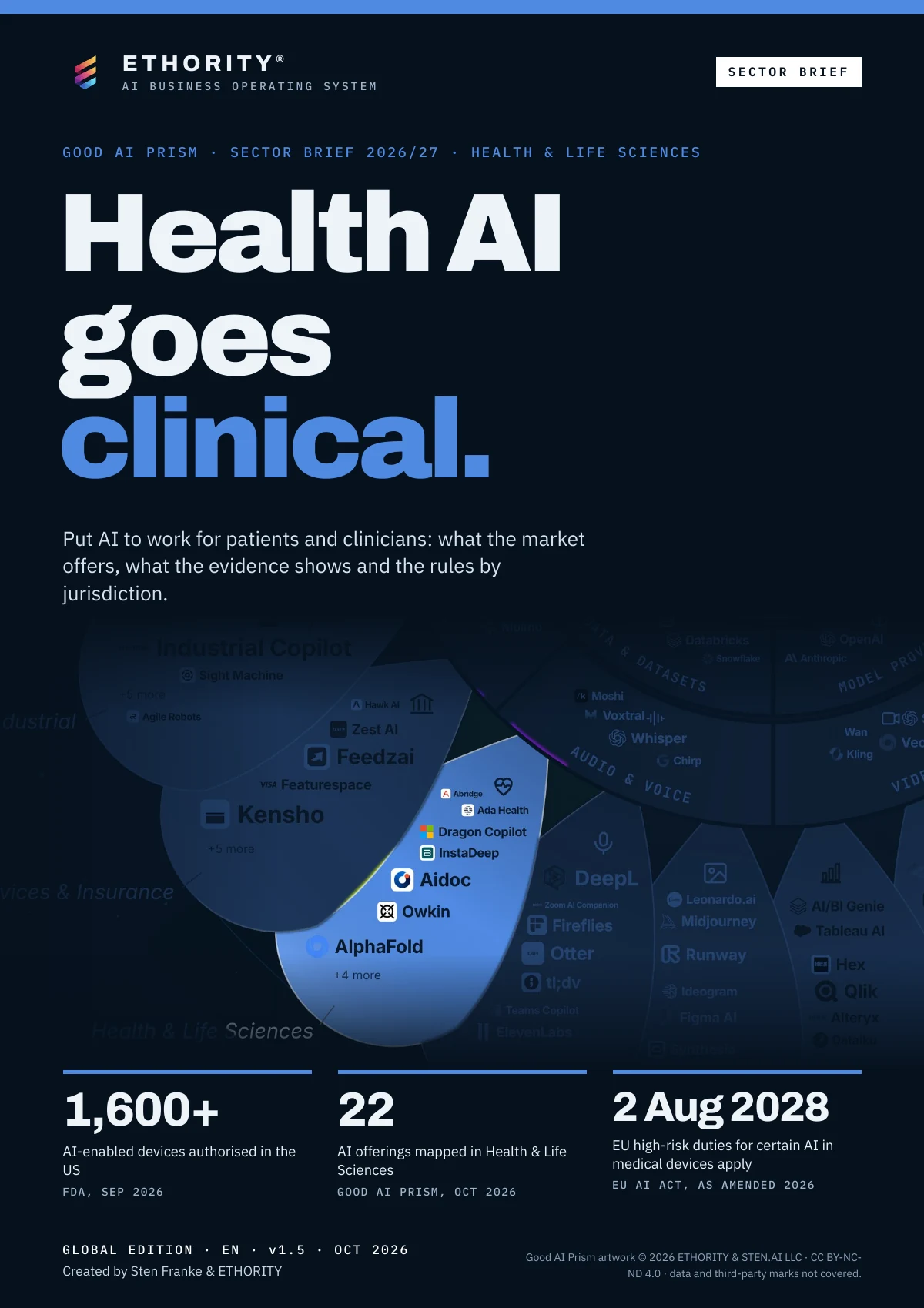
Health AI goes clinical.
More than 1,600 AI-enabled devices are authorised in the US. What the market offers patients and clinicians, what the evidence shows and the rules by jurisdiction.
Version 1.5 · 40 pages
Open the study →Global edition · EN
AI for care in ageing societies · Good AI Prism research
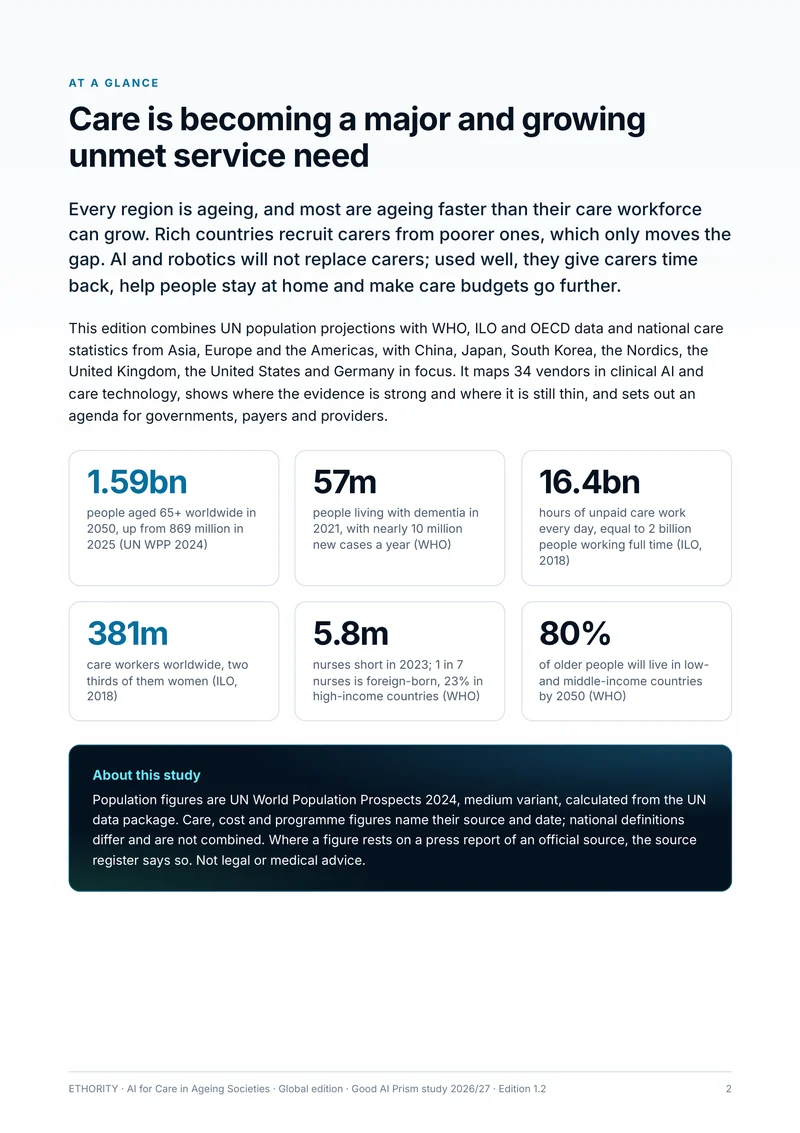
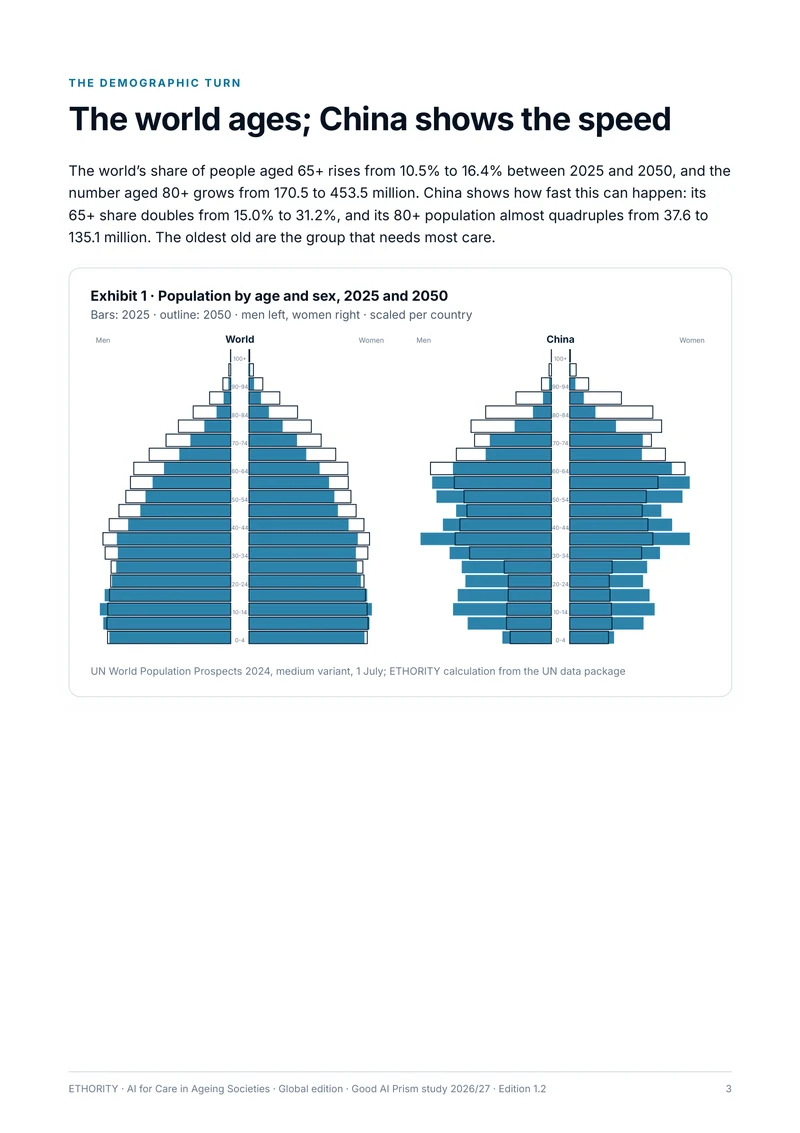
How health systems and long-term care use AI and robotics to give carers more time for people.
v1.2 · 18 pages · 22 Oct 2026 · Edition
Archived edition, preserved unchanged. Contributor and contact credits in this predecessor are superseded; use the current edition and media kit for current authorship and contact. Research populations and source dates are specific to this edition. They are distinct from the live market catalogue.

care-global-en.pdf · Edition 1.2
Archived edition, preserved unchanged. Contributor and contact credits in this predecessor are superseded; use the current edition and media kit for current authorship and contact. Research populations and source dates are specific to this edition. They are distinct from the live market catalogue.
Research method and catalogue coverage →EXECUTIVE SUMMARY
Ageing populations and workforce pressures make care capacity a practical question for providers, policymakers and technology teams. This study examines that context alongside AI applications in care and health services. Read the selected geographical edition first: a global comparison, a national situation and an original research perspective are different lenses. A demographic projection describes a possible future population under stated assumptions. It does not tell an individual care organisation which product to buy. Begin with a specific task, the people affected and the service standard that must be maintained.
The reading connects demand for care, workforce constraints and examples of AI-supported work. Documentation, scheduling, monitoring and clinical support should be assessed as distinct uses. Each has different users, information needs and consequences when something goes wrong. Ask where effort could be reduced without transferring a hidden burden to care workers, patients or relatives. A tool that produces an answer quickly may still require checking, explanation or correction. Involve the people who will use the system and those who will receive care before selecting a trial.
The study brings together demographic sources, sector information and research on particular applications. Keep the evidence level attached to each result: a reported deployment, an observational study and a controlled clinical comparison establish different things. Check the setting, population, date, comparator and outcome before carrying a finding into your own service. A reduction in one measured activity is not automatically an improvement in overall care or a financial saving. The original pages retain their source references and qualifications so readers can examine the basis of the argument.
A care application needs an explicit boundary around what the system may suggest, what people must decide and when a case is escalated. Establish access, data handling, human review and the ability to work safely during an outage. Include training, integration and supervision in the cost case. Measure the relevant care outcome alongside workload and service quality. Potential time savings should have an agreed destination, such as more time with people or a reduced backlog; they are not realised financial value until the corresponding change is demonstrated.
Use the study to formulate a question for the Health & Life Sciences area of the Prism, then inspect the sources behind a small shortlist. Request product-specific evidence for your intended use and location. Agree a bounded pilot, a responsible owner and criteria for continuing or stopping. The calculator can help expose assumptions; a Decision Brief can frame the comparison for a defined business question. This reading supports informed investigation. It does not replace clinical evaluation, professional judgement or the permissions needed for a particular medical use. A useful pilot record states who may use the system, which cases remain outside scope and how users report a problem. Compare the same workload before and during the trial, including checking time and escalations. Review the result with care staff and service users. Record a decision to continue, revise or stop, together with the evidence and the person accountable for the next step.
Source: selected study v1.2 · EN. This editorial reading guide preserves the source edition’s scope; practical next steps are recommendations, not observed outcomes. Read the source overview ↗
Global edition · EN
More than 1,600 AI-enabled devices are authorised in the US. What the market offers patients and clinicians, what the evidence shows and the rules by jurisdiction.
Version 1.5 · 40 pages
Open the study →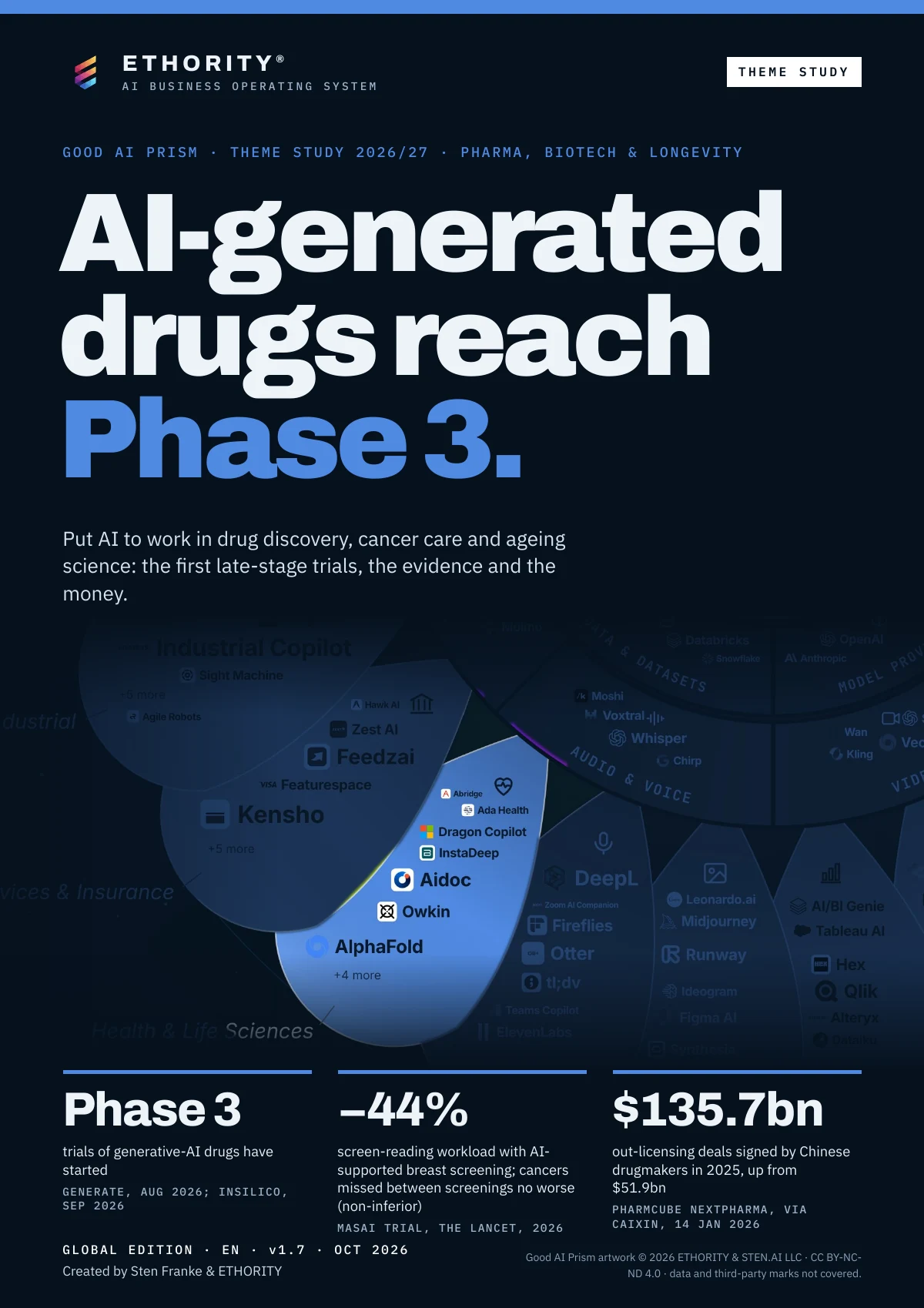
Global edition · EN
AI-supported breast screening cut screen-reading workload by 44%. The first late-stage trials, the evidence and the money in drug discovery, cancer care and ageing science.
Version 1.7 · 40 pages
Open the study →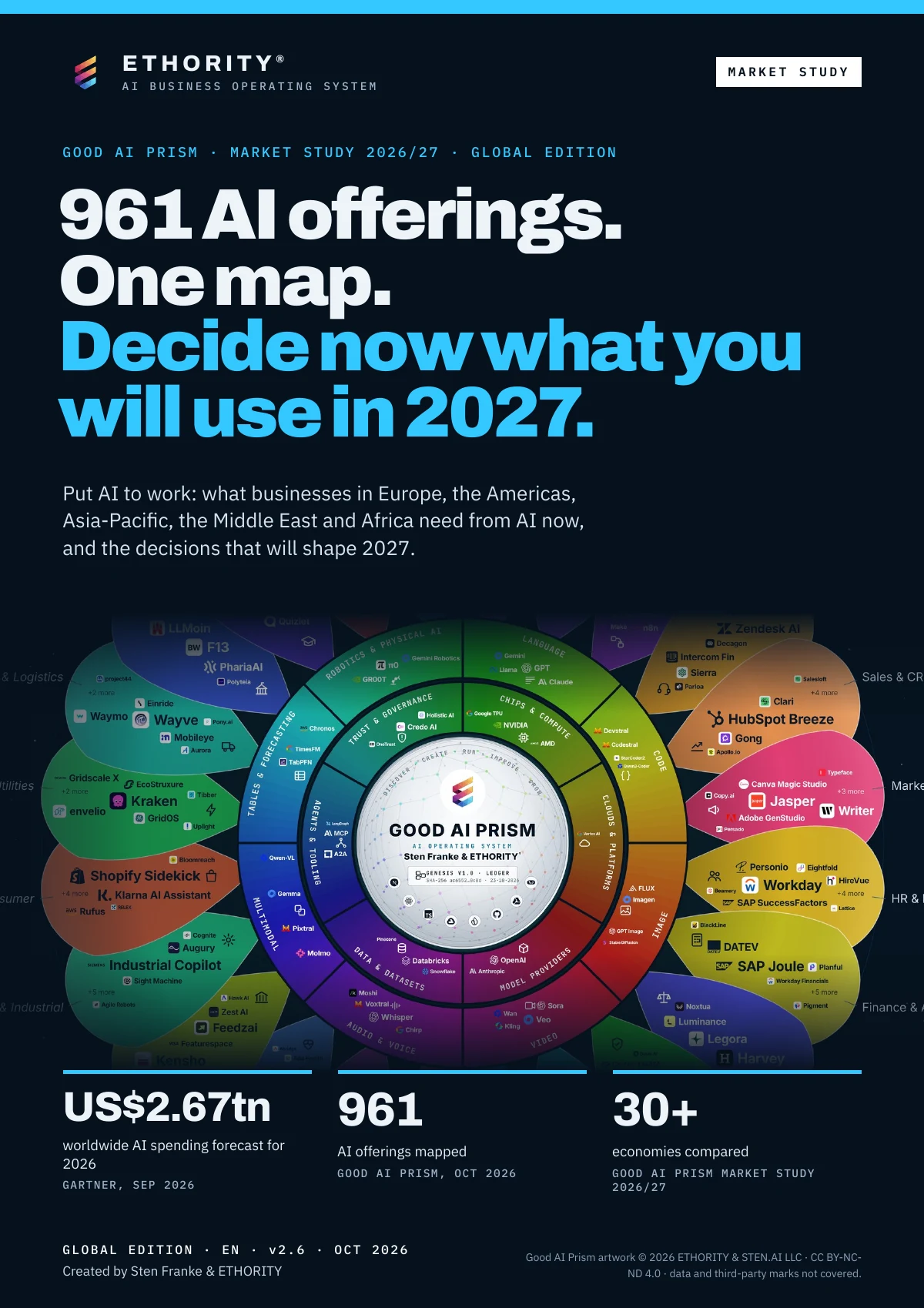
Global edition · EN
The Good AI Prism helps you find useful AI and compare the evidence behind your options. For organisations already using AI, the question is moving from whether to use AI to which AI, how safely and whether it pays. This Global edition brings together 961 AI offerings across 24 topic areas, 8 data types and 6 technology layers, with sources, dates and limits to guide your next decision.
Version 2.6 · 90 pages
Open the study →